PINETOWN JKA KARATE INSTITUTE is a Karate school establishment in Durban, KwaZulu-Natal, South Africa
Pinetown JKA Karate Institute – Karate School in Durban, KwaZulu-Natal
Pinetown JKA Karate Institute presents itself as a traditional English Shotokan karate dojo with a strong affiliation to the Japan Karate Association (JKA). The site emphasises a long-standing heritage, tracing the club’s history to the mid-1980s and highlighting the current leadership of Sensei Dylan Powell, a recognised competitor and instructor who has represented South Africa at national and international levels. The emphasis throughout is on preserving the art’s traditional discipline while fostering personal development and physical fitness.
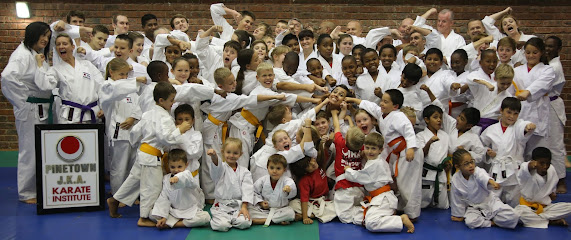
Core services centre on traditional karate training for a broad age and ability range. Classes are designed to accommodate complete beginners through to advanced black belts, with the programme described as suitable for children and adults alike. The school promotes JKA Shotokan karate as its authentic practice, stressing the discipline, respect and continuous self-improvement integral to the art. The instructional team comprises fully qualified instructors with international JKA credentials, led by Sensei Powell, who holds SA JKA and Africa Cup championships and a track record of coaching provincial and national karateka.
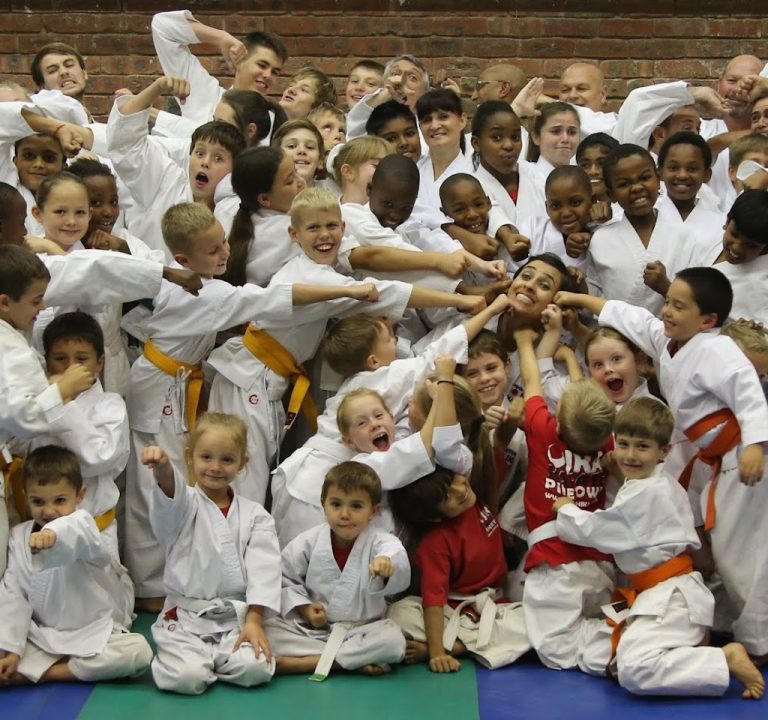
Training at Pinetown JKA covers a full-body regimen that develops strength, flexibility, coordination and cardiovascular fitness. The school asserts that karate training helps participants achieve balance, harmony and inner strength, extending benefits beyond the dojo into daily life. The environment is portrayed as a supportive, family-like community, combining professionalism with approachability to create a welcoming space for learners of all ages.
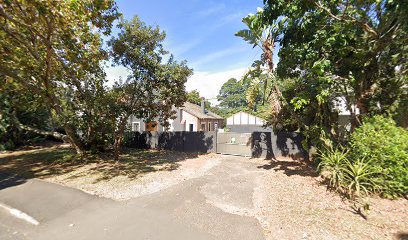
Facilities and location are clearly identified. The dojo operates from the Cowies Hill Municipality Hall at 5 Woodside Avenue, Cowies Hill, serving the surrounding Durban area and contributing to KwaZulu-Natal’s karate community. The site presents a clear pathway for new entrants through a trial class option, inviting prospective students to experience the classes before committing to membership. The programme is advertised as inclusive of all skill levels, with a timetable that accommodates school-age participants and adults alike.
Evidence of customer experience appears through a selection of testimonials. Descriptions celebrate the dojo as more than a training venue, portraying it as a family and a community that values discipline, respect and unity. Parents frequently highlight the positive impact on children’s confidence and conduct, while adult members describe personal growth, perseverance and the supportive guidance of Sensei Powell and the coaching team. These reviews reinforce the impression of a dedicated, student-focused environment where instruction is high-quality and tailored to individual progress.
From a practical standpoint, the site outlines how sessions operate and what to expect. Class times are structured to balance beginner-friendly sessions with more advanced training. The timetable shows dedicated slots for beginners, junior belts, and higher-grade students, with particular emphasis on evening sessions, which aligns with typical working-day availability. The schedule indicates classes occur on Monday to Thursday, with a mix of regular weekdays aimed at different belt levels, and the possibility of trial attendance for new members.
Typical activities at the institute include regular training sessions, grading events and participation in tournaments, all presented as integral to the journey of becoming a karateka. The curriculum reiterates core JKA maxims—Character, Sincerity, Effort, Etiquette and Self-Control—suggesting that the programme prioritises character development alongside technique and fitness. The Dojo’s described ethos appears to support students’ growth in both technical skill and life readiness, with instructors recognised for patience, dedication and personalised guidance.
Practical tips for prospective customers include considering a trial class to experience the teaching style and dojo atmosphere, checking the class timetable to identify suitable times for beginners, and noting the location for convenient access within the Durban region. New joiners should be prepared for a structured routine that blends physical training with mental discipline, and should expect to engage with a welcoming community that values respect and perseverance as part of daily practice.
- Main services: Traditional JKA Shotokan karate, classes for all levels, emphasising fitness, coordination and inner strength.
- Typical sessions: Beginner and belt-based classes, junior and senior groups, with periodic grading and tournament activity.
- How to start: Attend a trial class and arrange the first session with Sensei Dylan Powell or the coaching team.
- Location and access: Cowies Hill, 5 Woodside Avenue, Cowies Hill, Durban area; serves KwaZulu-Natal.
- Best times to visit: Weekday evenings appear to be the main training windows alongside daytime options for beginners.
Overall, Pinetown JKA Karate Institute presents a well-established, community-oriented approach to traditional karate, aligning robust technical instruction with the JKA’s philosophy and a supportive, family-like dojo atmosphere. The combination of internationally qualified instructors, a clear progression path and a strong emphasis on character development positions the school as a notable option within the Durban martial arts scene.
Durban
KwaZulu-Natal
Cowies Hill, Durban
South Africa

Sorry, no records were found. Please adjust your search criteria and try again.
Sorry, unable to load the Maps API.
Karate School Services in Durban, KwaZulu-Natal
In Durban, Karate schools typically offer a range of entry‑level and advanced programmes designed to suit different age groups and fitness levels. Sure-footed instructors emphasise discipline, technique and safety, delivering a structured pathway from beginner lessons to more demanding advancing ranks. Classes commonly blend practical self‑defence skills with traditional forms, or kata, and controlled sparring to build confidence, balance and focus.
Most Durban dojos organise programmes around key disciplines that appeal to a broad audience. Beginner and beginner‑plus classes are a staple, providing foundational stances, punches, blocks and movement patterns in a supportive environment. As students progress, curricula expand to include katas, kumite (sparring), and bunkai (application of techniques) to deepen understanding and practical application. Training often integrates fitness components such as conditioning, flexibility work and cardiovascular drills to improve endurance and tone.
Durban Karate schools frequently tailor offerings for younger students, teenagers and adults. Child programmes prioritise discipline, focus and respect, while encouraging physical literacy and coordination. Teen and adult classes typically concentrate on refinement of technique, strategy in sparring and the cultivation of mental resilience. Some schools may offer family classes or sibling discounts to encourage shared participation within households.
A typical service set includes belt progression and grading events, where students demonstrate proficiency in prescribed techniques and gain next‑level recognition. Grading intervals vary by school but usually occur on a scheduled programme, with clear criteria communicated to participants. Seminars and guest‑instructor sessions are common, bringing additional expertise and exposure to different training styles within the Karate community.
For individuals seeking practical skills, self‑defence is a prominent feature of many Durban programmes. Instruction focuses on real‑world scenarios, awareness, avoidance strategies and the appropriate use of technique to deter or escape danger. Some classes integrate elements of fitness training or conditioning circuits to support performance and resilience in day‑to‑day life.
Facilities across Durban’s Karate schools tend to be clean, well‑ventilated and equipped with martial‑arts mats, protective gear for sparring, and display boards outlining etiquette and safety rules. Students are often advised on appropriate attire, typically a gi (uniform), belt colour corresponding to rank, and any protective gear required for certain activities. Attendance policies and safety guidelines are generally emphasised, with attention paid to warm‑ups, injury prevention and respectful conduct within the training space.
Practical considerations for potential participants include scheduling and timetable flexibility, with most schools offering after‑school, evening and weekend slots to accommodate work and school commitments. Location and ease of access are important, particularly in a busy city environment such as Durban, where proximity to public transport routes and parking availability can influence attendance consistency. Some programmes may provide trial classes or introductory sessions to help newcomers assess fit before committing to a longer term arrangement.
For families and individuals evaluating Karate schools in Durban, it is useful to consider the level of student support, such as mentoring from senior students, clear progression routes, and a constructive training culture. Prospective learners should inquire about class sizes, instructor qualifications and any community or charitable activities linked to the dojo. Overall, Durban Karate schools tend to combine traditional values with practical, goal‑oriented training that helps participants improve physical ability, discipline and self‑confidence in a supportive local environment.