Amanzimtoti JKA Karate is a Karate club establishment in Amanzimtoti, Kwa-Zulu Natal, South Africa
Amanzimtoti JKA Karate – Karate Club in Athlone Park, KwaZulu-Natal
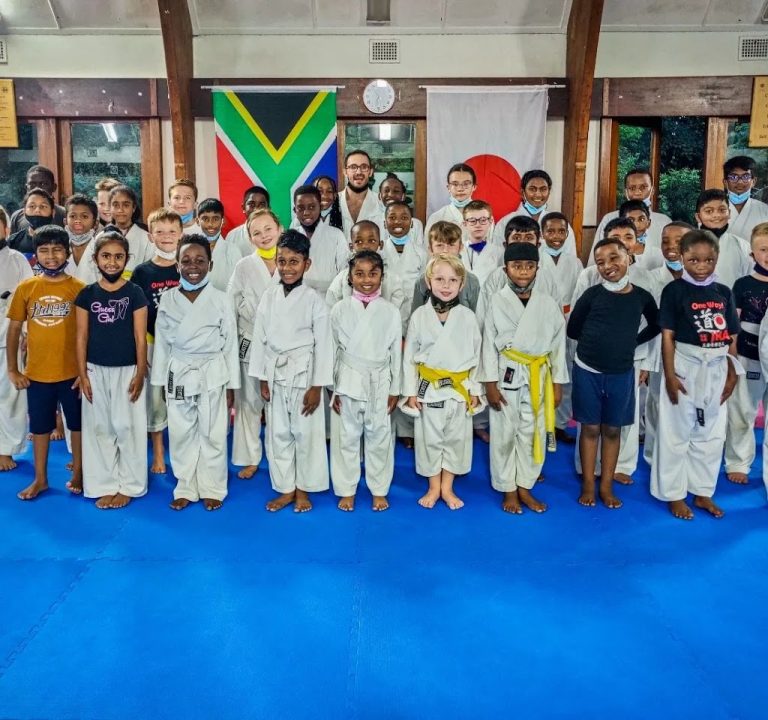
Amanzimtoti JKA Karate operates as a community karate club based in Athlone Park, KwaZulu-Natal. Since taking over in 2014, the club has maintained a focus on authentic, practical karate training that emphasises discipline, fitness, and self-defence. It is led by a team of experienced instructors, including Sensei Michael Thompson (4th Dan), and Senpai Savannah Thompson (3rd Dan) with Desere Thompson (1st Dan) supporting programme delivery. The leadership highlights a strong teaching lineage and a commitment to student progression across ages and abilities.
The dojo presents itself as a family-style environment, welcoming participants from three years old through to adults. The programme is designed to develop coordination, flexibility, core strength and martial technique, while fostering respect and personal development. Training is delivered with a blend of mental, physical and enjoyable exercises, suitable for individuals and families seeking a structured activity with a traditional ethos.
Operated under the JKA Karate framework, Amanzimtoti JKA Karate offers instructors with notable competitive backgrounds and health and fitness training experience. This combination supports both beginners and competitive students, with instruction tailored to different belts and experience levels. The club’s coaching team emphasises regular skill-building and goal-oriented coaching to help students achieve personal milestones in karate.
The dojo provides a practical schedule designed to accommodate varying ages and experience levels. Sessions run on Tuesday and Thursday evenings, with a distinct progression through age-specific groups. The timetable includes:
- Little Ninja’s class (3–6 years): 5:00pm – 5:35pm (Introduction to basics, white and early belt levels)
- Junior Samurai’s class (7–17 years): 5:40pm – 6:25pm (Foundation to intermediate skills, yellow and orange belts)
- Adults class (17+): 6:30pm – 7:30pm (Adults and beginners, white belt and above)
The club describes itself as open and in full operation, maintaining covid protocols to ensure safety and continuity of training. Facilities include wheelchair access and on-site amenities, with a sense of community that extends beyond weekly training to support camaraderie among students and families.
In terms of services, Amanzimtoti JKA Karate offers a range of session types, including group classes and one-on-one coaching where appropriate. The programme emphasises self-defence, traditional budo karate discipline, and the development of physical fitness through a structured curriculum. The instruction is supported by staff with competitive and health and fitness credentials, creating a well-rounded offering for those seeking a serious yet friendly karate experience.
Typical client profiles include school-age children, teens, and adults seeking a disciplined activity that can fit around family life. The club positions itself as a welcoming environment for beginners, while offering pathways for progression towards higher belt ranks and more advanced training as experience grows.
Operational details include the business address at 6 Warner Road, Athlone Park, and a service area that focuses on Amanzimtoti and neighbouring communities within reach of the venue. The club operates during the stated evening hours, providing convenient after-work and post-school training times for families and working adults. Payments are accepted via cash or direct deposit, with costs structured per term and annual registration and affiliation fees, reflecting typical martial arts school financial arrangements.
Customer feedback on ActiveActivities highlights a highly positive reputation, with several five-star reviews noting the supportive and familial dojo atmosphere, the quality of instruction from Sensei Michael and his team, and tangible skill development seen in students. The reviews emphasise safety, engagement, and a welcoming culture that motivates learners of all ages to continue with karate training.
Practical tips for potential attendees:
- Check the class timetable ahead of a first visit to plan for the suitable age group and level.
- Arrive a few minutes early to allow time for registration and a quick warm-up or orientation.
- Wear appropriate karate-appropriate attire as advised by the instructors; speak to staff about any equipment needs or size considerations for young children.
- Ask about term dates, registration fees, and any seasonal promotions or equipment requirements at the start of the term.
- Respect the dojo culture and safety guidelines, including any covid-related protocols in place to protect students and staff.
Overall, Amanzimtoti JKA Karate presents a well-regarded option for karate training in the Amanzimtoti area, combining traditional discipline with a family-friendly environment, led by experienced, credentialed instructors and supported by a positive, safety-conscious community.
Amanzimtoti
Kwa-Zulu Natal
4126
South Africa

Sorry, no records were found. Please adjust your search criteria and try again.
Sorry, unable to load the Maps API.
Karate clubs in Amanzimtoti: services and practicalities
In Amanzimtoti, Kwa-Zulu Natal, Karate clubs typically offer programmes tailored to different age groups and experience levels, ensuring pathways for beginners as well as seasoned practitioners. The environments are generally purpose‑built or converted spaces that provide clear mat areas, mirrors for form practice, and basic training equipment. The emphasis is often on discipline, safety, fitness and technique, with sessions designed to be both instructional and engaging for local families and adults seeking self‑defence and personal development.
Children’s classes are a common feature, focusing on balance, listening skills, coordination and confidence. Young learners are introduced to basic stances, punches, blocks and movement patterns in a structured, age‑appropriate manner. These sessions usually incorporate short drills, group activities and playful elements to sustain interest while reinforcing core karate principles such as respect, punctuality and courtesy. Parents may notice progression through visible milestones, including belt goals, which provide tangible targets and a sense of achievement.
For adults and older teenagers, programmes typically concentrate on technique refinement, fitness and personal safety. Classes may blend conditioning warm‑ups with technical practice, including kata (formal sequences) and kumite (sparring) at varying intensities. Those seeking a more competitive route might be directed towards local or regional tournaments, while others may prefer a practical self‑defence focus and stress management skills. In many Amanzimtoti clubs, instructors emphasise breathing techniques, controlled stances and precision in movements as foundations for more advanced repertoire.
Membership structures commonly feature regular weekly sessions with options for multiple days, plus occasional intensives or holiday programmes. It is typical for clubs to offer a trial class or short introductory period so newcomers can assess fit before committing. A sense of community is often fostered through regular belt tests, demonstrations at local events or schools, and occasional seminars with visiting masters or higher‑graded practitioners. The emphasis remains on safety and personal growth, rather than sheer speed or power.
Facilities vary but typically include a clean, well‑ventilated training area with suitable flooring and clear safety lines. Adequate changing and waiting spaces for families are valued, as is easy access for residents living near the coastline and surrounding suburbs. Practical considerations include nearby parking, reasonable travel times from residential areas, and flexibility in class timings to accommodate work and school hours. The climate in Amanzimtoti, with its coastal conditions, may influence the scheduling of outdoor demonstrations or seminars held in suitable venues during milder stretches of weather.
In terms of equipment, basic karate essentials such as belts and uniforms are commonly worn, while equipment like mitts or focus pads may be provided by the club or available for purchase where required. Visitors are encouraged to arrive with appropriate workout attire and a bottled drink, and to communicate any medical considerations prior to participation. Clubs typically maintain a code of conduct emphasising respect for instructors, fellow students and the training space, alongside clear guidelines on safety practices during sparring and partner work.
- Structured beginner and children’s programmes with progression milestones
- Adult and mixed‑age classes focusing on technique, fitness and self‑defence
- Competition pathways and local event participation
- Trial sessions, flexible timetables and holiday programmes
- Basic equipment, uniform guidance and safety standards
Overall, Karate clubs in Amanzimtoti aim to provide accessible, well‑organised training that supports physical fitness, mental discipline and personal confidence, while offering a welcoming community atmosphere for residents across the Kwa‑Zulu Natal region. Prospective members are advised to check class timetables, facility access, and any introductory conditions to determine the best fit for individual goals and schedules.