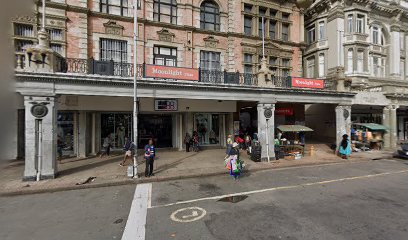
Thekwini City College is a College establishment in Durban, KwaZulu-Natal, South Africa
Thekwini City College: Services and Experience in Durban, KwaZulu-Natal
Thekwini City College is described as a registered private college founded in 2010 with a focus on empowering learners through affordable and accessible education. The institution presents itself as offering a broad array of programmes in business studies, engineering studies and occupational qualifications. These programmes are framed around international best practices and a hands-on, value-driven approach designed to provide practical solutions for the business world on a global scale. The emphasis is placed on teaching and learning methods that aim to equip learners with decision-making skills aligned to cutting-edge development in their professional domains.
Across its main offerings, Thekwini City College presents a suite of business-oriented qualifications. Notably, many programmes culminate in a National Diploma issued by the Department of Higher Education & Training on successful completion of in-service training. The in-service training component typically spans 18 months and involves around 2,000 hours of relevant practical experience. This structure signals an emphasis on practical work-integrated learning, with in-built pathways to recognised qualifications upon completion of the required workplace training period.
The college’s published course list includes areas such as:
- Business Management
- Marketing Management
- Management Assistant
- Financial Management
Each programme is described as offering a National Diploma upon successful in-service training, highlighting a consistent framework across fields of study. The repetition of several course titles within the institution’s listing suggests a focus on developing management, marketing and administrative expertise suitable for roles in various commercial and organisational settings.
In terms of the learner experience and academic philosophy, the institution promotes a “leaners” (learners) centred approach and positions its teaching and learning methods as tools to empower students to reflect contemporary development in their decision making. The stated goal is to produce graduates who are prepared to navigate the intellectual territories of their chosen industries, supported by programmes designed to reflect international standards.
The college is connected to a Durban location, with a stated new address in the Commercial City Building. The 2025 update specifies an address at 40 Dr AB Xuma Street, Commercial Street, Durban, on the 6th floor of the Commercial City Building, 4001. This situates the campus in the central Durban area, making access convenient for students in the region and for those engaging with Durban’s business corridor.
What prospective students can expect in terms of processes and engagement includes the possibility to apply online for admission, as well as access to library and e-learning resources via dedicated online portals. The site’s online admission and student information systems imply a structured digital experience for applications and ongoing study administration, alongside a facility for library use and e-learning access through secured user accounts.
The college presents itself as an institution with a vision “to be the training institution of choice for all South African individuals and corporate clients seeking tailor-made national recognised technical and vocational skills” that empower individuals and support corporate capacity in a technologically evolving world. This framing positions Thekwini City College as a pathway for individuals seeking practical vocational qualifications and for organisations seeking trained personnel with relevant practical experience.
Typical student experiences, as inferred from the site, revolve around affordable access to a diverse programme mix, the opportunity to undertake in-service training for diploma conferral, and the utilisation of online resources to complement on-campus or remote study. The institution’s emphasis on market relevance and practical outcomes suggests a customer experience oriented toward clear progression milestones, industry-aligned content and hands-on learning experiences.
Practical tips for potential applicants include confirming the latest application windows and registration deadlines, noting the required in-service training period for diploma attainment, and locating the campus at the Durban Commercial District to plan travel and on-site visits. It may also be beneficial to explore the online admission platform and the library/e-learning portals to understand the digital resources available prior to enrolment.
Operating hours are not explicitly listed on the public-facing pages, but the central Durban location and the presence of online administration channels indicate a blend of on-site enrolment activity and remote access to information. For those planning a visit, aiming for daytime hours on weekdays is advisable, with the new Commercial Street address providing a central point for campus tours or in-person consultations when available.
Durban
KwaZulu-Natal
4001
South Africa


Sorry, no records were found. Please adjust your search criteria and try again.
Sorry, unable to load the Maps API.
College Services in Durban, KwaZulu-Natal
Durban, situated on the eastern coast of South Africa in KwaZulu-Natal, hosts a range of college services tailored to diverse learners and professional pathways. These institutions typically provide access to further education and training, vocational programmes, and supplementary support designed to equip students with practical skills and academically recognised qualifications. The emphasis is on work-ready learning that aligns with local industry needs and regional development priorities.
Enrolment and course delivery form the core of college services. Prospective students can expect structured programmes that include full-time studies, part-time schemes, and occasional block-release options for employed learners. Programmes cover areas such as business studies, information technology, engineering, hospitality, health sciences, community development, and creative industries. Assessments commonly combine coursework, practical projects, and examinations, with progression linked to competency achievements and, where applicable, accreditation through national or sector-specific bodies.
Student support services are a prominent feature, offering guidance on academic skills, career planning, and personal development. Access to study mentors, advice on study techniques, and assistance with study materials are typical provisions. Many colleges in Durban emphasise inclusive access, providing support for learners with disabilities, language support for English or isiZulu speakers, and relief for financial pressures through bursaries or instalment payment options. Welfare services may also address wellbeing, housing advice, and family responsibilities, helping learners sustain their studies while managing everyday commitments.
Facilities on campus are designed to support practical learning and employability. Laboratories, workshops, and computer suites enable hands-on practice aligned with theoretical instruction. Libraries or learning resource centres offer digital and physical collections, study spaces, and information literacy guidance. For vocational and technical courses, industry-standard equipment and simulation environments are often utilised to mirror real-world operating conditions. Safe transport arrangements, secure campus access, and robust safety protocols contribute to a conducive learning atmosphere.
Career guidance and industry liaison are integral components of college services. Students typically receive information about career avenues, graduate destinations, and further study options. Schools frequently cultivate partnerships with local employers, chambers of commerce, and training providers to facilitate work-integrated learning, internships, or placement opportunities. These connections help learners understand real workplace expectations and develop professional networks that can translate into employment after graduation.
Practical considerations for potential applicants include assessing the duration and intensity of programmes, the timing of classes to fit work schedules, and the recognition of qualifications within the South African education framework. Fees, funding options, and eligibility criteria vary between institutions and programmes; prospective students are advised to review official curriculum guides and financial information carefully. It is common for colleges to offer clear guidance on application deadlines, required documents, and any compulsory orientation or placement assessments.
Beyond academics, campus life in Durban often includes activities that promote leadership, community engagement, and cultural exchange. Students may participate in student associations, sport, or volunteer initiatives, contributing to a well-rounded experience that supports personal growth and social responsibility. Accessibility to digital learning resources, study spaces, and quiet rooms further enhances the educational environment, ensuring that learners can study effectively whether on campus or, where available, through a blended or fully online component.
In summary, college services in Durban, KwaZulu-Natal, focus on practical, career-oriented education delivered in supportive, well-resourced settings. The aim is to enable learners to achieve recognised qualifications, enter the workforce with applicable skills, and continue with further study if desired, all within a regional context that values employment opportunities and community development.