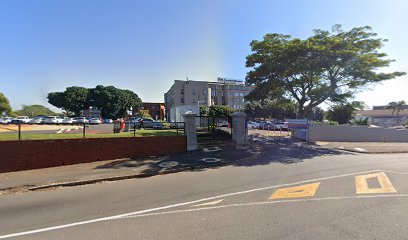
Vahed R is a Hospital establishment in Durban, KwaZulu-Natal, South Africa
Durban
KwaZulu-Natal
4001
South Africa
Sorry, no records were found. Please adjust your search criteria and try again.
Sorry, unable to load the Maps API.
Hospitals and health services in Durban, KwaZulu-Natal
Durban, a major city on the KwaZulu-Natal coast, offers a mix of public and private hospital facilities that provide a wide range of medical care. Hospitals in this region typically operate through a network of departments designed to manage routine, urgent and emergency needs as well as more complex, specialised treatments. The landscape reflects the broader South African healthcare system, combining public access with private options that may be funded by medical schemes or out-of-pocket payments.
Emergency and urgent care
Most Durban hospitals maintain 24-hour emergency departments capable of handling serious injuries, acute illnesses, and time-sensitive conditions. On arrival, patients are triaged to prioritise those in most need. Urgent care often includes stabilisation, resuscitation, and rapid access to diagnostic imaging and laboratory work. For non-life-threatening conditions, some facilities offer walk-in urgent care or rapid assessment services to reduce waiting times.
Inpatient and surgical services
Inpatient wards accommodate short-stay and long-stay hospitalisation. Surgical departments cover a broad spectrum, including elective procedures, emergency operations, and postoperative care. Facilities typically feature operating theatres, recovery rooms, and postoperative wards. Access to advanced imaging, blood transfusion services, and anaesthesiology support is common, facilitating a smooth perioperative pathway from admission to discharge.
Maternity, paediatrics and women’s health
A significant component of Durban’s hospital services relates to maternity care, including antenatal assessments, delivery with obstetric support, and postnatal care. Paediatric departments address children’s medical and surgical needs, from routine vaccinations and growth monitoring to specialised care for common childhood illnesses and congenital conditions. Women’s health services may include gynecology clinics, prenatal screening, and counselling.
Medical and diagnostic services
Hospitals in this region commonly provide comprehensive diagnostic and therapeutic services. Radiology departments offer X-ray, ultrasound, CT and MRI where available, alongside fluoroscopy and specialised imaging for specific conditions. Pathology and laboratory services support the diagnosis and monitoring of illnesses, including blood tests, microbiology, and cytology. Specialist clinics and consults are often available for cardiology, endocrinology, nephrology, neurology, and respiratory medicine, among others.
Rehabilitation, mental health and palliative care
Rehabilitation services aim to restore function after surgery, injury, or illness, and may include physiotherapy, occupational therapy, and speech–language therapy. Mental health services, where provided, emphasise assessment, counselling and treatment within a hospital setting. Palliative care focuses on symptom management and quality of life for patients with life-limiting conditions, delivered in hospital or via linked community teams.
Outpatient and follow-up care
Outpatient departments handle routine follow-ups, diagnostic testing, clinical reviews, and referrals. After discharge, discharge planning often includes guidance on medications, home care, and referrals to community health services or private practitioners for ongoing treatment.
Practical considerations for patients and visitors
- Access and admission: Public hospitals often operate through referral pathways and may require waiting times for certain services. Private hospitals usually organise admissions via private health schemes or self-pay options.
- Language and communication: KwaZulu-Natal features diverse linguistic communities; interpreters or multilingual staff may assist with communication.
- Affordability and funding: Medical schemes, government subsidies for public facilities, and private pay arrangements influence cost and access.
- Transport and parking: Urban centres can experience congestion; plan for potential delays and consider hospital-arrival times for emergencies.
- Discharge and aftercare: Discharge planning commonly involves medication prescriptions, follow-up appointments, and referrals to community or home-based care services.
A practical overview
Hospitals in Durban are equipped to handle a broad array of health needs, from acute emergencies to planned surgeries and ongoing chronic illness management. The experience for patients generally includes initial assessment, stabilisation if required, targeted investigations, definitive treatment, and structured discharge planning. While the specifics vary between public and private institutions, the overarching aim is to provide timely, proficient care with appropriate follow-up to support recovery and wellbeing.