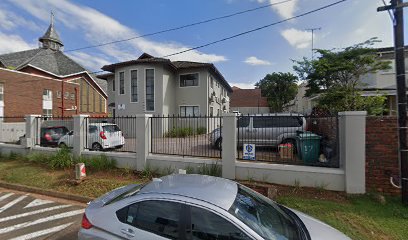
Khanyisa Developmental Centre is a Special education school establishment in Durban, KwaZulu-Natal, South Africa
Khanyisa Developmental Centre: Special Education Services in Durban and East London
Khanyisa Developmental Centre operates as a specialised educational and therapeutic hub for children with diverse needs and their families. Serving communities in KwaZulu-Natal and the Eastern Cape, the organisation emphasises an individualised, evidence-based approach to support development, learning, and well-being. The centre articulates a commitment to best-practice tools and international standards, aiming to maximise each child’s potential while maintaining a safe, nurturing space for growth.
From the information available, Khanyisa positions its core mission around three central pillars: recognising and celebrating what each child can do, advocating for families, and delivering compassionate care. The framework appears designed to support not only the child but also family members who accompany them on their journey, investing in hope and practical assistance as part of the intervention process.
The organisation highlights two physical sites, located in Durban, KwaZulu-Natal, and East London, Eastern Cape. This geographical footprint implies accessibility for families across different regions, with the potential for varied local programmes tailored to the needs of the respective communities. The site structure suggests a cohesive network intended to unify educational and therapeutic services under a common philosophy of inclusive practice.
In terms of how the engagement with Khanyisa unfolds, prospective families are guided through a straightforward, three-step process. First, an initial contact is established to share information about the child and family needs. This is followed by a facility tour, described as a chance to experience the “beauty and magic” of Khanyisa in person. Finally, families are connected with the range of support and programmes on offer. The emphasis on investigation and personal immersion before commitment indicates a customer-centric approach that values transparency and relationship-building.
Khanyisa’s messaging notes a strong emphasis on accessibility and inclusion. The organisation asserts that “every child has the right to access the support they need to learn and develop,” underscoring a mission that seeks to reduce barriers for families facing challenges related to developmental differences. The narrative acknowledges the emotional strain experienced by parents and families, positioning Khanyisa as a partner that aims to reignite hope and provide practical pathways forward.
While specific service titles or descriptions of individual programmes are not enumerated in the available materials, the language used points to a comprehensive programme mix that combines education and therapeutic intervention. The centre’s intent to “use best practice tools and international standards” and to “innovate and create an individualized approach” suggests an adaptable service model designed to respond to a range of developmental needs through personalised plans.
Volunteerism, donations, and sponsorship are presented as meaningful ways to support the centre’s mission. The site invites engagement through monetary gifts, volunteered time, and sponsorship of events, framing philanthropy as a practical component of the broader support network for students. This emphasis on community involvement reflects an openness to broader stakeholder participation beyond formal programming.
Practical tips for potential clients and supporters include the following:
- Consider initiating contact to outline the child’s needs and gather initial information before arranging a visit.
- Take the opportunity to tour the facilities to observe the environment, staff interactions, and available resources.
- Engage with the programmes offered to understand how an individualised plan might be developed and implemented.
- Prepare questions about the intake process, progress measures, and how therapies are integrated with educational objectives.
- Explore the two-site option (Durban or East London) to identify the most convenient location and potential programme variations by site.
For families seeking more information about the organisation’s values and approach, Khanyisa presents a narrative focused on hope, compassion, and practical support. The centre’s emphasis on advocacy for families and its commitment to creating a safe, hopeful learning environment are highlighted as defining features of the customer experience.
Location and service area are clearly identified as Durban, KwaZulu-Natal, and East London, Eastern Cape, with an apparent intention to serve families across these regions. Prospective visitors should consider planning visits around the described three-step process to gain a grounded understanding of how Khanyisa might support a child’s learning and development journey.
Durban
KwaZulu-Natal
4001
South Africa


Sorry, no records were found. Please adjust your search criteria and try again.
Sorry, unable to load the Maps API.
Special education school services in Durban, KwaZulu-Natal
Special education schools in Durban, KwaZulu-Natal provide a range of structured educational and developmental supports tailored to learners with diverse needs. These services are designed to enable students to participate meaningfully in learning, develop life skills, and progress at an appropriate pace within a supportive environment. The province’s urban centres, including Durban, typically offer facilities that aim to be both accessible and adaptable to various levels of ability, with attention to local transport, safety, and community integration.
A core focus is the delivery of specialised teaching programmes that accommodate individual learning profiles. Class sizes are commonly smaller than mainstream settings to allow for personalised attention, with curriculum adaptations that align with national standards while addressing cognitive, physical, or sensory differences. Across Durban, schools may implement alternative communication approaches, multi-sensory instruction, structured routines, and explicit teaching methods to support literacy, numeracy, social skills, and practical independence. The emphasis is on sequencing activities to build confidence and gradual mastery of skills.
Assessment and planning are central to service provision. Initial assessments identify strengths, challenges, and clear goals, which are used to develop individual learning plans or equivalent programmes. Progress is monitored regularly, with reviews involving relevant staff and, where appropriate, families. Parents and carers are often invited to participate in planning discussions, helping to ensure consistency between school and home environments. Where there are significant needs, collaborative planning may involve allied professionals who contribute to a holistic support approach.
A broad spectrum of therapeutic and supportive services frequently accompanies academic instruction. Speech and language therapy, occupational therapy, and social or emotional support are common components, aiming to improve communication, fine and gross motor skills, self-regulation, and resilience. Some schools partner with health and social services to arrange referrals or on-site sessions, subject to local resources and approvals. Assistive technologies, convenient to the learner’s context, may include adapted keyboards, communication devices, or customised seating and posture supports to facilitate engagement and safety.
Practical considerations form an important part of the experience. Transport arrangements, meal provision, and safe, accessible facilities are often integrated into daily operations. School layouts are usually designed to minimise sensory overload and to provide quiet spaces for rest or reflection. Clubs, sports, or adapted physical education activities are commonly offered to promote inclusion, friendship, and physical wellbeing. Staff members typically possess competencies in special education, inclusive practices, behaviour management, and safeguarding, with ongoing professional development as a key priority.
For families evaluating options, it is advisable to consider the school’s approach to inclusion, the level of individualisation in programming, and the availability of targeted supports. Visiting a prospective school to observe classrooms, speak with teachers, and review the environment can provide valuable insights into daily routines, safety measures, and the consistency of provision. In Durban, learners may benefit from schools that foster community ties, celebrate cultural diversity, and plan transitions to higher levels of education or training as appropriate.
Overall, special education services in Durban, KwaZulu-Natal, aim to build a reliable framework where learners can access meaningful instruction, practical supports, and collaborative partnerships with families. The resulting environment is one that prioritises dignity, progress, and the development of skills that support independent living and participation in wider society.