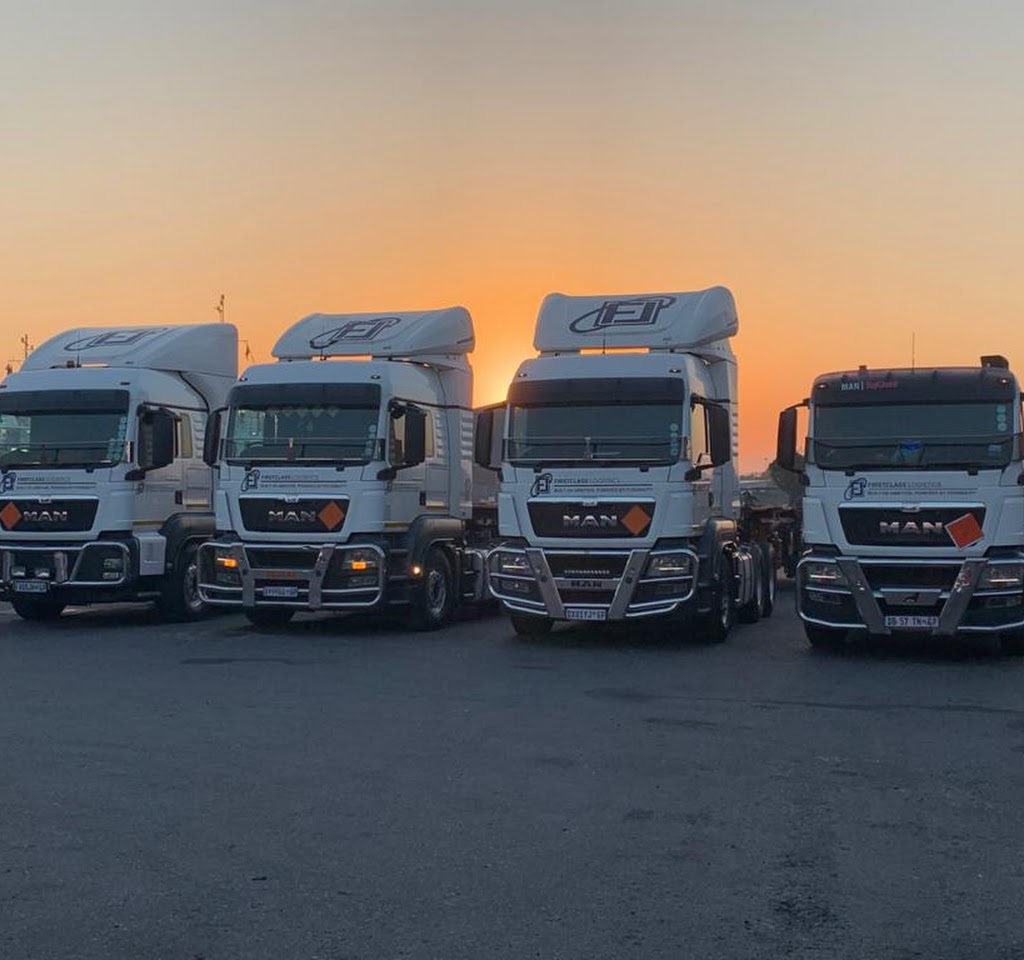
FIRSTCLASS LOGISTICS is a Transportation service establishment in Durban, KwaZulu-Natal, South Africa
Firstclass Logistics: Transportation services in Durban, KwaZulu-Natal
Firstclass Logistics presents itself as a well-established South African logistics provider with a broad service offering designed to support a wide range of industries. Based in Durban, the company emphasises a commitment to “Best in Class” service and positions itself as an integrated logistics management business with a focus on cost effectiveness, quality service, people development and environmental awareness. The organisation began operations in 2003, and its leadership team highlights extensive management experience across the logistics sector, underscoring a long-standing track record in road transport and related services.
The core services available through Firstclass Logistics sit within three primary areas: Transportation, Warehousing and Truck Hire. The Transportation service is the central offering, describing the company as a logistics partner capable of handling freight movement, with an emphasis on reliable execution and customer-centric practices. Warehousing complements this by providing storage and related logistics support, while Truck Hire expands capacity for clients needing access to additional equipment and flexible transport options. While the site does not specify detailed service levels for each category, the portfolio suggests an end-to-end approach designed to support both national and regional supply chains.
In terms of client base and sector experience, Firstclass Logistics states it serves a diverse mix of customers, ranging from multinational corporations to proudly South African enterprises. The emphasis on a broad client spectrum implies an ability to tailor solutions to varied industry requirements, from compliant handling to timely delivery and inventory management. The company’s branding—“Built on Ambition, Powered by Possibility”—reflects a forward-looking stance and a commitment to growth, with a stated objective to operate within global standards and to deliver value through service quality and people development.
The leadership team, described as having more than fifty years of collective management experience, is positioned as a key asset in guiding the business. Founding figure Gashan Naidoo is presented as the CEO and co-owner, with a background rooted in shipping and road freight, culminating in the launch of Firstclass Logistics in 2003. The management cadre also includes Amsavanee Naidoo, the Business Development Director and co-owner, and Pregasen Govender, the General Manager and Human Resources lead. Their profiles emphasise a strong focus on customer satisfaction, process efficiency and a workforce oriented toward sustainable success.
Durban operations operate alongside the company’s other regional offices in Johannesburg and Cape Town, underscoring a national footprint. The Durban address is listed as 54 Sucrose Crescent, Mount Edgecombe, with contact details aligned to the broader corporate communications framework. The presence of multiple offices suggests an intent to provide local service capabilities while maintaining standardised corporate practices across locations.
From a customer experience perspective, Firstclass Logistics presents a professional business persona focused on reliability and value. The site communicates a philosophy of partnership with clients, aiming to support growth and development across the South African logistics landscape. The emphasis on governance, social responsibility and environmental awareness further indicates an intent to operate with accountability and sustainable business practices, which may resonate with organisations seeking responsible logistics partners.
Typical job types and industries are not exhaustively enumerated on the public content, but the reference to a wide client base across multinational and local South African companies implies capabilities in handling varied freight profiles. Prospective clients seeking transportation services in Durban can anticipate a vendor that positions itself as an integrated logistics partner, capable of coordinating freight movements in tandem with warehousing support and equipment utilisation through Truck Hire options.
Practical tips for customers considering Firstclass Logistics include preparing precise freight details (dimensions, weight, origin and destination, delivery windows) and clarifying any industry-specific requirements early in discussions. As the site does not publish explicit service level agreements or pricing, potential clients may wish to request clear information on lead times, pickup and delivery windows, and any value-added services such as tracking, customs handling (if applicable) or inventory management support. Given the Durban location and regional reach, customers should confirm service availability within Mount Edgecombe and surrounding areas, along with any applicable rural or peri-urban coverage if those routes are required.
Business hours and best times to visit are not stated on the publicly accessible pages, but the Durban office is part of a triad of national locations, suggesting standard office hours aligned with business logistics operations. For those planning site visits or meetings, arranging a formal appointment through the Durban contact point would be prudent to ensure staff availability and to secure a suitable discussion slot.
Durban
KwaZulu-Natal
4302
South Africa
Sorry, no records were found. Please adjust your search criteria and try again.
Sorry, unable to load the Maps API.
Overview of Transportation Services in Durban, KwaZulu-Natal
Durban, a major coastal city in KwaZulu-Natal, offers a diverse range of transportation services designed to accommodate residents, commuters, visitors, and businesses. The landscape encompasses urban mobility within the city, regional travel across KwaZulu-Natal, and connections to neighbouring provinces, airports, and ports. The variety of services typically reflects the area’s growing population, tourism activity, and commercial demand, providing options for daily routines as well as occasional travel needs.
Within the urban core, a common focus is on dependable door-to-door or point-to-point transportation. This includes professional private hire and taxi services, which can operate on a scheduled basis or as on-demand transport. Riders may rely on licensed drivers who navigate busy streets, offer local knowledge, and prioritise safety and punctuality. In bustling commercial districts and near transport hubs, these services support commuting, meetings, and short-notice arrangements alike.
For longer journeys and intercity connections, intercity bus services and shuttle operators form an essential part of the network. These services typically route travellers between Durban and surrounding towns, coastal towns along the KwaZulu-Natal coastline, and regional centres. Passengers can expect standard comfort levels, straightforward ticketing, and clear schedules. Travel times may be influenced by traffic, weather, and road conditions, particularly along popular holiday corridors or during peak periods.
Rail travel also contributes to the transportation mix, with options available for urban commuters and longer-distance travellers. Rail services provide a rail link to nearby towns and regions, offering alternatives to road travel for those prioritising a faster or more economical journey by rail. Stations are commonly located at convenient points within the metropolitan area, with associated accessibility features and timetable information to guide passengers.
Maritime access is a notable consideration in Durban due to its well-known port and coastal position. Freight and passenger movements may intersect with city life through logistics services, cruise calls, and ferry or water-taxi operations where available. The maritime element shapes commercial provisions, particularly for businesses that rely on import-export activity and for travellers seeking scenic or experiential journeys along the coast.
Practical considerations play a significant role in selecting a transportation service in Durban. Safety and licensing are typically central expectations for customers, with emphasis on professional driving standards, vehicle maintenance, and compliance with local regulations. Accessibility features may be available on certain services to accommodate people with mobility constraints, while cleaner, well-maintained vehicles contribute to a positive travel experience. In busy areas, passengers might plan for peak travel times, street congestion, and parking requirements when arranging active transport or private hire.
Rates for transportation services in Durban are influenced by distance, time of day, demand, and service type. Basic urban trips may be priced differently from longer intercity journeys or premium options, and some customers will consider multiple providers to compare fare levels and reliability. Transparent pricing and clear communication about expected arrival times help travellers manage schedules and reduce the likelihood of delays.
For visitors and newcomers, local travel is often facilitated by sophisticated transport networks and informative signage. Visitors may also benefit from practical tips such as recognising official vehicle markings, verifying driver credentials, and selecting services that operate within established regulatory frameworks. While the specifics can vary by operator, the overall approach aims to balance convenience, safety, and efficiency across Durban’s dynamic transportation landscape.
- Private hire and taxi services
- Intercity and regional coaches
- Rail and transit connections
- Maritime freight and passenger access
- Accessibility-focused and regulated transport options