
Abethu Skills Development training durban is a Training centre establishment in Durban, KwaZulu-Natal, South Africa
Abethu Skills Development Training Durban – Summary of Services and Customer Experience
Abethu Skills Development Training Centre in Durban provides practical and theory-based skills training across a wide range of construction and allied trades. Operating from its Durban head office and with a stated reach to learners from several KwaZulu-Natal regions as well as other parts of South Africa, the organisation positions itself as a provider of high‑quality operator and skills training designed to improve employability and safety on site. The programme mix includes machine operation, lifting and earth‑moving equipment, welding and metalwork, carpentry and bricklaying, computer studies, and various safety and short courses.
The core offering centers on machine operator training and related practical competency development. Courses cover operating cranes, forklifts and other lifting equipment, with specialised options such as mobile and overhead crane training, reach stackers, cherry pickers, and articulated dump trucks. The organisation emphasises hands‑on instruction using modern machinery, paired with theoretical learning to ensure learners acquire both practical skills and the underpinning knowledge required for on‑the‑job performance.
In addition to lifting and earth‑moving training, Abethu provides a suite of artisan and trade skills programmes. These include bricklaying, carpentry, and electrical installation courses, complemented by a selection of related disciplines such as domestic plumbing and various safety and computer courses. The Carpentry and Bricklaying offerings describe standard unit standards and practical tasks, including alignment, measurement, cutting, installation of timber components, and the construction of forms or structures. The breadth of courses reflects an aim to prepare entrants for entry to the construction sector or to support ongoing professional development within it.
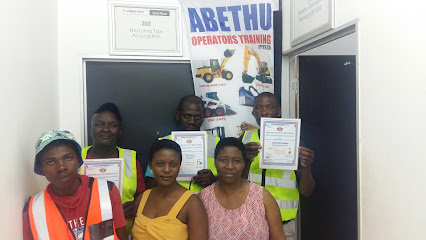
From the learner’s perspective, Abethu presents a structured training journey. The About Us content outlines a staged approach to assessment, including planning for assessments, learner preparation, conducting assessments, and providing feedback. Successful completion results in operator licences or certificates of completion, with the organisation branding its process as quality‑driven through supervision and moderation. This framework is described as designed to ensure consistent quality across both practical and written assessments.
Customer experience is shaped by several distinguishing features. The provider describes experienced facilitators and assessors who work with learners on a one‑to‑one or group basis, and it highlights flexible learning options to accommodate part‑time or full‑time study. Reviews referenced on the site indicate positive sentiment from learners in the form of brief Google reviews, suggesting satisfactory training experiences and value for money as reported by participants.
Abethu also emphasises the broader outcomes of training beyond certification. The organisation claims to offer free job assistance and accommodation to students, along with job placement support across South Africa. This combination of hands‑on training, practical assessment, and post‑course placement assistance is presented as a key differentiator in the market, particularly in a sector where employment opportunities are closely linked to recognised qualifications and operator licences.
Main services offered
- Machine operator training (forklift, crane, lifters, and other lifting equipment)
- Earth‑moving and earthworks courses (e.g., excavator, grader, and related training)
- Artisan and trade skills (bricklaying, carpentry, electrical installation, domestic plumbing)
- Welding and metalworking (CO2 welding, argon welding, boiler making, arc welding)
- Computer studies and basic IT training
- Safety and short courses related to construction and industry compliance
Typical job types or industry pathways mentioned in the content include roles in construction, civil works, and plant operation across sectors that value skilled machine operators and tradespeople. The programme is positioned as suitable for beginners through to refresher or certificate renewal, with on‑site or corporate training options available for organisations seeking customised staff development.
How requests usually work
The materials describe a learner journey beginning with registration and course selection, followed by practical training supplemented by theory. Assessments are conducted with feedback, and successful candidates receive operator licences and accredited certificates. The organisation also notes a capacity to conduct on‑site training for individuals or groups, suggesting flexibility for corporate clients seeking customised solutions.
Practical tips for customers
- Prepare for practical demonstrations by arriving with appropriate safety gear for chosen courses (where required for enrolment details).
- Clarify whether a programme leads to operator licences or accredited certificates and understand the post‑course job placement options.
- If relocation or travel is needed, investigate the organisation’s accommodation and support provisions as advertised.
- Confirm course units and duration (for example, bricklaying or carpentry) to plan progression and potential cross‑credit opportunities.
- Discuss flexible study options (part‑time vs. full‑time) to align with work commitments.
Abethu Skills Development’s Durban training centre presents itself as a practical hub for skilled construction trades and operator training, with a focus on hands‑on delivery, recognised certification, and employment support. The organisation’s stated reach across multiple South African regions and its emphasis on affordable, value‑driven courses position it as an accessible option for aspiring and advancing professionals seeking to enter or progress within the construction and allied industries.
Durban
KwaZulu-Natal
Durban
South Africa

Sorry, no records were found. Please adjust your search criteria and try again.
Sorry, unable to load the Maps API.
Training centre services in Durban, KwaZulu-Natal
Training centres in Durban, KwaZulu-Natal, typically offer a range of practical programmes designed to enhance professional capability and workforce productivity. Visitors can expect a mix of in-person sessions held on-site at dedicated learning facilities, with some centres also providing remote or blended learning options to suit busy stakeholder schedules. The emphasis is on applying skills to real-world business needs, rather than theoretical instruction alone.
Core offerings commonly include foundational and advanced courses in leadership and management, project management, communication, and customer service. Many centres tailor programmes to the needs of local industries, such as manufacturing, logistics, retail, tourism, and financial services. In addition, a substantial portion of the portfolio covers occupational health and safety, first aid, regulatory compliance, and risk management, which are particularly relevant in the South African context. Skills development often encompasses digital literacy, information security basics, and introductory programmes in information technology, data handling, and software utilisation aimed at improving day-to-day operational efficiency.
Practical delivery tends to blend theory with hands-on practice. Participants may engage in facilitated workshops, role-playing scenarios, case studies, and interactive simulations. Assessment methods frequently include practical demonstrations, quizzes, assignments, and occasionally simulation-based tasks. The goal is to enable immediate transfer of knowledge to the workplace, with learners leaving equipped to implement new techniques and standards in their teams.
Customers can typically expect clear guidance on programme structure and outcomes during the initial enquiry stage. A standard learning journey may involve a recognised assessment or certification upon completion, subject to the centre’s accreditation status and the nature of the course. While some programmes are designed for individuals seeking personal development, many courses are aimed at organisations pursuing staff upskilling or mandatory training compliance. Centres often offer group enrolment options, enabling companies to schedule multiple delegates across several sessions to minimise disruption to operations.
Practical considerations for choosing a Durban training centre include venue accessibility and layout, availability of quiet breakout spaces for group work, and suitability for hands-on practice. Proximity to major transport routes and public transit can influence attendance, as can convenient parking provisions. Facilities may include traditional classroom spaces, computer laboratories, and practical training rooms equipped with industry-standard tools and demonstrations. A visible emphasis on safety and inclusivity is common, with accessible infrastructure and materials designed to support diverse learner needs.
Operational logistics are typically straightforward. Centres publish course calendars, duration, venue details, and entry requirements in advance. Flexible scheduling is often available, including weekend or after-hours sessions to accommodate shift patterns. Facilitators usually aim to balance structured curricula with adaptive teaching, allowing learners to progress at a realistic pace while still meeting programme objectives. Administrative processes commonly cover enrolment, attendance tracking, and certificate issuance upon successful completion, with guidance provided on any credited or funded pathways available locally.
- Typical programme areas: leadership, communications, customer service, safety and compliance, ICT fundamentals, and industry-specific upskilling.
- Common formats: classroom-based workshops, practical demonstrations, group activities, and blended learning.
- Key considerations: venue quality, accessibility, scheduling flexibility, and clear programme outcomes.