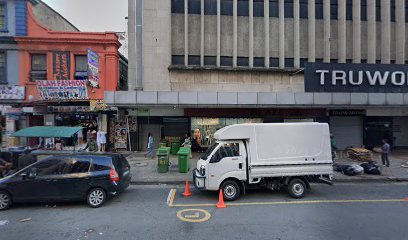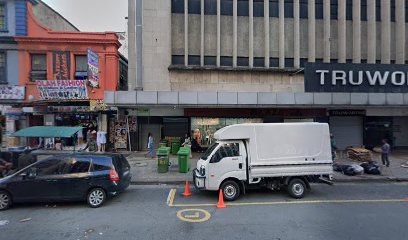
Africa College of Technology is a Educational institution establishment in Durban, KwaZulu-Natal, South Africa
Africa College of Technology (ACT): Educational Institution in Durban, KwaZulu-Natal, South Africa
Africa College of Technology (ACT) presents itself as an Educational Technology institution focused on equipping learners with practical, industry-relevant ICT expertise, business insights, and engineering skills. As described on its official site, ACT centres on merging innovation with hands-on learning to prepare individuals for leadership roles in a rapidly evolving technological landscape. The institution emphasises fostering a community where opportunity and technology intersect, positioning itself as a provider of both traditional education tracks and modern, flexible learning options.
The core offering revolves around a diverse slate of courses designed to cover multiple sectors. The main categories highlighted include Business, Education & Training, Engineering, Health, Information Technology, and Transport & Logistics. Each category is presented as a pathway to develop practical competencies alongside theoretical understanding. This breadth suggests ACT aims to support learners who seek to enter, advance, or switch within technology-driven industries, as well as those pursuing managerial or entrepreneurial capabilities aligned with a technology focus.
In addition to traditional on-campus or structured programmes, ACT places a strong emphasis on online learning. The site advertises access to over 2,700 e-learning courses, underscoring a commitment to flexible study and continual professional development. The online platform is framed as a means to “learn anytime” and “grow anywhere,” appealing to individuals who require adaptable study schedules or who are balancing work, family, or other commitments while pursuing new skills or career advancement.
Official materials highlight several notable professional partnerships and accreditations. ACT brands itself as a Microsoft Gold Learning Partner and a delivery partner for CompTIA, Huawei, and PeopleCert, which signals alignment with global technology standards and vendor-specific training. The institution also indicates accreditation by recognised bodies such as MICT SETA, TETA, and QCTO, and it notes registration with Higher Education and Training. These affiliations are presented as evidence of recognised, industry-relevant qualifications that aim to meet world-class standards and to facilitate recognition by employers and industry bodies.
From a practical perspective, prospective students can expect a structured journey toward certification. The site outlines a straightforward path: choose a course, enroll, learn, and obtain certification. This process is depicted as clear and sequential, suggesting programmes are designed to be accessible for learners at various stages of their educational or professional development. The emphasis on practical learning indicates an intention to blend theoretical knowledge with real-world applications, potentially including project work, labs, or hands-on sessions across technology, engineering, and business disciplines.
In terms of typical job types or industries, the site frames opportunities through its course categories. While explicit roles are not enumerated in detail, the inclusion of Information Technology, Engineering, Health, Education & Training, Business, and Transport & Logistics implies preparation for roles such as IT professionals, engineers, health care support staff, educational practitioners, business and entrepreneurship specialists, and logistics or transport managers. The references to industry partnerships and practical learning reinforce the view that graduates are prepared with applied skills that align with current workplace demands and emerging technology landscapes.
For customers evaluating ACT, practical tips emerge from the available information. Consider the breadth of course areas to determine which tracks align with long-term career goals. Explore both on-campus and online options to maximise flexibility and exposure to different learning environments. Investigate the specific accreditations and partnerships tied to individual courses to understand which qualifications will be recognised by target employers or professional bodies. If considering online study, utilise the e-learning platform to access a broad catalogue of programmes and leverage the ability to study remotely while maintaining existing commitments.
Location and coverage appear to reflect a focus on Africa-wide impact, with Durban listed within the category of Educational institution in KwaZulu-Natal. While the site does not specify daily business hours, prospective learners and collaborators may wish to verify local campus information and online support windows through official contact routes. The emphasis on flexible learning, industry partnerships, and recognised accreditation positions ACT as a potentially compelling option for individuals seeking technology-centric education and practical qualifications in South Africa and beyond.
- Main services offered: a broad programme portfolio across Business, Education & Training, Engineering, Health, Information Technology, and Transport & Logistics; extensive online learning with 2,700+ e-learning courses; practical, hands-on training complemented by industry partnerships.
- Typical job or industry pathways implied: IT professionals, engineers, healthcare support roles, educators and trainers, business leaders and entrepreneurs, and logistics/transport managers.
- How requests and learning typically work: select a course, enroll, engage with material, and achieve certification; options likely include on-campus and online learning experiences guided by accredited programmes.
Durban
KwaZulu-Natal
Durban Central, Durban
South Africa
Sorry, no records were found. Please adjust your search criteria and try again.
Sorry, unable to load the Maps API.
Educational institution services in Durban, KwaZulu-Natal
Educational institutions in Durban provide a range of services designed to support learners across different ages and stages. From schools offering primary and secondary education to higher education campuses and specialised training centres, the emphasis is on delivering structured programmes, assessable outcomes, and avenues for personal and professional development. The Durban region blends coastal city life with inland suburbs, influencing how campuses are distributed and how learners access resources, transport, and support services.
Admissions and enrolment processes are typically guided by established timelines and documented requirements. Prospective students often submit application forms, provide academic records, and meet language or entrance criteria where applicable. Once admitted, learners receive information about timetables, curriculum choices, and progression routes. Typical arrangements may include be a blend of classroom teaching, practical sessions, and supervised study periods, with adjustments available for part-time learners or those pursuing distance or blended learning options.
Curriculum delivery usually centres on core academic subjects, alongside vocational and technical offerings. Institutions strive to align with national education standards and, where relevant, recognised vocational frameworks. In Durban, learners may access a diverse mix of science, mathematics, languages, arts, and social studies, together with career guidance and subject-specific enrichment. For higher education and professional development, programmes often emphasise infrastructure, industry partnerships, and research opportunities, subject to the institution’s specialised focus.
Assessment and progression are integral to the learning journey. Regular tests, assignments, coursework, and formal examinations help monitor understanding and competence. Feedback mechanisms enable learners to identify strengths and areas for improvement, while academic advice is commonly available to plan future study or career steps. Certification and qualification outcomes vary by programme but typically follow recognised national or regional standards.
Support services play a significant role in Durban’s educational landscape. Learners can expect access to libraries, study spaces, and information technology resources, alongside tutoring, language support, and disability services where applicable. Welfare and student services may include counselling, orientation programmes, mental health resources, and guidance on handling personal or academic challenges. Transport options, campus safety, and accommodation assistance are often provided to facilitate attendance, particularly for learners travelling from surrounding towns or rural areas.
Facilities differ across institutions but commonly include well-equipped classrooms, science and computer laboratories, specialised workshops, sports complexes, and arts spaces. Environmental sustainability and safety are generally highlighted, with maintenance programmes and emergency procedures communicated to students and staff. In Durban, climate considerations—such as humidity and rainfall patterns—may influence campus maintenance, indoor air quality, and outdoor activity scheduling.
Practical considerations for prospective and current students include accessibility, language of instruction, and the availability of flexible study options. Proximity to major transport hubs, bus and taxi routes, and rail services can impact daily commuting. Institutions often publish calendars outlining term dates, holiday periods, and examination windows, helping learners plan workloads around family and work commitments. Cultural diversity, local industry links, and community engagement are additional factors that shape the student experience in Durban.
A simple overview of typical services is as follows:
- Admissions, enrolment, and programme guidance
- Curriculum delivery, alongside practical and theoretical components
- Assessments, progression planning, and certification
- Learner support, welfare, advisory, and language services
- Library, IT, and study facilities
- Transport, safety, accommodation, and campus services
Overall, educational institutions in Durban, KwaZulu-Natal offer a structured framework designed to support academic achievement, skill development, and personal growth within a vibrant regional context.