DS TRANSPORT is a Transportation service establishment in Durban, KwaZulu-Natal, South Africa
DS TRANSPORT: Overview of services and customer experience in Durban, KwaZulu-Natal
DS TRANSPORT operates as a Durban-based heavy transport provider with a long-standing focus on delivering secure, reliable and customised service to clients in the transport sector. The company’s profile emphasises a client-centric philosophy, underscoring satisfaction as the primary measure of success. The business traces its roots to 1998 and has since grown from a single horse and four trailers to a substantial fleet housed at a Clairwood premises, positioned at the hub of KwaZulu-Natal’s transport industry. The emphasis on stability, safety and professional service is reflected in the organisation’s mission to offer value-added, professional and efficient transport solutions at competitive rates.
From the outset, DS TRANSPORT frames its operations around essential principles such as honesty, integrity and transparency. These values are presented as enabling trust between employees and clients, and the company asserts a commitment to safety and security through investment in high-end security infrastructures. The client-facing ethos is reinforced by a claim that the workforce is comprised of qualified personnel capable of meeting and, where possible, exceeding client expectations. A 24-hour backup service and well-equipped office and workshop facilities further support continuous operational capability for customers requiring dependable heavy haulage and related services.
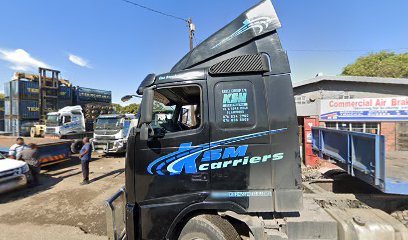
The company describes a diverse service offering designed to accommodate a range of handling and logistics needs, particularly in the realm of heavy haulage and container logistics. DS TRANSPORT highlights its own fleet as a key differentiator, noting company-owned vehicles, including skeletal trailers, flatbed trailers, forklifts (Hysters), a hydraulic stacker, and a dedicated courier fleet. This self-managed fleet reduces reliance on external contractors and enhances control over service quality and delivery timelines, which is particularly important for time-sensitive and high-security cargo.
- Main services offered include Hazchem Management, Isotainers, General Cargo, Break Bulk (loose cargo), Warehousing, Hazardous Container Storage, and Clearing and Forwarding. This combination signals a capability across hazardous materials handling, specialised container operations, general freight, flexible storage, and end-to-end logistics support.
- Typical job types described implicitly through service lines encompass hazardous material transport, isotainer and hazardous container handling, general cargo movements, break bulk shipments, warehousing needs, and freight clearing/forwarding activities—categories commonly encountered in industrial and corporate logistics requirements along with emissions and compliance considerations that accompany heavy haulage work.
- How requests typically work (as inferred) involve a client-driven approach focused on customised solutions. The emphasis on a “value-added, professional and efficient service” implies a process where client requirements are assessed, plans are developed to meet specifications, and service delivery is closely monitored to maintain high levels of client satisfaction. The 24-hour back-up capability suggests ongoing availability to respond to urgent requests, disruptions, or emergencies.
Geographically, DS TRANSPORT positions itself within KwaZulu-Natal with a Durban footprint, and its history mentions growth from earlier sites to a Clairwood base, illustrating a regional focus that serves major corporate clients in South Africa and beyond. The company’s CSR stance indicates attention to sustainability and community engagement, including efforts in waste management, pollution reduction, and participation in social programmes through SASS and local organisations. This aligns with a broader commitment to responsible operations in the transport industry, complemented by safety and quality management practices such as SQAS monitoring according to the available information.
In terms of customer experience, the narrative conveyed by DS TRANSPORT centres on reliability, trust, and professional stewardship. The leadership profile highlights founder figures with extensive industry experience and a hands-on management style, which can translate into proactive problem-solving and crisis management. A long-standing client relationship ethos—evident in the emphasis on client satisfaction and transparent practices—appears designed to foster durable partnerships rather than short-term transactions.
Practical tips for potential customers include considering the company’s company-owned fleet as a factor in reliability and control over service delivery, and recognising the breadth of services when planning end-to-end logistics solutions, from hazardous materials handling to warehousing and forwarding. Prospective clients may also benefit from noting the 24-hour backup support, which could be particularly valuable for urgent freight or contingency planning. The Durban-area focus suggests convenience for local operations, while the established history signals experience in managing complex load profiles common in heavy haulage and container logistics.
DS TRANSPORT operates from 245 Voortrekker Street, Jacobs, with contact details listed for business inquiries. The organisation is presented as a mature, safety-conscious, and client-focused player within the KwaZulu-Natal transport landscape, aiming to deliver dependable logistics solutions for substantial corporate clients and regional partners.
Durban
KwaZulu-Natal
4052
South Africa


Sorry, no records were found. Please adjust your search criteria and try again.
Sorry, unable to load the Maps API.
Overview of Transportation Service Providers in Durban, KwaZulu-Natal
Durban, a coastal city in KwaZulu-Natal, offers a diverse range of transportation services designed to move people and goods efficiently within urban areas and beyond. The sector encompasses commuter solutions, private hire, corporate shuttles, courier and parcel deliveries, freight movements, and specialised transport for events or tourism. The emphasis is on reliability, accessibility, and adherence to local regulations, with providers adapting to the city’s busier routes, harbour logistics, and dense residential zones.
Customers can expect a variety of service levels to suit different needs. For daily commuting, conventional taxi and ride-hailing options may be available alongside commuter shuttles that serve popular corridors such as the central business district, commercial precincts, and residential suburbs. For businesses, fleets offering scheduled deliveries, intercity transfers, or time‑specific courier runs are commonly utilised. In tourism and hospitality, transport services frequently cater to airport transfers, hotel-to-attraction transfers, and group sightseeing itineraries, often with multilingual drivers and flexible routing.
A typical transportation service in Durban operates through a straightforward workflow. First, a request is initiated for a journey or delivery, specifying origin, destination, time, and any special requirements. The provider confirms availability and may suggest an appropriate vehicle size or service level. On the day of travel, the driver or rider arrives within the allocated window, sometimes using a dispatch system that optimises routes for efficiency and fuel conservation. Upon completion of the trip, payment is processed and a receipt is issued. For freight or courier tasks, parcels are handed over, tracked, and delivered to the designated recipient, with proof of delivery documentation provided where applicable.
Practical considerations frequently shaping the customer experience include safety, comfort, and compliance. Vehicles typically come equipped with seatbelts, adequate space for luggage, and basic privacy provisions during transit. Drivers are expected to observe local road rules and traffic conditions, including peak‑hour congestion common in coastal and harbour areas. It is prudent for customers to plan for potential delays arising from weather, roadworks, or seasonal traffic surges around Durban’s ports, shopping belts, and stadiums during events. Accessibility options may vary by service type and operator, with some providers offering wheelchair‑accessible vehicles or assistance for passengers with mobility needs.
Pricing and payment arrangements generally reflect distance travelled, time, and service level. Some routes may involve surge pricing during periods of high demand, while other services operate on fixed-rate zones or daily tariffs. Methods of payment range from cashless arrangements to card payments and mobile wallet options, depending on the operator and platform integration. For international visitors, note that some services may require adherence to local licensing, identification checks, or consent for third‑party data processing when booking.
Customers seeking transportation services in Durban should consider proximity to preferred routes, availability during early mornings or late evenings, and the reliability history of the provider. It is advisable to review terms related to baggage allowances, animal policies, and cancellation provisions in advance. Overall, Durban’s transportation sector aims to deliver practical, convenient mobility solutions that connect residential communities with business districts, coastal attractions, and regional destinations while navigating the city’s unique urban landscape.