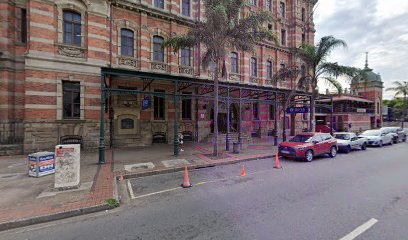
Emtateni Freight Plus (Pty) Ltd is a Freight forwarding service establishment in Durban, KwaZulu-Natal, South Africa
Durban
KwaZulu-Natal
4001
South Africa
Sorry, no records were found. Please adjust your search criteria and try again.
Sorry, unable to load the Maps API.
Freight Forwarding Services in Durban, KwaZulu-Natal
Durban, as one of South Africa’s key gateways for trade, hosts a broad spectrum of freight forwarding offerings designed to move goods efficiently from inland origins to international destinations and vice versa. The service landscape commonly combines logistics planning, multimodal transport, and customs compliance to deliver end‑to‑end solutions. Where the port and nearby highways interface with industrial parks and warehousing facilities, forwarders typically coordinate a seamless chain that supports exporters and importers across diverse sectors such as manufacturing, retail, automotive, and perishables.
Across Durban and the KwaZulu-Natal region, typical freight forwarding services cover several core activities. Initial consulting and shipment planning address the best routes, modes, and timelines, taking into account cargo characteristics, regulatory constraints, and cost considerations. Once a shipment is defined, freight forwarders arrange transportation by sea, air, road, or rail, often combining multiple modes to optimise delivery times and reliability. Shipping by sea from Durban usually involves containerised cargo through the Port of Durban, one of Africa’s busiest ports, with container terminals designed to handle large volumes and a range of cargo types. Air forwarding leverages regional gateways for quicker movement of time‑sensitive goods, while road and rail links facilitate hinterland delivery and cross‑border transfers into neighbouring SADC countries.
Another fundamental component involves the preparation and handling of documentation. Essential documents typically include commercial invoices, packing lists, certificates of origin, and the relevant export or import declarations. Where required, forwarders assist with regulatory compliance such as SARS export and import procedures, trade documentation, and any sector‑specific licencing. Insurance arrangements are commonly offered to mitigate risk along the supply chain, covering incidents that may occur at sea, in transit, or during handling at warehouses or terminals. Organizations often provide guidance on risk management, packaging standards, and the proper labelling required to satisfy both international and domestic requirements.
Customs clearance represents a critical phase in Durban‑based forwarding operations. Forwarders act as intermediaries between the client and customs authorities, preparing and submitting electronic declarations, classification for duties and VAT, and handling duty deferrals where applicable. The interplay between local compliance, international trade rules, and industry codes necessitates attentive document management, timely communication, and proactive problem solving whenever clearance delays arise. In many cases, this entails arranging inspections, coordinating with authorised agents, and ensuring accurate tariff codes are applied to goods before clearance is granted.
Practical considerations for clients in KwaZulu‑Natal include freight cost awareness, lead times, and service reliability. Rates are influenced by cargo type, volume, insurance requirements, and the chosen routing. It is prudent to discuss incoterms, which clarify responsibilities for transportation, risk, and duties at different stages of the shipment. Warehousing and distribution are frequently integrated into forwarding services, offering facilities for storage, consolidation, order fulfilment, and reverse logistics where necessary. Durban‑based forwarders may also tailor value‑added services such as labelling, packing optimisation, and sector‑specific handling, particularly for units of delicate or high‑value goods.
For businesses engaging in international trade via Durban, selecting a freight forwarder involves assessing reliability, market knowledge, and responsiveness to regulatory changes. A competent partner will provide transparent communication, clear timelines, and documented processes for tracking shipments and resolving issues. While the specifics of platforms or proprietary tools are not assumed, clients can expect a structured workflow that aligns transportation, customs activities, and final delivery with local and international requirements, ensuring goods reach their destination securely and on schedule.
- Multimodal transport coordination (sea, air, road, rail).
- Customs clearance and regulatory compliance support.
- Documentation management, including invoices, packing lists, and declarations.
- Insurance and risk management options.
- Warehousing, consolidation, and distribution services.