

Executive Plant Hire is a Plant and machinery hire establishment in Durban, KwaZulu-Natal, South Africa
Executive Plant Hire — Plant and Machinery Hire in Durban, KwaZulu-Natal
Executive Plant Hire operates as a comprehensive plant hire provider in Durban and the surrounding KwaZulu-Natal region, presenting a versatile fleet designed to support a wide range of construction and civil engineering projects. The business positions itself as an all-in-one plant hire store, emphasising breadth of equipment as well as in-house transport capabilities to streamline site operations from delivery to mobilisation.
The principal offering centres on an extensive range of earthmoving and construction machinery. The fleet spans excavators in multiple sizes, including models with peckers or hammers for breaking concrete and rock, and mini excavators suitable for confined spaces. The larger machine line-up features standard excavators for bulk earthworks and trenching, complemented by specialised variants such as long-reach or high-reach options depending on project requirements. Attachments play a prominent role in the available equipment, with peckers/hammers, augers for drilling, trenchers for drainage and underground work, and sweeping attachments to maintain clean, safe work sites.
In addition to excavators, the fleet includes Bobcats/Skidsteers and related configurations designed for tight spaces and versatile site use. These smaller loaders are highlighted for their agility and suitability for landscapers, building contractors, and tasks such as loading rubble onto tipper trucks or clearing debris. Attachment combinations extend to full hammer/pecker setups for demolition and a sweeper attachment for cleaning pavements and industrial areas. Trenching and augering capabilities are especially emphasised, enabling drainage, underground installations, and structural work such as fence poles or deck foundations.
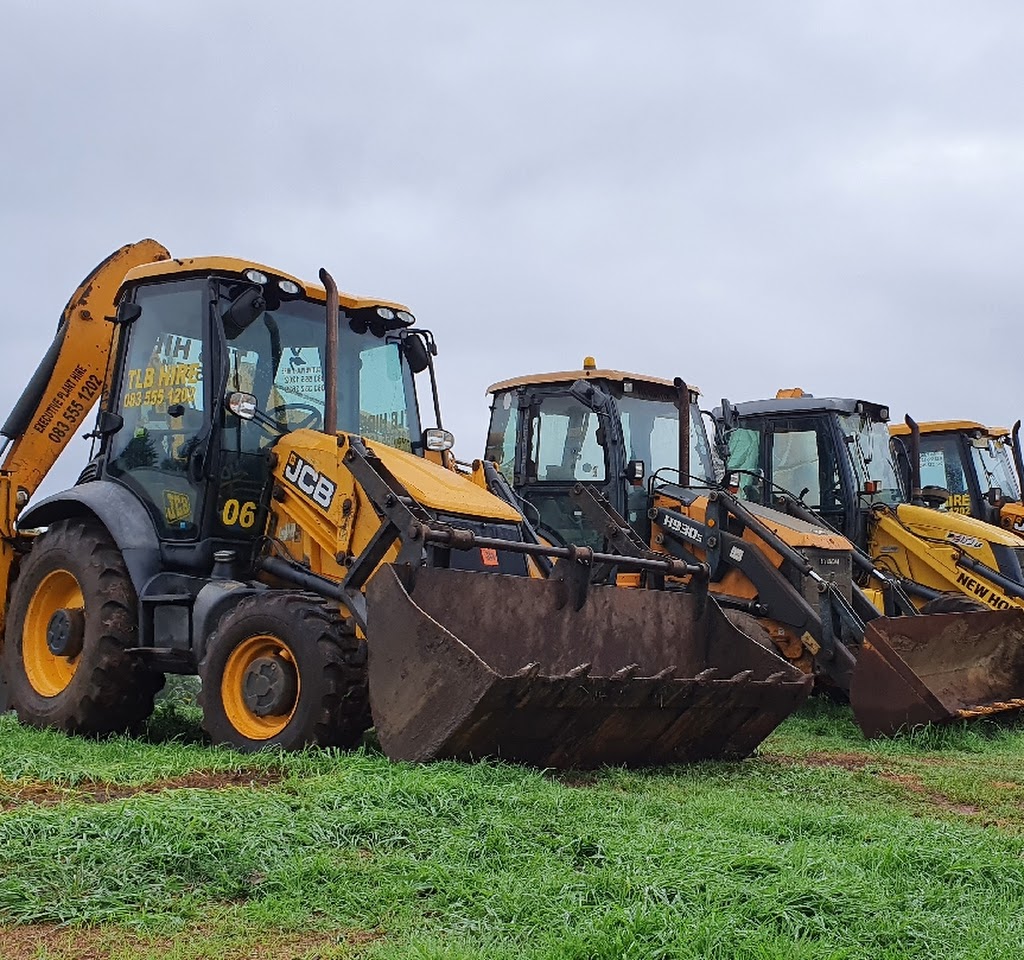
Tractor, Loader, and Backhoe (TLB) units form another core element of the offering, noted for their ability to dig, load, and relocate on site. These machines are described as versatile and transportable between locations, with some models moving under their own power or via rollback services, to minimise site downtime. The range also covers front-end loaders for bulk handling and transport of materials such as sand, soil, and debris, as well as smaller lifting and material-handling equipment.
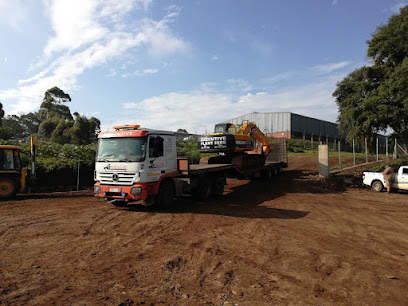
Large capacity and special-use equipment feature prominently as well, including tipper trucks, articulated dump trucks (ADTs), motor graders, rollers, forklifts, and access platforms such as cherry pickers, scissor lifts, and boom lifts. Telehandlers (telescopic handlers) are noted for their reach in less accessible areas, while demolishing equipment and general construction tools complete the portfolio. The in-house transport offering—comprising lowbed, rollback, and crane trucks—helps facilitate delivery, mobilisation, and on-site repositioning of machinery, which is especially valuable for projects spanning multiple sites within the Durban region.
Typical job types and applications implied by the equipment range include groundwork for civil projects, site clearance and earthworks, trenching and drainage installation, foundation drilling and piling prep, landscaping and small-scale excavation, and heavy lifting or material handling for construction sites. The equipment set-up supports both large-scale civil contracts and smaller, targeted works, with emphasis on flexibility, off-site transport, and the capacity to provide multiple assets in a single site visit.
Customer requests are generally addressed through a process focused on equipment selection, transport coordination, and site access considerations. Potential clients can expect guidance on appropriate machine sizes, the suitability of attachments, and the most efficient combination of assets for a given scope. The presence of in-house transport suggests a workflow that prioritises timely delivery and on-site readiness, reducing the need for external logistics or additional procurement steps.
Practical tips for customers planning a hire include the following considerations: clearly outline the site access limitations, including space for manoeuvring and height restrictions; confirm the required attachment type and any compatibility needs with existing site equipment; assemble a rough timetable for delivery and potential repositioning across different work phases; and account for operator training or supervision if in-house operators are not included in the hire package. It is also prudent to verify power availability and fuel arrangements on site to avoid downtime when changing from one machine to another.
Operated hours and local area reach within Durban and KwaZulu-Natal are typically aligned with standard business hours for service providers in the region, and the fleet is described as ready to mobilise between sites as required. The location serves customers across the Durban metro area and the wider KwaZulu-Natal province, offering equipment with a focus on rapid deployment and improved site efficiency through integrated transport solutions.
In summary, Executive Plant Hire presents a broad, well-equipped offering for plant and machinery hire in Durban, combining a wide range of excavators, loaders, rollers, lifts, and specialist attachments with an in-house transport capability. The service model appears designed to support both large civil undertakings and smaller contractor needs, emphasising fleet versatility, site-ready equipment, and streamlined delivery processes. Practical preparation and clear communication about site conditions can help maximise productivity on hire projects in KwaZulu-Natal.
Durban
KwaZulu-Natal
Hillcrest, Durban
South Africa
Sorry, no records were found. Please adjust your search criteria and try again.
Sorry, unable to load the Maps API.
Plant and Machinery Hire Services in Durban, KwaZulu-Natal
In Durban, KwaZulu-Natal, plant and machinery hire services provide essential equipment for construction, mining, logistics, and industrial projects. These offerings encompass a range of machinery suitable for coastal and inland sites, including earthmoving machines, material handling gear, and support equipment. The emphasis is on reliable performance, timely delivery, and appropriate compliance with local regulations to support projects of varying scale and duration.
Typical equipment available for hire includes excavators, backhoe loaders, wheel loaders, bulldozers, skid steer loaders, forklifts, telehandlers, graders, rollers, and compactors. Supporting machinery often includes generators, lighting towers, air compressors, pumps, and small tools designed to complement larger assets. In Durban’s climate and terrain, equipment configured for diverse ground conditions—ranging from sandy coastal soils to more compacted inland surfaces—tends to be especially sought after.
Customers can expect a straightforward hire process that begins with a needs assessment, clarifying the project timeline, site access, and the precise capabilities required. Operators may be included or available as an add-on, depending on the supplier and project demands. For many sites, the offer extends beyond the bare unit to include wear parts, routine servicing, and on-site support during the hire period to minimise downtime and ensure steady productivity.
Site preparation and access are important considerations in Durban. Sites should be assessed for space to manoeuvre machinery, safe entry and exit routes for vehicles, proximity to power lines, and the presence of any underground utilities. Equipment may require transport to the job site, with arrangements for loading, unloading, and securing machines in transit. Ongoing fuel arrangements, daily checks, and basic maintenance are commonly addressed by hire providers to reduce interruptions and promote safe operation.
Insurance and risk management form a critical aspect of the hire arrangement. Most providers offer or require cover that protects against damage to equipment, third-party liability, and loss or theft. It is prudent for clients to confirm the extent of insurance cover, any required excess, and the process for reporting incidents. Safety standards and operator qualifications are frequently emphasised, with equipment being supplied in a safe and ready-to-use condition after routine inspections.
Practical terms often include minimum rental periods, delivery windows, and agreed service levels for standby or breakdown support. Clients should establish clear expectations regarding response times for maintenance, availability of replacement units, and the process for extending hire periods if project timelines shift. In Durban, where port access, industrial zones, and mixed urban–outdoor sites are common, coordination with delivery schedules and site access permissions can influence project planning and logistics.
When choosing a plant and machinery hire provider, it is common to compare the breadth of equipment on offer, the reliability of the fleet, and the ability to tailor the selection to the project’s phase. Some hire partners provide comprehensive packages that integrate equipment with ancillary services such as site supervision, operator training for temporary staff, or rental-to-own options. Others focus on flexible short-term hires designed to accommodate project variability and surges in demand.
Overall, Durban’s plant and machinery hire market supports a wide spectrum of construction and industrial activities. The approach centres on dependable equipment readiness, practical logistics, and clear terms that accommodate the region’s distinctive environmental and regulatory context. By aligning equipment choice with site conditions, project timelines, and risk considerations, clients can optimise productivity while maintaining prudent cost control.
- Key considerations include site access, transport logistics, insurance coverage, operator needs, and maintenance arrangements.
- Common hires cover earthmoving, lifting, and handling equipment, with supporting tools to sustain operations.
- Practical planning emphasises safety, regulatory compliance, and clear service level expectations.


