
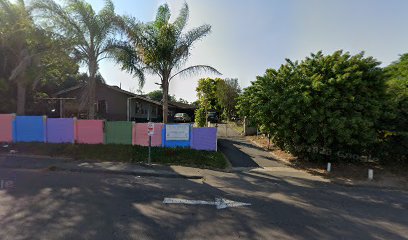
G.E.M.S Preschool is a Preschool establishment in Pinetown, KwaZulu-Natal, South Africa
G.E.M.S Preschool, Pinetown (KwaZulu-Natal): Services and Customer Experience Overview
G.E.M.S Preschool, situated in Pinetown, KwaZulu-Natal, offers a Montessori-inspired early years programme designed to support children from infancy through to Grade R. The school presents a tiered structure that mirrors typical progression in South African early childhood education, beginning with a Babies programme for 3 to 12 months, followed by Toddlers (1–2 years), Playgroup (2–3 years), Nursery (3–4 years), Juniors (Grade RR, 4–5 years) and Seniors (Grade R, 5–6 years). This arrangement aims to provide a continuous, developmentally appropriate pathway that emphasises independent learning, early literacy and numeracy, and socialised teamwork within a nurturing environment.
The Preschool Journey sits at the core of the offering, with a Montessori-based curriculum that is tailored to individual children’s needs. The programme is designed to guide learners from infancy through to Grade R, fostering a lifelong love of learning through a supportive and creative classroom atmosphere. Across the stages, the emphasis is on hands-on materials, practical life activities, sensorial exploration, and developmentally appropriate routines that promote autonomy and personal growth.
Specific programmes and activities are described in detail for each age group. The Babies programme focuses on safe, stimulating activities that encourage physical development through tummy time, sensory exploration, music, storytelling and facial interaction. Toddlers’ activities prioritise walking, independence, language development, early literacy concepts, simple puzzles and social play, with feeding and sleep arrangements aligned to parental preferences. Playgroup targets early social and language development through sensory play, role-playing, weekly worksheets to support fine motor skills, and group activities that teach sharing and cooperation. The Nursery phase introduces Montessori sensorial work, practical life activities, language development, maths preparation through concrete materials, and imaginative play to build curiosity and problem-solving abilities. The Juniors (Grade RR) and Seniors (Grade R) stages emphasise numeracy, literacy, and the transition towards more formal concepts, with structured workbooks, thematic learning cycles, and a blend of teacher-guided and independent activities.
Aftercare is available for primary school-aged children, with supervision in the afternoons, transport coordination for school pickup and return, help with homework and projects, and a range of indoor and outdoor activities. The aftercare offering includes an afternoon snack and a daily closing time of 17:30, with monthly fees noted in the programme details.
The customer experience at G.E.M.S Preschool appears to be structured around consistency, small class sizes, and a strong focus on age-appropriate Montessori and practical life approaches. The school highlights small classes as a hallmark of its Seniors programme, enabling teachers to tailor instruction to individual learners and monitor progress closely. Across the age bands, the environment is described as welcoming, inclusive, and designed to nurture a lifelong love of learning. The setting is positioned as culturally diverse, reflecting the broader community of Pinetown and surrounding areas.
Typical processes for enrolling or engaging with the school are implied rather than explicit. Prospective families are invited to seek information, with references in the site copy to “join our preschool” and to making contact for more details. While specific steps for admissions, intake assessments, or waitlists are not detailed on the site, the structure suggests a straightforward journey from Babies through to Seniors, with ongoing parental involvement and clear routines around meals, naps, and daily activities.
Key practical tips for customers
- Identify the appropriate age-based programme for the child’s current stage, then review the Montessori and practical life activities described for that level to understand daily routines and learning goals.
- Ask about the daily schedule, including meal provisions, nap times, and how parental preferences for feeding and additional routines are integrated.
- Inquire about aftercare availability, transport arrangements, and how homework assistance is organised in the afterschool setting.
- Check class sizes and observe the classroom environment to assess the level of individual attention offered by teachers.
- Clarify admission steps, fees, and any required documentation, and request a visit to experience the atmosphere and speaking with staff.
Location and service area are centred on Pinetown, KwaZulu-Natal, with a focus on families seeking a locally oriented early education provider that emphasises continuous learning pathways from infancy through Grade R. While hours are not exhaustively listed on the site, the aftercare option provides a clearly defined late-afternoon wrap-up for families requiring supervision beyond standard school hours.
Pinetown
KwaZulu-Natal
3610
South Africa
Sorry, no records were found. Please adjust your search criteria and try again.
Sorry, unable to load the Maps API.
Preschool Services in Pinetown, KwaZulu-Natal
Preschool provision in Pinetown, KwaZulu-Natal, combines early learning with gentle neighbourhood familiarity, offering programmes geared towards toddlers and young children preparing for formal schooling. The environment typically emphasises safety, routine, and social development while introducing foundational literacy and numeracy concepts. Families often look for spaces that balance play and guided learning, within a community setting convenient to residential areas and commuter routes.
In most Pinetown preschools, the day is structured around a predictable timetable that supports young children’s need for stability. Morning arrivals may be followed by circle time, where teachers introduce topics, songs, and simple language activities. Play-based learning remains central, with age-appropriate stations that nurture creativity, fine motor skills, and problem-solving. Outdoor play is common, subject to local climate and safety considerations, and may include sand play, ball games, and nature exploration. A calm-down corner or quiet activities cater for moments when a child needs space to regroup.
Curriculum typically covers a broad spectrum of early learning goals. Basic literacy often begins with recognising letters, sounds, and captions, while numeracy centres explore counting, patterns, and shapes through hands-on activities. Language development is fostered through storytelling, role play, and interactive reading. Social-emotional learning emphasises sharing, turn-taking, empathy, and cooperation, preparing children for group settings and future classroom environments. Many preschools also introduce practical life skills such as organising belongings, tidying up, and following simple routines, reinforcing a sense of responsibility.
Health, safety and well-being are principal considerations. Preschools in Pinetown commonly implement child-protection policies, health screening at drop-off, and clear routines for meals and toileting. Snack routines often include balanced options with attention to dietary restrictions and allergies. Some centres may provide breakfast or light meals, while others expect parental provision. Hygiene practices, including handwashing and sanitising, are typically reinforced throughout the day.
Parents and carers can expect transparent communications about a child’s progress and daily activities. Regular updates may come through written notes, informal chats with teachers, or notices displayed in common areas. Many preschools encourage parent involvement through volunteering, attendance at events, and participation in learning workshops, supporting a collaborative approach to a child’s early education.
Practical considerations when selecting a preschool in Pinetown include location and accessibility, especially in relation to traffic patterns and commuting time. A comfortable and engaging learning environment is essential, with appropriately sized furniture and stimulating, age-appropriate resources. Class sizes and staff-to-child ratios influence personalised attention, while the qualifications and experience of educators contribute to the overall learning atmosphere. It is sensible to observe a typical day to assess mood, safety, and the level of active learning in practice.
Enrolment processes are generally straightforward, with a willingness to provide basic documentation such as proof of residence and medical information. Waiting lists may exist in popular neighbourhoods, so early planning is advisable. Fees vary by facility and duration of attendance, and some centres offer half-day or full-day options, as well as holiday or term-time adjustments.
Overall, preschool provision in Pinetown seeks to combine warmth and structure, offering a supportive start to early education within a KwaZulu-Natal community. Parents are advised to consider the learner-friendly environment, the balance of guided instruction and play, and the practicalities of daily routines when making a choice that aligns with a child’s development and a family’s logistical needs.


