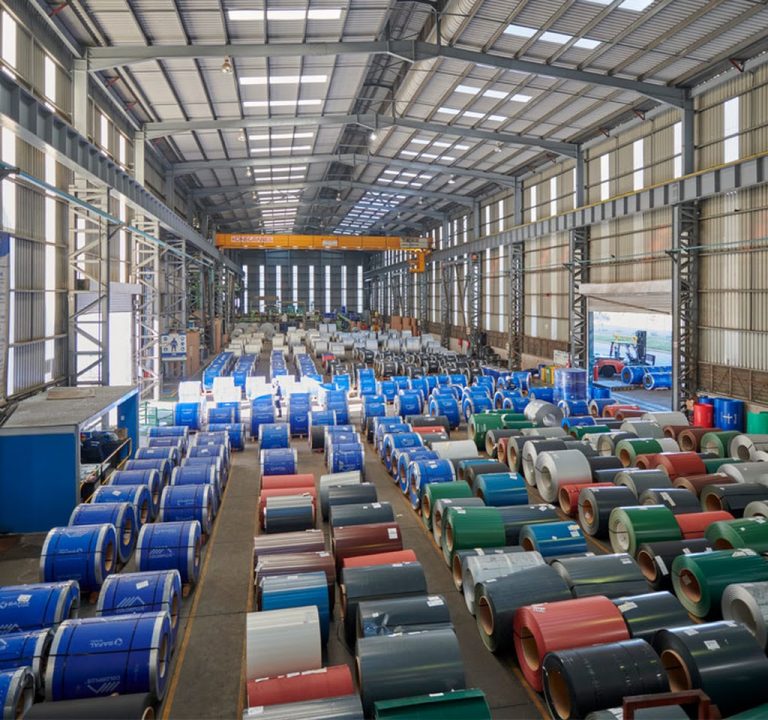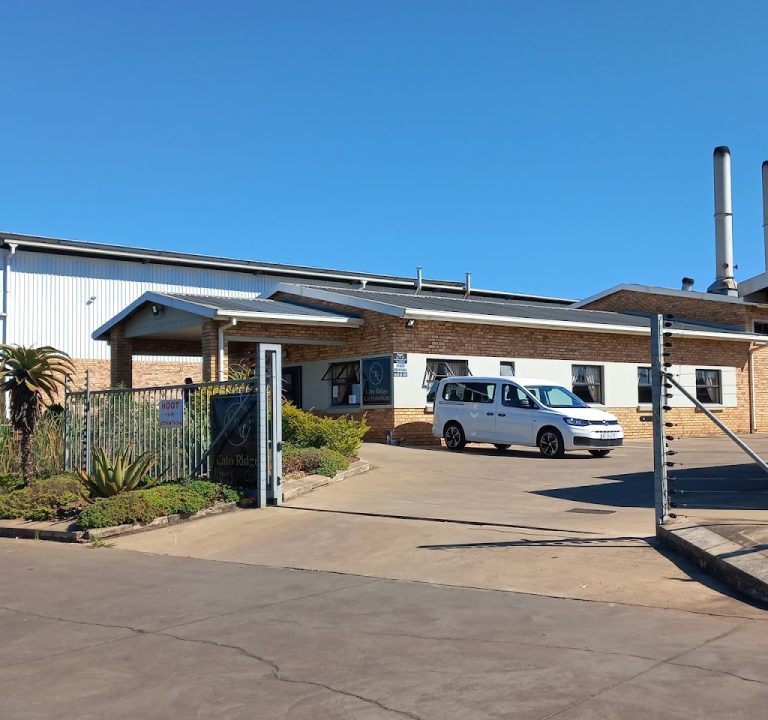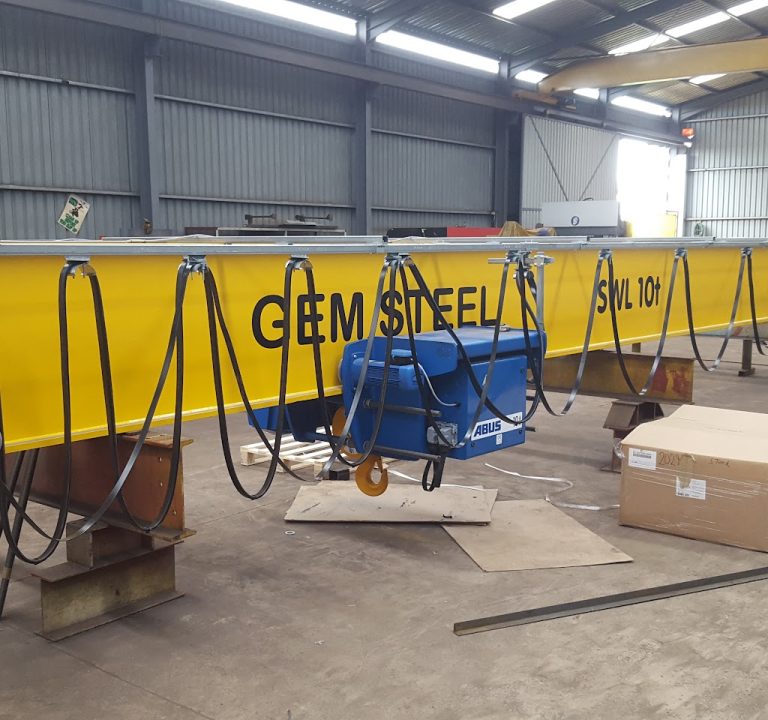
GEM Steel is a Steel fabricator establishment in Cato Ridge, Kwa-Zulu Natal, South Africa
GEM Steel — Steel Fabricator in Cato Ridge, Kwa-Zulu Natal
GEM Steel is a well-established steel fabrication business based in Cato Ridge, Kwa-Zulu Natal, with a track record spanning over three decades. The company describes itself as offering complete engineering solutions, specialising in the design, manufacture, renovation and commissioning of lifting equipment and related structural elements. Its portfolio covers cranes, gantries and lifting devices, alongside broader steel fabrication projects such as mezzanine floors and stairways, illustrating a broad capability in both specialised equipment and general structural work.
A core focus is the customised design and installation of lifting systems. GEM Steel highlights experience across suspension cranes (underslung), single and double girder overhead travelling electric cranes, pillar, wall-mounted and free-standing jib cranes, as well as monorail systems. In addition to these lifting solutions, the company designs, fabricates and erects gantry structures and conducts gantry surveys, underscoring its commitment to both installation and ongoing assessment of equipment. The service range extends to maintenance and servicing for gantries and cranes, suggesting a lifecycle approach to lifting equipment rather than a one-off project.
In terms of broader fabrication capabilities, GEM Steel offers complete steel structures fabrication, including mezzanine floors, stairways and walkways. The refurbishment of above-ground storage tanks is listed among the offered services, indicating an ability to work within industrial facilities that require equipment refresh and integrity checks. This breadth positions GEM Steel as a single-source partner for clients seeking both high-precision lifting gear and integrated structural fabrications.
Quality and industry standing are emphasised through several professional affiliations and registrations. The company presents LME 366 (Lifting Machine Entity) status with the Department of Labour, LMI 201112023 (Lifting Machine Inspector Accredited with the Engineering Council of South Africa), and 8100577 as a member of the Lifting Equipment Engineering Association of South Africa. Additionally, GEM Steel is affiliated to the Chamber Of Engineering Technology. These credentials are cited as indicators of safety, compliance and professional capability within the lifting equipment and fabrication sectors.
The client base referenced by GEM Steel includes notable South African organisations across manufacturing and consumer sectors. Names such as Hulamin Operations, Assmang Manganese, Mondi, Nampack, Toyota, Unilever and Dunlop appear in company materials, illustrating a track record of working with sizeable blue-chip companies. Such references suggest experience in meeting the demands of large-scale, industrial operations, including projects that may require customised design, careful installation and reliable aftercare.
Requests and inquiries are channelled through the company’s contact points. The site presents a dedicated enquiry mechanism and lists two primary contact emails ([email protected] and [email protected]) along with mobile numbers (083 657 1902 and 084 800 7160). The physical address is Allsop Road, R103, Cato Ridge, 3680, South Africa, reinforcing the local service footprint in Kwa-Zulu Natal. A practical note for visitors is the stated instruction: should a visit be desired, communications should prompt the organisation to send a pin to access the factory, reflecting a security-conscious approach to site access.
A visitor experience at GEM Steel, based on the available information, is oriented toward customised, end-to-end solutions rather than solely supplying components. The emphasis on design, fabrication, installation and ongoing service indicates a project lifecycle approach, with attention to safety, quality and customer satisfaction. The collaboration with large industrial clients further implies a level of professionalism expected in engineering environments, where timelines, performance criteria and regulatory considerations are frequently important.
Practical tips for customers:
- Prepare a clearly defined brief outlining the lifting equipment or structural project, including any niche requirements such as load ratings, span lengths and installation site constraints.
- Use the enquiry channels provided (email or phone) to discuss project scope, timelines and maintenance expectations, and to request a formal quotation or site survey if needed.
- Consider engaging in a gantry survey or service arrangement as part of ongoing equipment management, to support reliability and compliance.
- If access to the factory is required, coordinate in advance to receive the provided access pin and plan a visit during standard business hours when personnel are available to discuss specifications.
GEM Steel’s location in Cato Ridge situates it within the Kwa-Zulu Natal industrial corridor, well-placed to serve a regional client base across the construction, manufacturing and mining-related sectors. The combination of bespoke lifting solutions, complete fabrication capabilities and ongoing service positions GEM Steel as a potential partner for organisations seeking integrated steel and lifting equipment expertise within South Africa’s eastern region.
Cato Ridge
Kwa-Zulu Natal
South Africa
South Africa

Sorry, no records were found. Please adjust your search criteria and try again.
Sorry, unable to load the Maps API.
Steel Fabricator Services in Cato Ridge, Kwa-Zulu Natal
In Cato Ridge, Kwa-Zulu Natal, steel fabricator services are commonly sought for a range of commercial, industrial and domestic applications. Local workshops typically specialise in the transformation of raw steel into finished products through a blend of cutting, bending, welding and detailing. The emphasis is on durability, precision and adherence to practical site requirements, ensuring that fabricated components integrate smoothly with existing structures or systems.
Typical offerings cover the full spectrum from initial concept to final assembly. This includes interpretation of drawings or client specifications, development of fabrication drawings, and the procurement or utilisation of appropriate steel stock such as mild steel, stainless steel and, in some cases, aluminium. Precision cutting is followed by forming operations, which may involve press braking, rolling or angle bending. The resulting components are then joined using traditional welding techniques or bolted connections, depending on the project’s functional and load requirements.
On-site and off-site work are both common. Off-site fabrication in a workshop environment often provides the advantage of controlled conditions, access to heavy equipment and better quality control. On-site services may include installation of steel frames, supports, handrails, brackets and structural components, subject to site access and safety considerations. In many cases, projects require a combination of both approaches to optimise efficiency and minimise disruption.
finishing and protection form an important part of the service mix. After fabrication, components may undergo surface preparation such as degreasing and cleaning, followed by galvanising, powder coating or traditional painting to enhance corrosion resistance and appearance. The choice of finish typically aligns with environmental exposure, maintenance regimes and client preferences, with consideration given to Kwa-Zulu Natal’s coastal climate and variable moisture levels.
Clients can expect a collaborative approach to project management. This typically involves reviewing design intent, confirming material specifications, and agreeing on tolerance levels and inspection points. Quality control procedures are a standard feature, with checks carried out to ensure dimensional accuracy and structural integrity before handover. Where necessary, weld procedures, non-destructive testing and certified workmanship may be advised to meet industry standards or local regulations relevant to the project type.
Practical considerations influence all stages of a steel fabrication project. Accurate measurement and coordination with architectural or engineering drawings are essential to avoid clashes with existing utilities or surrounding structures. Transport logistics play a role, as larger fabricated components require suitable handling equipment and vehicle access. Additionally, consideration is given to site safety, temporary works, and the potential need for craneage or hoisting solutions during installation.
In Kwa-Zulu Natal, proximity to Durban and surrounding municipalities can simplify supply chains for materials and components, supporting reasonable lead times and flexibility. Customers typically receive a clear brief, followed by a quotation that outlines material costs, labour, estimated timelines and any site-specific requirements. While exact services vary by workshop, the overarching aim remains consistent: to deliver robust, accurately finished steel components that meet the specified performance criteria and are suitable for integration into larger structures or systems.
- Steel cutting and shaping (mild steel, stainless steel, aluminium)
- Welding and assembly (MIG, TIG, stick where applicable)
- Press brake and forming operations
- Drilling, tapping and bolt‑up assemblies
- Surface finishing (galvanising, powder coating, painting)
- Structural fabrication for frames, supports and structural steelwork
- On-site installation and assembly services
- Quality control, inspection and documentation as required