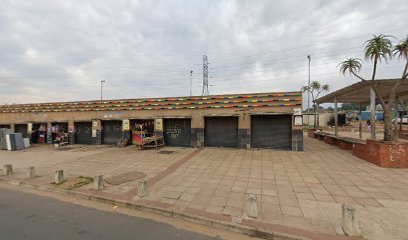
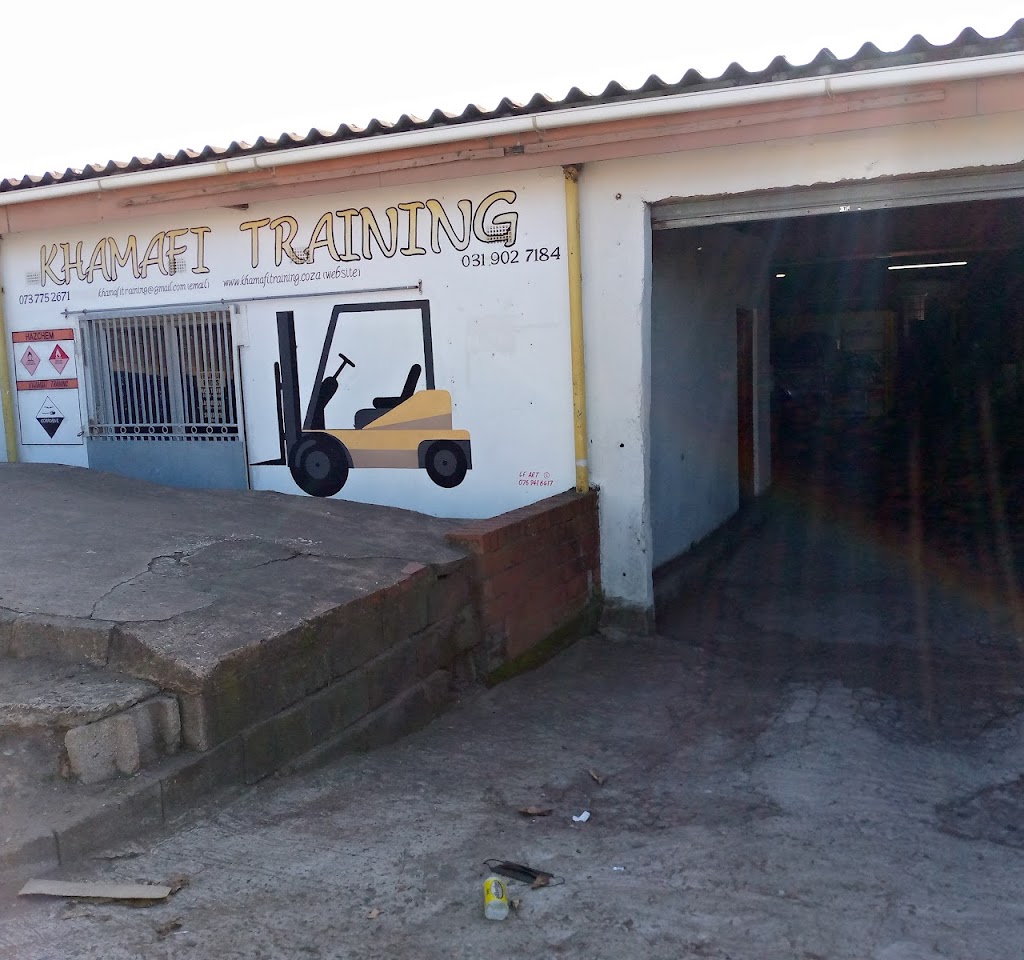
Khamafi Skills Training is a Training centre establishment in Durban, KwaZulu-Natal, South Africa
Khamafi Skills Training: Durban Training Centre
Khamafi Skills Training operates a Durban-based training centre offering practical courses designed for workplace safety, compliance, and operational capability. Positioned in Isipingo, KwaZulu-Natal, the centre presents a range of courses aimed at improving both individual performance and organisational safety standards. The operation has been established since 2008 and emphasises affordable, high-quality instruction delivered by experienced facilitators and assessors.
The centre highlights a portfolio of core courses intended to support common industrial and logistical needs. The training catalogue includes forklift operations, overhead cranes, truck-mounted cranes, dangerous goods handling, first aid, fire fighting, and health and safety, covering both practical skills and regulatory understanding. This combination is designed to prepare participants for relevant job responsibilities and certification requirements in demanding environments such as warehouses, construction sites, and sites requiring compliance with safety regulations.
In terms of the training experience, Khamafi emphasises the expertise of its assessors and facilitators. The staff are described as having extensive experience—some with more than 20 years in quality training—who bring a grounded understanding of real-world application to the classroom. The programme is positioned as affordable without compromising on the quality of instruction, with claims that it represents one of the lower-cost options in the market while delivering authentic, behaviour-changing training that aims to improve workers’ engagement and customer service attitudes on the job.
The centre’s offerings are presented through accessible channels on the website, including an array of course pages and a concise description of what each programme covers. Prospective learners can observe a straightforward path from enquiry to certification, with the site encouraging prospective learners to book lessons and pursue recognised qualifications in short timescales where possible. The training footprint is clearly linked to Durban and the KwaZulu-Natal region, reinforcing its relevance to local industries and employers seeking nearby, practical training solutions.
Typical service information includes the ability to book forklift training and other programmes directly, with the site implying a rapid progression from initial instruction to certification. The centre describes its facilities as a purpose-built environment for hands-on practice and skills assessment, designed to accommodate learners aiming to meet industry standards efficiently and affordably.
Main services offered
- Forklifts
- Over Head Cranes
- Truck Mounted Cranes
- Dangerous Goods
- First Aid
- Fire Fighting
- Health And Safety
Location and reach: The Khamafi Skills Training centre is located at No. 35 Phila Ndwandwe Road, Unit 4, Glebe shopping centre 4066, Durban (KZN) 313, serving learners in and around Durban and the broader KwaZulu-Natal area. The site also provides contact details and an online chat option for immediate assistance, suggesting a customer-friendly approach to enquiries and bookings.
How requests usually work, in brief, based on the site’s wording: a learner or employer selects a course from the offered list, contacts the centre to arrange training, and proceeds through the assessment and certification process as guided by the facilitators. The site presents a straightforward user journey intended to streamline registration and enable timely completion of required qualifications.
Practical tips for customers:
- Check which course aligns with the specific job role and industry requirements before booking (e.g., forklift driving versus crane operation).
- Confirm the desired certification and any regulatory approvals that may be needed for employment or compliance purposes.
- Ask about the expected duration of each course and the format of assessments to plan work commitments accordingly.
- Inquire about prerequisites or prior experience recommended for higher-demand programmes such as crane operations.
- Verify the location details and access arrangements at Glebe shopping centre in Durban to plan for travel time and parking.
Business hours and best times to visit are not explicitly stated on the site, so potential participants may wish to use the provided contact options or live chat to confirm availability and scheduling. The centre’s presence in Durban and Isipingo positions it as a convenient local option for organisations and individuals seeking practical, on-site-related training with a focus on safety and compliant practices.
Durban
KwaZulu-Natal
Durban
South Africa

Sorry, no records were found. Please adjust your search criteria and try again.
Sorry, unable to load the Maps API.
Training centre services in Durban, KwaZulu-Natal
Durban, a coastal city in KwaZulu-Natal, hosts a range of training centres that cater to individuals seeking practical skills, professional development and organisational capability. These centres typically offer a blend of classroom-based instruction, workshop sessions and practical, hands-on learning designed to equip learners with industry-relevant competencies. The emphasis is often on bridging theory and real-world application, with programmes aligned to local labour market needs and regional industry sectors.
Most training centres in Durban provide core offerings such as vocational courses, apprenticeships and trainee programmes. Vocational courses cover trades, hospitality, information technology, business administration and health and safety awareness. Apprenticeships combine on-the-job learning with structured off-the-job training, usually supported by mentors and assessors who monitor progress and competency. In addition, many venues deliver short courses aimed at upskilling staff in areas such as customer service, leadership, project management and computer literacy. These programmes are designed to be accessible to a broad audience, including school leavers, career changers and employed professionals seeking upskilling.
Corporate training is another common focus, with organisations seeking customised development solutions for teams or entire departments. Training centres may work with employers to assess current capabilities, identify skill gaps and design bespoke curricula. Delivery modalities often include face-to-face workshops, blended learning and facilitated seminars. Even in Durban’s dynamic business environment, flexible scheduling remains important; programmes can be arranged as day courses, evening classes or weekend sessions to accommodate work commitments.
Facilities and learning environments are an important consideration for prospective students. Well-equipped centres provide dedicated classrooms, practical laboratories or workshops, and sometimes simulated work environments relevant to local industries. Accessibility features, on-site catering options and safe travel arrangements for learners are practical aspects that influence attendance and overall learning experience. Durban’s climate and traffic patterns are also considered when arranging timetable logistics, particularly for those commuting from surrounding towns or townships.
Assessment and certification processes follow each programme. Learners are usually assessed through a combination of practical demonstrations, written tests and project work. Where applicable, prior learning may be recognised for credit, subject to validation by the centre’s assessors. Upon successful completion, participants receive a certificate or statement of attainment that reflects the level and scope of the programme. The credibility of qualifications is often supported by local registration bodies or recognised awarding organisations, though specifics vary by course and centre.
Support services commonly accompany the instructional offering. Academic or career guidance helps learners plan their progression, whether continuing within the centre’s own pathways or transferring to further education or employment. Some centres also provide assistance with enrolment, funding information, and access to resources such as study materials or online learning portals. In Durban, there is an increasing emphasis on inclusive education and learner support, aiming to ensure access for individuals with diverse needs.
Practical considerations influence the choice of a training centre. Location and travel times matter for those commuting from surrounding areas, while cost and value for money are weighed against programme duration and outcomes. Prospective attendees should verify the centre’s accreditation status, the range of available programmes, and the booking process. Such due diligence helps ensure that the chosen centre aligns with personal goals and provides a transparent pathway to recognised credentials and improved employability in Durban’s competitive KwaZulu-Natal labour market.