Marlin Technologies Group is a Water purification company establishment in Durban, KwaZulu-Natal, South Africa
Marlin Technologies Group — Water Purification Solutions in KwaZulu-Natal
Marlin Technologies Group is presented as a Durban-based, independent water technology manufacturer focused on delivering robust quality across water treatment applications. The company emphasises its design-led approach to water quality and product reliability, underscored by an ISO13485:2016 certification and SAHPRA licensing. This positioning suggests a strong alignment with stringent regulatory and quality expectations, particularly in medical and laboratory contexts.
The core services offered span the full spectrum of water treatment from concept to completion. Potable Water Treatment involves the design and construction of bespoke water treatment plants capable of processing water from diverse sources such as municipal supply, boreholes, dams, and rivers. The emphasis is on tailoring systems to the unique source characteristics and end-use requirements of each client. In medical applications, Marlin Technologies Group positions itself as a leading service provider for water used in renal dialysis and related therapies, indicating a capability for highly controlled, high-purity water production. For laboratory and analytic instrumentation, the company manufactures class 1, 2, and 3 water production systems, suggesting suitability for diverse laboratory workflows and quality control environments.
Manufacturing capabilities are complemented by a dedicated project management service. Projects of varying scale are managed from start to finish, with on-site liaison to ensure completion within budget and on schedule. A comprehensive water testing offering is described, including Sans 1657 for bottling water, ISO23500 for dialysis microbiology and chemistry, Sans 241 for portable consumption, and Legionella testing. This mix signals a broad testing portfolio designed to verify water quality across both end-user and specialised medical contexts.
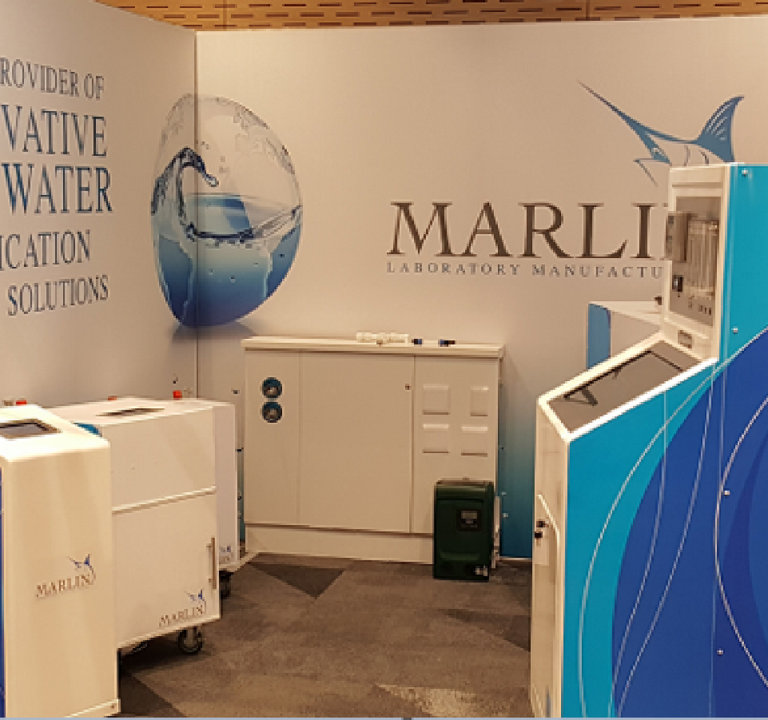
Another key service is manufacturing. The organisation identifies itself as a proud local manufacturer of quality reverse osmosis machines and notes the production of mobile portable units capable of delivering 90 litres per hour of permeate water. This highlights an emphasis on practical, deployable water solutions that can be brought to site as needed.
Customer experience and project workflow are outlined in a six-step process. The sequence begins with clarifying client requirements and guiding the financial positioning, followed by water testing where samples are taken from the client’s water source. System design then leverages test results, client specifications, and requirements to craft an appropriate solution. After proposal presentation, execution proceeds with a detailed project plan and timelines. Post-plant build support is a notable feature, offering 24/7 technical assistance and warranties on installations, reinforcing a commitment to ongoing service and reliability.
The company’s client base is reflected in public testimonials from educational institutions and partners. Notable references include Pecanwood College, ADvTECH Group, and St Stithians College, indicating experience in the education sector and a trust-building narrative around water quality and sustainability. The repeating sentiment of “Changing Lives” paired with “Providing Solutions” reinforces a visitor-facing image of delivering practical, life-improving water solutions.
From a customer-facing perspective, practical tips can be inferred for prospective buyers. First, the breadth of testing options listed suggests that clients should consider conducting formal water assessments to determine the appropriate treatment pathway. Given the emphasis on bespoke design, engaging early in the process with clear source data and end-use requirements will likely streamline system design and budgeting. The post-installation support and warranty offer a safety net, making consideration of ongoing maintenance and service agreement an essential part of procurement. Additionally, the existence of mobile portables indicates a potential advantage for projects requiring temporary or temporary-to-permanent deployments, or for rapid response to on-site challenges.
Geographically, the materials emphasise Durban and KwaZulu-Natal as the business context, with references to a national footprint through diverse client sectors. The company’s local manufacturing capability signals a commitment to domestic supply chains and responsive service.
In summary, Marlin Technologies Group presents itself as a regulated, high-capability water treatment partner with end-to-end capabilities—from design and testing to manufacturing, installation, and ongoing support. The firm’s integrated approach, combined with industry-standard certifications and a track record within education sector clients, positions it as a credible option for organisations seeking customised potable, medical, or laboratory water solutions within South Africa’s context.
Durban
KwaZulu-Natal
4126
South Africa
Sorry, no records were found. Please adjust your search criteria and try again.
Sorry, unable to load the Maps API.
Water purification services in Durban, KwaZulu-Natal
Water purification companies in Durban cater to a broad range of needs, from households seeking clean drinking water to businesses requiring reliable filtration for industrial processes. The coastal city’s climate, mineral content and occasional supply variability mean that many customers look for tailored solutions that address taste, odour, contaminants and scale formation. Providers typically offer a mix of testing, design, installation and ongoing maintenance to ensure water quality remains within acceptable standards.
Key services commonly found in this market include expert water testing and analysis. Realistic expectations are set after sampling municipal, borehole or rainwater sources to identify elements such as hardness, dissolved minerals, biological contents, iron odour, chlorides and other common contaminants. The findings guide the recommended treatment approach, which may combine several technologies to address specific issues rather than relying on a single solution.
System design and installation form the core of the offering. Durban-based specialists assess space, water pressure, electrical supply, and anticipated usage to determine appropriate equipment. Typical installations may involve pretreatment to remove particulates, filtration to improve taste and clarity, and post-treatment stages to safeguard against bacterial growth or residual contaminants. In some cases, multi-stage systems are configured to manage varying water quality across different fixtures or sectors, such as kitchens, washrooms or process lines in small and medium enterprises.
Common treatment technologies include point-of-entry and point-of-use filtration units, cartridge filters, activated carbon for odour and taste improvement, and water-softening systems to manage hardness. For more challenging water profiles, reverse osmosis installations may be considered, alongside ultraviolet (UV) disinfection to inactivate microbes. Where contamination concerns or preservation of equipment matter, sanitisation and periodic replacement of filters and membranes are emphasised as part of ongoing maintenance.
Maintenance, service cycles and aftercare constitute important aspects of the service model. Regular servicing typically involves filter or membrane replacement at manufacturer-recommended intervals, system sanitisation, inspection of fittings and leak checks, and testing of output water quality to verify performance. Many providers also offer service plans or maintenance contracts to give customers predictable costs and timely responses to faults or efficiency declines.
Practical considerations influence decision-making for clients in Durban. Local conditions such as seasonal rainfall, borehole yield, water table quality and the presence of minerals like iron or manganese can affect equipment choices. Electrical reliability and the availability of skilled technicians are practical factors in selecting a provider. Space constraints, noise considerations and the aesthetic impact of a system on a home or business may guide installation locations and configurations. Local installation must also align with safety and building regulations, including appropriate backflow prevention and compliance with any municipal or provincial requirements.
Customers can typically expect a consultative approach, where a qualified technician evaluates the source water, explains the proposed treatment train, and outlines expected outcomes, maintenance needs and costs. Clear communication about performance, warranties and the lifespan of consumables helps prospective buyers make informed decisions without over-reliance on generic claims. In practice, a reputable Durban water purification service balances effective treatment with sustainable operation, aiming to deliver reliable water quality improvements while minimising energy use and environmental impact.