

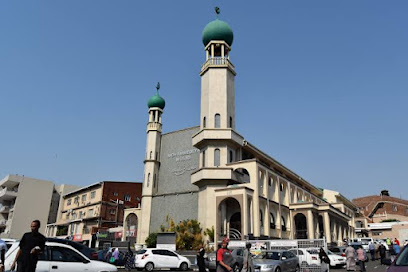
Mohammedeya Musjid (Sparks Road) is a Mosque establishment in Berea, Kwa-Zulu Natal, South Africa
Mohammedeya Musjid (Sparks Road) — Berea, Kwa-Zulu Natal
Mohammedeya Musjid, located in the Berea area of Kwa-Zulu Natal, South Africa, functions as a community mosque serving local worshippers and visitors from nearby neighbourhoods, including Overport. The site presents itself primarily as a public notice point for daily prayer times and religious observances rather than a formal booking facility.
The mosque is linked to a dedicated online notice board, indicating a commitment to keeping the community informed about prayer schedules and events. The address recorded for the mosque corridor is 255 Moses Kotane Road, Overport, placing it within easy reach for residents of the Berea and surrounding areas. This accessibility supports routine prayers and community gathering opportunities for those living in or passing through the area.
Leadership appears to be represented by Moulana Ebrahim Mahomed, who is named in the posted schedule. This attribution suggests a clear point of guidance for congregants attending the mosque for daily prayers and any scheduled talks, lectures, or religious observances that may be announced locally. The presence of a named imam indicates a traditional structure for leading services and delivering sermons during key prayer times.
From the available time notices, the mosque provides concrete daily prayer times for adherents. For example, on a recent Monday notice, Azaan (the call to prayer) was listed for 4:15 pm with Salaah (the prayer) at 4:30 pm, followed by another Azaan at 7:15 pm and Salaah at 7:30 pm. This pattern demonstrates a commitment to standard daily observances with clearly announced windows for worship, enabling visitors to plan their attendance around daytime and evening prayers.
As a public religious facility, Mohammedeya Musjid appears to function as a traditional space for communal worship rather than a facility offering paid services or commercial programmes. The website content emphasises free access to prayer times and notices rather than paid classes or commercial activities. The emphasis on a notice board and posted timings suggests a straightforward, community-focused experience, underscoring respect for sacred spaces and etiquette during visiting hours.
In terms of the customer experience, visitors are likely to encounter a straightforward, schedule-driven environment. The online notice board provides a practical resource for planning attendance, while the presence of a named imam offers attendees a recognisable leadership figure during services. The quiet, personal nature of a mosque setting typically means visitors should expect a respectful atmosphere during prayer times and a focus on spiritual observance rather than commercial activity.
Location-wise, Mohammedeya Musjid serves the Berea region and surrounding Durban suburbs, with easy access for residents of Overport and nearby areas. The mosque’s online notice board acts as a central information point, helping attendees stay informed about changing timings and religious events, which may vary around public holidays or special occasions.
Practical tips for visitors and local residents planning a visit include checking the online notice board for the most up-to-date timings, arriving a few minutes before Azaan to participate in the congregation, and observing standard mosque etiquette during prayer times. It is advisable to wear respectful attire and maintain a quiet, orderly demeanour within the prayer hall, particularly during sermon periods or while observing the daily prayers.
Overall, Mohammedeya Musjid (Sparks Road) presents as a modest, community-oriented mosque that prioritises clear communication of prayer times and leadership leadership. It serves as a dependable religious hub for worshippers in the Berea region and the broader Durban area, facilitating regular daily prayers and community notices through a publicly accessible online board.
Berea
Kwa-Zulu Natal
4091
South Africa

Sorry, no records were found. Please adjust your search criteria and try again.
Sorry, unable to load the Maps API.
Mosque services in Berea, Kwa-Zulu Natal: an overview for visitors and residents
Berea, a suburb of Durban in Kwa-Zulu Natal, hosts several mosques that serve a diverse Muslim community characterised by different cultural backgrounds and languages. The mosques function as places of worship, learning, and community gathering, integrating daily prayers with a programme of religious education, social support, and charitable activity. Visitors to these spaces should anticipate a respectful, orderly atmosphere that emphasises punctual prayer, cleanliness, and courtesy to worshippers and staff alike.
Daily prayers form the core of mosque activity and are typically observed in a structured sequence. The five daily salah (ritual prayers) are offered at specific times that vary with the sun’s movement. Friday congregational prayer, known as Jumu’ah, is a central weekly event and usually includes a short sermon. Informational boards or notice sheets near entrances often convey prayer times, special programmes, and community announcements for the week. It is customary to arrive a little early to perform preliminary ablutions and to find a suitable place within the prayer hall. Ablution facilities (wudu) are provided on site, and facilities may be segregated by gender in accordance with local practice and mosque regulations.
In addition to formal worship, mosques in Berea typically offer religious education and study circles. Madrasa or Qur’an classes are common for children and adults, with programmes that cover Quranic recitation, memorisation, and basic jurisprudence. These sessions may occur after school hours, in the evenings, or on weekends, aimed at reinforcing literacy and a deeper understanding of Islamic teachings. Some mosques also run outreach or welfare programmes, providing guidance on charitable giving, social support, and community service.
Certain services extend beyond prayer and study to address practical needs. Funeral rites and condolences are part of the life cycle in the Muslim community, and mosques may assist with guidance on funeral arrangements, janazah prayers, and coordination with burial societies. Marriages and civil ceremonies conducted within or in partnership with mosques are approached with respect for Islamic traditions, including the consideration of appropriate arrangements, documentation, and family involvement. Many mosques in Berea support wedding advice, dowry discussions, and the facilitation of large gatherings where family and friends can offer blessings.
Food and hospitality are frequently intertwined with mosque activity. Halal meals might be available on special occasions or during community events, and mosques may operate kitchens or partner with local halal caterers for communal meals, especially during the holy month of Ramadan. Charity collection boxes and zakat distribution are often part of the mosque programme, directing assistance to those in need within the local community and beyond. Attendees can expect to be guided to verify halal compliance through local certification schemes or trusted community standards when applicable.
Practical considerations for visitors include modest dress and respectful conduct, particularly inside prayer halls and during sermons. Photography is generally discouraged or restricted in worship spaces, and language on notices tends to reflect the local community’s linguistic diversity, sometimes combining English with KwaZulu-Natal languages. Parking is usually available nearby, and accessibility may vary between mosques, so allowing extra time for arrival is sensible. For newcomers, it is prudent to seek guidance from mosque staff or regular attendees if there are questions about prayer etiquette, dress codes, or participation in community activities.
Overall, mosque services in Berea provide a focal point for worship, learning, and social cohesion. They offer a range of experiences—from the routine rhythm of daily prayers to the more extensive dost of education, charity, and life cycle events—within a culturally rich and welcoming urban setting.




