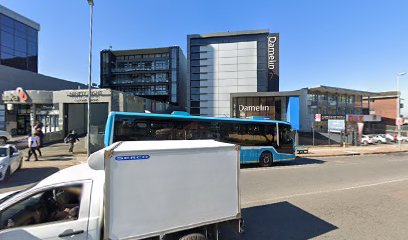
Muslim Prison Board KwaZulu-Natal is a Religious organization establishment in Durban, KwaZulu-Natal, South Africa
Muslim Prison Board KwaZulu-Natal (MPB-KZN): Services and Visitor Experience in Durban
The Muslim Prison Board KwaZulu-Natal (MPB-KZN) operates as a constituted organisation serving the KwaZulu-Natal province, with a history dating back to 1981. The board is recognised for its work within correctional services, maintaining strong relationships with authorities, Ulama, and various organisations across the region. Its mission centres on supporting incarcerated Muslim individuals and their families, promoting Islamic knowledge and practice within correctional centres, and facilitating rehabilitation and reintegration into society.
Core services are structured around three primary pillars: Spiritual Care, Educational Programmes, and Facilitation & Rehabilitation. These elements are delivered through authorised Spiritual Care Workers who operate in correctional centres on a voluntary basis, ensuring that Deen (the faith) is actively promoted and observed while inmates navigate the prison environment. The board emphasises a holistic approach to welfare, combining spiritual guidance with practical education and social support.
Spiritual Care forms the heart of MPB-KZN’s activities. Trained Spiritual Care Workers provide religious guidance, promote adherence to Islamic teachings, and support inmates in sustaining their faith. This is complemented by Educational Programmes, which cover a range of learning opportunities intended to assist personal development and provide constructive alternatives to negative behaviour. The board also oversees or facilitates halaal meals and kitchen supervision, ensuring that dietary requirements align with Islamic law and contribute to a respectful, culturally aware prison environment.
Facilitation & Rehabilitation activities focus on the offender’s reintegration into society. The MPB-KZN coordinates constructive programmes within correctional centres, supports policy development for Muslim offenders, and engages in strategic planning to enhance governance and proactive responses to evolving circumstances. The work includes Ramadhaan and Eidain programmes with special meals, reflecting an understanding of the calendar and religious observances important to Muslim inmates. In addition, the board engages in liaison activities with Department of Correctional Services (DCS) and participates in meetings, workshops, and community awareness initiatives through mosques, radio stations, and Islamic publications.
In terms of scope, MPB-KZN maintains several strategic aims designed to safeguard and promote the Deen of Islam within correctional facilities, while also providing practical support for families and offenders. The six strategic goals include preserving religious understanding, presenting educational and skills programmes, fostering partnerships with stakeholders, offering after-care support for parolees and ex-offenders, delivering welfare support to families, and optimising available resources. These goals inform a broad programme portfolio that encompasses administration, Islamic awareness and protection programmes, stakeholder relations, halaal oversight, financial and resource management, service delivery improvements, and after-care services.
Typical activities performed by the board include policy formulation and guidelines for Muslim offenders, coordination of Dawah (Islamic outreach) programmes, and ongoing engagement with correctional authorities to extend the reach of services. The organisation also promotes community awareness through engagement with masaajid (mosques), media, and Islamic periodicals. Areas of operation are dispersed across multiple zones within KwaZulu-Natal, including Durban (with Westville Correctional Centre), Midlands (Pietermaritzburg, Estcourt, Greytown), North Coast (Eshowe, Empangeni, Maphumulu, Stranger), South Coast (Port Shepstone, Lusikisiki, Kokstad, Bizana, Umzinto), and Northern Natal (Ladysmith, Dundee, Nqome, Vryheid, Newcastle, Glencoe).
What to expect as a visitor or stakeholder: the MPB-KZN presents itself as a collaborative partner with correctional authorities, prioritising respectful engagement, planning, and aligned objectives. The organisation stresses its long-standing integrity, respect from authorities, and support from Ulama and regional Islamic organisations, which can reassure visitors about the seriousness and legitimacy of its programmes.
Practical tips for customers or partners include noting that the board communicates through established channels with correctional facilities, with a focus on constructive programmes and welfare support. Visitors or prospective collaborators should anticipate a process oriented towards coordination with DCS and Muslim spiritual care workers, and to engage with the programme schedule around religious observances such as Ramadhaan and Eidain. For general inquiries or to understand current activities and areas served, a point of contact is available via the listed telephone number: 031 207 5160.
Overall, MPB-KZN presents a structured, faith-centred approach to supporting Muslim inmates and their families, combining spiritual nourishment with educational and rehabilitation opportunities, while fostering constructive collaboration with correctional authorities and the wider Muslim community in KwaZulu-Natal.
Durban
KwaZulu-Natal
Durban
South Africa
Sorry, no records were found. Please adjust your search criteria and try again.
Sorry, unable to load the Maps API.
Religious organisation services in Durban, KwaZulu-Natal
Religious organisations in Durban offer a broad spectrum of spiritual, social and community-oriented activities aimed at adherents and the wider public. In this coastal city within KwaZulu-Natal, congregations and faith-based centres often combine traditional worship with practical support programmes, reflecting the region’s diverse religious tapestry. Visitors can expect spaces that emphasise hospitality, respectful dialogue and a sense of communal responsibility.
Worship and devotional programmes form the core of most religious organisations. Regular services may take place on weekends and evenings, featuring readings, sermons, music and communal prayer. In addition to weekly gatherings, many centres provide daily or midweek devotional sessions, study groups and reflective practices. Services are typically designed to be inclusive, with accessibility considerations such as wheelchair access, large-print materials and available seating for families with children.
Pastoral care and counselling constitute a significant area of activity. Trained volunteers and ordained ministers often offer confidential support to individuals facing life events, grief or personal challenges. In Durban, it is common to find chaplaincy services, marriage preparation guidance, and bereavement assistance that respects cultural and religious sensitivities. Counselling may be provided on a low-cost or donation basis, and referrals to specialised professionals are often available when needed.
Sacred rites and life events are another common focus. Religious organisations frequently conduct baptisms, confirmations, weddings and funerals according to their denominations’ practices. Where appropriate, ceremonies can be customised to reflect cultural traditions and family preferences, within the guidelines of the faith community. Organisations may also run rites of passage or coming-of-age programmes, particularly for younger members of the congregation.
Education and youth engagement are emphasised to nurture faith across generations. Programmes often include catechism, religious education classes, youth groups, mentorship schemes and intergenerational activities. By offering study circles, lectures, and interfaith discussions, these centres support continual learning and the exploration of ethical and moral questions within a faith context. Parenting support and family activities are also frequently highlighted as part of a holistic approach to community wellbeing.
Charity, outreach and social responsibility are intrinsic to many Durban faith communities. Food banks, clothing drives, shelter initiatives and community feeding programmes are commonly coordinated or supported through religious centres. Donations and volunteer opportunities enable members to respond to local needs, including disaster relief, environmental stewardship and international aid projects. Interfaith collaborations and partnerships with secular charities may extend the impact of these efforts.
Practical considerations for engaging with religious organisations in Durban include accessibility and logistics. Prospective attendees should check service times, dress codes and any language considerations, as several congregations offer services in isiZulu, English and other languages. Parking availability, transport links and venue accessibility are practical factors for occasional visitors and members with mobility needs. Financial considerations, such as donation practices and suggested giving amounts, are typically handled informally within the community, with transparency about how funds support programmes.
Safety, safeguarding and governance are increasingly central. Responsible organisations implement safeguarding policies for children and vulnerable adults, maintain clear codes of conduct, and adhere to legal requirements for charitable activities and fundraising. Priests, pastors, imams, rabbis or other faith leaders are usually supported by a team of volunteers, administrators and lay leaders, ensuring that services run smoothly and respectfully.
Overall, religious organisation services in Durban aim to foster spiritual growth while supporting individuals and families through education, celebration, care and charitable action. The variety of programmes reflects the city’s rich cultural landscape, offering opportunities for worship, learning and meaningful community involvement in a welcoming, respectful environment.