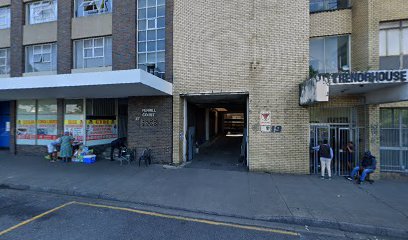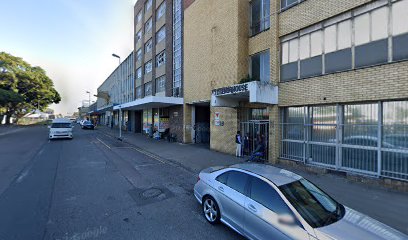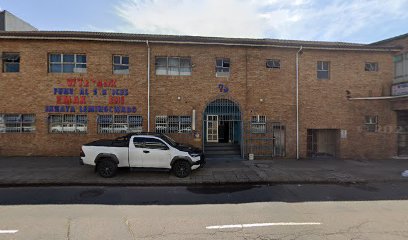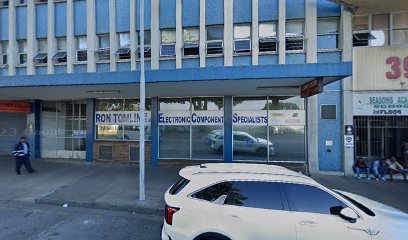
Ron Tomlin And Company (Pty) Ltd is a Electronic parts supplier establishment in Berea, Kwa-Zulu Natal, South Africa
Ron Tomlin & Co: Electronic Components Supplier in Berea, Kwa-Zulu Natal
Ron Tomlin & Co (Pty) Ltd operates as a focused supplier of electronic and electrical components and equipment, serving customers in Berea and across South Africa. As an independent provider, the company positions itself as a sourcing partner for clients who require specific items that may not be held in stock at any given moment. The business emphasises its ability to locate and deliver parts that are not readily available in its own inventory, offering a practical solution for projects with diverse or hard‑to‑find requirements.
From the available information, the core service offering centres on sourcing and supplying electronic components and electrical equipment. The emphasis is on accessibility and reliability in obtaining items that are not immediately in stock. This approach can be advantageous for businesses that handle maintenance, repairs, prototyping, or production work where downtime is costly and lead times for specialist parts need to be minimised by a trusted supplier with a broad network.
Customer experience appears to hinge on two practical strengths: responsiveness in locating missing items and a freight capability that extends across the Republic of South Africa. The ability to arrange freight “to anywhere in RSA” suggests a logistical model designed to support customers who operate on regional, national, or multi‑site scales. For organisations that manage projects across various locations, such a service can simplify procurement workflows and reduce inter‑regional delays when sourcing components from outside the immediate inventory.
The business communicates a straightforward value proposition for clients who encounter gaps in stock or specialised requirements. Rather than offering a fixed catalogue alone, Ron Tomlin & Co promotes itself as a partner capable of filling gaps by sourcing components and equipment that are not readily available. This model typically involves initial consultation to understand the exact specifications, followed by vendor negotiation, procurement, and arranging delivery. The focus remains on enabling customers to obtain the necessary parts without being constrained by in‑house stock limitations.
In terms of attributes that influence the customer journey, the company provides a contact channel through a dedicated email address and a phone number, enabling potential buyers to initiate requests and discuss project needs directly. While precise service level details, such as turnaround times or after‑sales support, are not explicitly stated, the combination of sourcing capability and nationwide freight indicates a pragmatic approach to procurement where speed and reliability are valued commodities for clients with time‑sensitive projects.
Typical job types or project categories that could align with the service offering include maintenance and repair of electronic systems, equipment upgrades, prototype development requiring specific components, and replacement parts for non‑stock items. Businesses operating in manufacturing, IT infrastructure, telecommunications, or consumer electronics may benefit from a supplier that can bridge stock gaps and deliver across South Africa. Although explicit industry classifications are not provided, the sourcing‑driven model is broadly applicable to any operation needing customised or hard‑to‑find parts.
Practical tips for customers planning to engage the service include: clearly documenting part specifications (part numbers, datasheets, packaging requirements, and any compatibility notes) to streamline the sourcing process; preparing a concise description of project timelines and delivery constraints to help coordinate freight; and understanding the delivery scope by confirming whether the required items can be sourced and how long delivery might take when parts are not in stock. Communicating any budgetary limits upfront can also assist in prioritising procurement options and negotiating lead times with suppliers.
Location and service area are implied through the company’s Berea base and the stated nationwide freight capability. Prospective clients in Kwa‑Zulu Natal and beyond can expect a procurement partner that aligns with regional business needs while offering the convenience of national delivery. The emphasis on sourcing unavailable items and enabling freight across RSA positions Ron Tomlin & Co as a practical option for organisations seeking dependable access to a broader range of electronic components and electrical equipment.
- Main services offered: sourcing and supplying electronic and electrical components and equipment not held in stock; nationwide freight within South Africa.
- Typical project types: repairs, maintenance, prototyping, and replacements requiring non‑stock or hard‑to‑find items.
- How requests usually work: client identifies required parts, the supplier sources the items, and delivery is arranged across RSA.
- Practical tips: provide precise specifications, clarify delivery deadlines, and discuss any budget constraints early to optimise sourcing and logistics.
Berea
Kwa-Zulu Natal
4001
South Africa
Sorry, no records were found. Please adjust your search criteria and try again.
Sorry, unable to load the Maps API.
Electronic parts supplier services in Berea, Kwa-Zulu Natal: a practical overview
In Berea, Kwa-Zulu Natal, electronic parts suppliers operate at the intersection of engineering reliability and local logistics. They serve a diverse clientele, ranging from hobbyists building small projects to manufacturers requiring steady access to components for production lines. The services offered typically reflect the needs of such communities: product sourcing, inventory management, technical assistance, and dependable delivery. The result is a network that emphasises availability, accuracy, and prompt support within the South African supply chain context.
A core service is procurement and sourcing of electronic components. Suppliers maintain stock of commonly used items such as resistors, capacitors, diodes, transistors, integrated circuits, connectors, wiring, and basic test equipment. They also handle more specialised items, including sensors, power components, connectors for circuitry, and hardware compatible with common national and international standards. Customers often rely on these suppliers for both small batches and larger requisitions, depending on production schedules or project needs. The ability to source multiple brands and variants helps engineers compare performance characteristics and price points before committing to a purchase.
Another important offering is advisory and technical guidance. Staff with domain knowledge can assist with part selection, compatibility checks, and basic troubleshooting. This support is particularly valuable for customers who are assembling prototypes, repairing equipment, or maintaining legacy systems. Guidance tends to focus on electrical specifications, pinouts, package types, voltage and current ratings, and tolerance considerations. While not a substitute for formal engineering design, informed recommendations can save time and reduce the risk of mismatched components in critical applications.
Inventory management and convenience are central to service delivery. Electronic parts suppliers often provide options for single purchases, bundled kits, or customised orders designed around a customer’s bill of materials. In Berea, where local businesses may require reliable lead times, the ability to reserve stock, maintain accurate invoices, and offer straightforward reordering processes contributes to operational efficiency. Some suppliers may offer consolidated purchasing services for businesses with recurring needs, helping clients streamline procurement and budgeting through consistent price structures and documented order histories.
Delivery and logistics form a practical consideration for customers in this region. Prompt local delivery within Berea and surrounding Kwa-Zulu Natal areas is commonly available, with options for courier-based delivery or scheduled pickup. Delivery reliability, packaging integrity, and order tracking are valued by engineers and technicians handling time-sensitive components. For larger or international orders, suppliers typically outline standard terms regarding shipping methods, estimated transit times, and compliance with applicable regulations. Clear communication about stock availability and expected delivery dates supports project planning and production schedules.
Quality assurance and return policies are addressed to varying degrees by different suppliers. Customers expect a reasonable standard of product authenticity and condition, particularly when procuring components used in critical or regulated environments. Practical considerations include checking for packaging integrity, verifying part numbers, and understanding warranty or return terms. In the Berea market, the emphasis remains on transparency, repeatable service levels, and straightforward problem resolution should issues arise with delivered items.
Operational realities in Kwa-Zulu Natal influence supplier practices as well. Local demand patterns, currency fluctuations, import controls, and regional distribution networks shape availability and pricing. Experienced suppliers maintain relationships with distributors and manufacturers to adapt to shifting demand, while ensuring compliance with South African regulations governing electronic components and related tooling. For customers, this translates into a practical, location-aware sourcing option that supports efficient project execution and steady component access.
Overall, electronic parts suppliers in Berea offer a practical blend of stock readiness, technical insight, convenient ordering, and reliable local delivery. By combining these elements, such suppliers support a wide range of projects—from rapid prototyping to ongoing manufacturing needs—while navigating the specific logistical and regulatory environment of Kwa-Zulu Natal.