
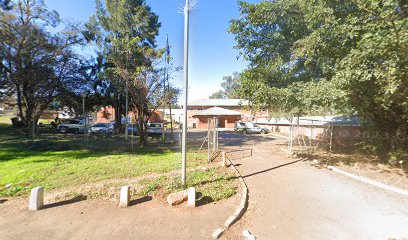
SAPS Camperdown Police Station is a State police establishment in Mpumalanga, KwaZulu-Natal, South Africa
Mpumalanga
KwaZulu-Natal
3720
South Africa
Sorry, no records were found. Please adjust your search criteria and try again.
Sorry, unable to load the Maps API.
State Police Services in Mpumalanga and KwaZulu-Natal, South Africa
State police services in Mpumalanga and KwaZulu-Natal are delivered through the national framework of the South African Police Service (SAPS), with provincial operations aligning to local needs and policing priorities. The emphasis is on safety, crime prevention, and the enforcement of laws across urban centres, rural communities, and busy transport corridors. The policing environment in these provinces reflects a mix of high-traffic areas, agricultural districts, and growing towns, each requiring proactive management of public order and crime risks.
From a customer perspective, the primary expectation is reliable response to incidents, accessible reporting channels, and visible policing that deters crime. In Mpumalanga and KwaZulu-Natal, officers typically engage in patrol duties that cover streets, townships, shopping districts, and major routes. The presence of uniformed officers, specialised units, and community liaison personnel aims to create a visible sense of security while facilitating swift intervention when emergencies arise.
Key services commonly provided include crime prevention through routine patrols, traffic management and road safety enforcement, emergency response to calls for help, and initial investigations into reported offences. The police services also handle public-order incidents, event policing, and the management of crowd control in suitable situations. Investigative work often follows standard procedures, with crime scene management, collection of evidence, and the pursuit of leads conducted by detectives within the provincial framework.
Another important aspect is the maintenance of law and order within communities. Officers engage in crime prevention programmes, school talks, youth outreach, and community safety partnerships. These activities help build trust and collaboration between the police and residents, contributing to faster reporting of crimes and improved information sharing. In many areas, police stations operate as central points for reporting incidents, obtaining information, and accessing support services such as victim assistance and referral networks.
Practical considerations for residents and visitors include understanding how reporting works and what to expect during a police response. In general, urgent matters should be reported by dialling the appropriate emergency number, with the expectation of a prompt on-site assessment or dispatch of appropriate personnel. For non-urgent concerns, citizens can visit local police stations or use official channels to file statements, lodge complaints, or request feedback on ongoing cases. Police procedures are designed to protect the rights of suspects and victims alike, while ensuring evidence is documented and processed in a lawful manner.
Beyond traditional policing, law enforcement in these provinces also involves collaboration with other agencies on matters such as traffic control at major intersections, enforcement against illegal mining or abalone poaching in coastal districts, and responses to environmental or public health concerns that intersect with public safety. Visible patrolling, traffic stops, and community engagement activities are commonly observed as part of routine policing efforts, reinforcing the perception of safety and deterrence.
In terms of access and scope, the state policing framework recognises the diverse geography of Mpumalanga and KwaZulu-Natal, spanning national parks, game reserves, towns, mining areas, and busy coastal belts. Officers are tasked with prioritising risk-based policing, allocating resources where crime trends indicate heightened need, and maintaining flexibility to respond to evolving crime patterns. For residents seeking assistance, the expected outcome is clear communication, timely intervention, and professional handling of the incident from initial contact through to follow-up and feedback where applicable.
Overall, state police services in Mpumalanga and KwaZulu-Natal function as a strategic part of national safety and security, balancing firm enforcement with community engagement. The objective remains to create safer environments by preventing crime, protecting lives and property, and fostering trust between the police and the communities they serve.