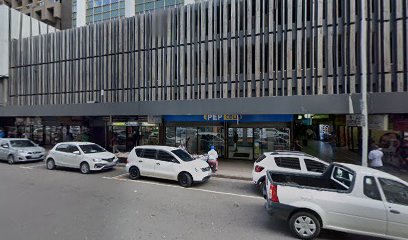
South African Police Service is a Police department establishment in Durban, KwaZulu-Natal, South Africa
South African Police Service (SAPS) – Police Department, Durban, KwaZulu-Natal: Services and Visitor Experience
The South African Police Service (SAPS) operates as the official police service for Durban, the wider KwaZulu-Natal region, and across South Africa. The SAPS website presents a broad suite of services aimed at crime prevention, public safety, and responsive support for the community. An outside observer notes a structured portal designed to guide residents and visitors to essential policing resources, with emphasis on accessibility through online tools and direct contact points.
Key services and resources highlighted by the SAPS include immediate reporting channels, stakeholder contacts, and access to public information. The site foregrounds emergency and reporting mechanisms such as Dial 10111 for urgent assistance and the MySAPS mobile application, which are positioned as primary tools for engaging with police services. In addition, there are dedicated channels for service interactions, including the SAPS Service Complaint Centre, as well as directories for Wanted Persons, Unknown Persons, and Missing Persons. These features indicate a framework intended to streamline case intake, tracking, and citizen liaison.
Public-facing information emphasises crime statistics and routine administrative processes. The site provides access to Crime Statistics, which offers situational awareness for residents and businesses, and to a Clearance Certificate service, signalling formal documentary procedures that may be required for employment, travel, or other legal processes. For victims and vulnerable groups, the site links to Family Violence, Child Protection and Sexual Offences (FCS) resources and Rape Crisis Centres, suggesting a recognised emphasis on safeguarding and specialised support within policing services.
From an experiential perspective, the Durban/KwaZulu-Natal user journey on the SAPS site appears to be organised around quick navigation to regional and national contacts. The portal’s structure encourages visitors to click on provincial links to obtain police station contact details, thereby simplifying the path from online inquiry to in-person engagement. This design choice aligns with a user expectation that local station information is essential for on-the-ground policing interactions, investigations, and service requests.
The site frequently references current operations and crime-fighting activity, exemplified by press-style updates on nationwide operations. Such updates demonstrate an emphasis on transparency and public communication about law enforcement outcomes, which can bolster community confidence and situational awareness, even for those researching SAPS Durban capabilities.
Typical job types or service categories that are implied by the content include general policing, criminal investigations, traffic law enforcement, victim support services, and public safety outreach. While the portal does not list private sector collaborations or paid service tiers, the presence of complaint channels, public crime data, and victim-services links suggests a broad, collaborative public policing model designed to respond to a wide range of urban safety concerns in Durban and the wider KwaZulu-Natal region.
- Main services offered
- Emergency and non-emergency reporting via Dial 10111
- Public access to MySAPS mobile application for reporting and updates
- Service Complaint Centre for public feedback and issue resolution
- Directories for Wanted, Unknown, and Missing Persons
- Access to Crime Statistics and Clearance Certificate services
- Specialist support via Family Violence, Child Protection and Sexual Offences (FCS) and Rape Crisis Centres
- Typical interactions
- Reporting a crime or incident
- Checking police station contact details for a local area
- Applying for a Police Clearance Certificate
- Accessing services for victims of violence and exploitation
- How requests usually work
- Use Dial 10111 for emergencies or direct station contact when available
- Utilise the MySAPS App for on-the-go reporting and updates
- Submit service complaints online and track progress through the SAPS portal
- Refer to provincial police station contacts for in-person assistance
Practical tips for customers visiting or contacting SAPS Durban include leveraging online resources to identify the correct provincial station contact details and using the MySAPS app to report non-urgent incidents or to monitor case status. Victims and witnesses can navigate to FCS resources and Rape Crisis Centres for specialised support, while those requiring formal documentation can access Clearance Certificates through the site. Given the lack of explicit opening hours on the general landing pages, visitors are advised to consult the specific police station contact details for local hours and arrangements prior to visiting in person. The website underscores public safety as a priority and positions SAPS Durban within a nationwide framework of active crime-fighting and community-facing services.
Durban
KwaZulu-Natal
Durban Central, Durban
South Africa
Sorry, no records were found. Please adjust your search criteria and try again.
Sorry, unable to load the Maps API.
Police Department Services in Durban, KwaZulu-Natal
Durban, a coastal city in KwaZulu-Natal, hosts a comprehensive array of policing services aimed at safeguarding residents, visitors, and businesses. The policing landscape combines local station duties with provincial and national policing structures to address crime prevention, emergency response, and community safety. The emphasis is on accessibility, rapid response to incidents, and ongoing community engagement to deter crime and improve public confidence.
Residents can expect incident response for immediate threats or emergencies, including road traffic accidents, violent crime, domestic disturbances, and missing persons. Police in Durban prioritise prompt dispatch to distressed situations, followed by investigations that may involve collecting evidence, interviewing witnesses, and coordinating with other law enforcement units. While not every case reaches court, the aim is to establish a clear factual record and to pursue appropriate enforcement actions in line with South African law.
Key services commonly provided include crime prevention initiatives, regular patrols in high-traffic and high-risk areas, and visible policing to reassure the public. Community safety is often reinforced through partnership programmes that engage with neighbourhood watches, students, business owners, and local associations. These efforts seek to deter criminal activity through presence, information sharing, and proactive problem-solving rather than relying solely on reactive measures.
Investigations form a central component of the policing remit. In Durban, investigations cover a range of matters such as property crime, organised crime, financial fraud, and serious offences. Investigative work typically involves gathering documentary and forensic evidence, tracing suspects, and following procedural steps designed to safeguard the integrity of the process. The tempo of investigations can vary depending on the nature of the case, available resources, and inter-agency cooperation.
Public safety programmes are supported by traffic policing aimed at reducing road incidents, enforcing traffic laws, and managing congestion in busy urban corridors. Traffic officers may conduct routine stops, assist with accident scenes, and collaborate with other departments on road safety campaigns. Educational outreach often accompanies enforcement, helping motorists understand regulations and safe driving practices.
Durban’s police services also extend to specialised units that handle issues such as crowd management during public events, maritime safety along the coast, and the protection of vulnerable populations. While the availability of specific units can fluctuate, the overarching objective remains to tailor policing responses to local circumstances, balancing enforcement with accountability and respect for rights.
Practical considerations for members of the public include knowing the correct channels to report incidents, the expected levels of service, and how information is recorded and used. In emergencies, dialling the appropriate emergency number should be the first step, followed by a clear description of the incident. For non-urgent matters, the local police station or prescribed hotlines provide a route for reporting, requesting advice, or initiating investigations. It is beneficial to retain any reference numbers, witness details, and relevant documentation to support follow-up inquiries.
For businesses operating in Durban, collaboration with the police can enhance security and rapid response capabilities. Business owners and managers are often advised to implement security measures, maintain open lines of communication with local stations, and participate in community safety forums. While policing approaches are designed to be impartial and law-abiding, the practical outcome depends on accurate information, timely reporting, and constructive cooperation between the public and policing authorities.