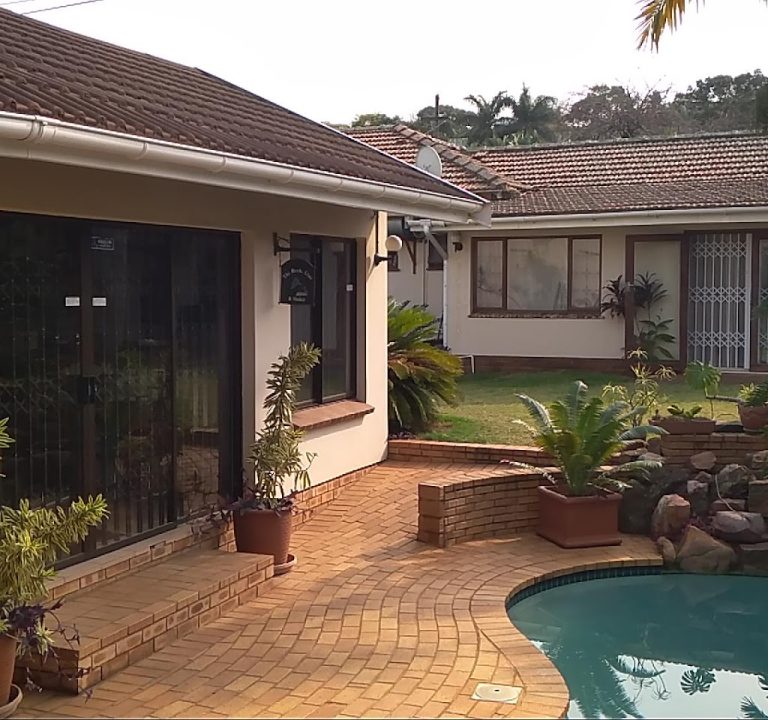
Structured Solutions is a Internet service provider establishment in Durban North, KwaZulu-Natal, South Africa
Structured Solutions: Internet and Networking Services in Durban North, KwaZulu-Natal
Structured Solutions operates from Durban North, KwaZulu-Natal, offering a specialised approach to home and small-office wiring and networking. The company emphasises a structured wiring philosophy, bringing all communications cabling into a single central panel and distributing signals to individual rooms through neat, room-specific wall plates. This design aims to create a cohesive, scalable system rather than a patchwork of separate connections scattered around the property.
The core service proposition centres on the installation and realisation of a robust, low‑voltage communications network within the home. The level 1 offering described on the website involves embedding advanced wiring into the walls and establishing a central distribution hub that resembles a power distribution board for low voltage systems. This centralisation is promoted as the foundation for flexible in-home connectivity, enabling multitier capabilities such as telecommuting from any room with multiline phone access, and the ability to access or control various electronic sources from different televisions or rooms in the house.
In practical terms, the firm positions itself as a provider of structured networking and multimedia connectivity. The services span several interrelated areas:
- Networking – The company highlights a three‑pillar approach to a solid network foundation: reliable problem‑solving via a data hub, high‑quality cabling, and dependable connections at wall plates. The supplied cabling is described as capable of supporting speeds up to 1000 Mbps. Typical outcomes include internet connection sharing across multiple PCs, file sharing, and resource sharing for devices such as scanners, printers, and security cameras spread throughout the home.
- Telephone wiring – Four‑line telephone capabilities are offered over Cat5e (the same cabling used for Ethernet), with advantages such as reduced interference due to twisted pairs, helping to deliver clear communication. The system is designed to support multiple numbers and lines across different rooms, bringing convenience and organisation to household communications.
- Television and AV wiring – TV wiring is described as carrying signals from antennas, satellite services, DVD players, and CCTV to any room. The emphasis is on maintaining high signal quality through quad‑shielded cabling and, where appropriate, RF amplification. The and approach is to deliver distinct cables to each room rather than relying on splitters, which the provider notes can degrade quality.
Requests for work are framed as project‑based engagements, with an emphasis on delivering a centralised, well‑organised wiring system that treats the home’s communications as a single, cohesive network. The site explains the value of avoiding splitters, favouring individual, dedicated cabling runs to sustain consistent signal quality across rooms and devices. This suggests a focus on predictable performance and easier future troubleshooting.
In terms of user experience, the information presented places importance on clarity of outcomes and ease of use. The central idea is that a well‑designed structured wiring system simplifies future changes and troubleshooting. The firm advocates easy isolation of cables for testing, which can assist in diagnosing faults without disturbing the broader network. This approach aligns with a practical, problem‑solving ethos designed to minimise downtime and provide reliable access to resources throughout the property.
The organisation provides contact details for two named personnel, located at the same Durban North address: Jarred Bremner and Brent Miller. The contact information emphasises direct communication channels for consultation and planning, which may help potential customers discuss requirements, review proposed layouts, and understand installation timelines. The site also indicates the company’s long‑standing presence (copyright notes reference 2009), suggesting established local experience in the area.
Typical job types implied by the content fall within residential and small‑office contexts where multiple rooms require integrated access to the internet, devices, multimedia sources, and telephony. Projects would likely involve assessing current cabling, designing a central distribution panel, routing cables to wall plates in each room, and implementing the necessary cabling to support high‑quality signal transmission and scalable networking capabilities.
Practical tips for prospective customers include prioritising a single centralised wiring point, requesting a formal layout plan that shows cable routes and wall plate positions, and asking for a demonstration of how the network will be able to share resources such as printers and storage devices. When planning, consider future needs such as higher internet speeds or additional devices, and solicit a written outline of the proposed components, including the types of cables used and the rationale for avoiding splitters. The Durban North base also serves surrounding KwaZulu‑Natal areas, which may be relevant for customers located within reachable distance seeking personalised, local service.
Durban North
KwaZulu-Natal
4051
South Africa
Sorry, no records were found. Please adjust your search criteria and try again.
Sorry, unable to load the Maps API.
Internet service provider options and expectations in Durban North, KwaZulu-Natal
Durban North, a coastal suburb in KwaZulu-Natal, offers a mix of internet service provider (ISP) options that cater to residential households, small businesses, and remote workers. The landscape generally includes fibre connections, fixed wireless services, traditional copper networks, and satellite solutions, each with its own strengths and limitations. Prospective customers can expect a focus on reliable connectivity, scalable speeds, and local support channels designed to address regional network conditions.
Fibre remains the most common high-speed option for well-serviced addresses in Durban North. Where available, fibre delivers higher and more consistent speeds, improved upload capacity, and lower latency compared with copper-based services. Installation typically requires a technician visit to confirm line availability, followed by a notifiable period for activation. In-fibre services often support multiple simultaneous devices, smart home systems, video conferencing, streaming, and small office needs. However, availability is dependent on physical infrastructure, and some properties may require alternative solutions if fibre reach is limited.
Fixed wireless is another prevalent solution in the area, leveraging line-of-sight access to towers or distribution points. This can provide flexible speeds and faster deployment when fibre is not accessible at a premise. Fixed wireless services are influenced by factors such as distance to the wireless node, weather conditions, and potential radio interference. For many households and smaller businesses, fixed wireless presents a practical compromise between cost, speed, and installation lead times, especially in suburban environments like Durban North.
Copper-based connections, including ADSL and VDSL, are still encountered in portions of the suburb and surrounding neighbourhoods where fibre and wireless reach are limited. These services can offer adequate performance for general web browsing, email, and streaming at modest speeds, but they are more susceptible to distance from the exchange, line quality, and encapsulated with lower symmetrical bandwidth. Customers should be prepared for potential slowdowns during peak usage or adverse weather events, and may face slower upgrade paths when compared with fibre or fixed wireless options.
Satellite internet serves as a niche solution for properties that do not have reliable terrestrial access. Satellite connectivity can provide coverage in remote locations or where other services are not feasible. The trade-offs typically include higher latency, data caps or throttling practices, and often a higher monthly cost. Satellite can be a dependable fallback for essential connectivity, particularly where continuous back-up power supplies are in place.
When selecting an ISP in Durban North, several practical considerations emerge. Installation timelines can vary based on the chosen technology, existing infrastructure, and provider workloads. Service level expectations such as uptime guarantees, response times for support, and maintenance windows are commonly outlined in service agreements. Data policies, including fair-use considerations and potential throttling during peak periods, should be reviewed to avoid unexpected limitations. Providers may offer business-grade options with enhanced SLAs, higher quality of service, and dedicated account support for small enterprises and home offices.
Reliability is influenced by regional factors such as power stability and network resilience. Customers might find it prudent to consider uninterruptible power supplies for modems and routers, along with backup connectivity arrangements for critical operations. Customer support is frequently a deciding factor, with many services offering local technical assistance and remote diagnostics to minimise downtime.
In summary, Durban North customers can access a spectrum of internet services ranging from high-speed fibre to fixed wireless, with copper and satellite as alternatives where appropriate. Understanding local availability, projected usage, and reliability needs helps in selecting an arrangement that aligns with daily routines, work-from-home requirements, and business objectives.