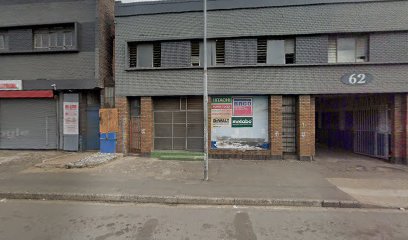
T & S Surface Technologies is a Sandblasting service establishment in Durban, KwaZulu-Natal, South Africa
Durban
KwaZulu-Natal
4052
South Africa


Sorry, no records were found. Please adjust your search criteria and try again.
Sorry, unable to load the Maps API.
Sandblasting Services in Durban, KwaZulu-Natal
Durban, located on the KwaZulu-Natal coast, presents a dynamic setting for sandblasting work due to its humid subtropical climate, salty maritime air, and varied industrial activities. Sandblasting services in this region typically cover preparation, cleaning, and restoration tasks across construction, manufacturing, shipping, and maintenance sectors. The scope is broad, encompassing industrial components, structural steel, concrete surfaces, and marine equipment, with attention to surface integrity and durability in coastal conditions.
A standard project begins with a careful assessment of the surface to determine the appropriate blasting medium, pressure, and technique. Materials such as steel, stainless steel, aluminium, concrete, timber, and fibreglass may be treated, each requiring specific conditioning to achieve the desired surface profile. The chosen method aims to remove rust, old coatings, contaminants, corrosion products, and any imperfections that could hinder subsequent finishing or protective coatings. In coastal environments, particular emphasis is placed on achieving a stable, uniform roughness that ensures good adhesion for primers and topcoats, while minimising dust and debris dispersion.
Common blasting methods include abrasive blasting, where materials such as mineral grit or recycled media create the necessary micro-abrasion on the surface. Glass bead and plastic-media blasting offer gentler alternatives for delicate surfaces, providing a smoother finish and reduced risk of dimensional change. In some projects, high-pressure water jetting or hydro-blasting may be employed as a complementary or alternative approach, especially for concrete cleaning or intricate details where dust control is essential. The choice hinges on the surface material, the environment, and the end-use requirements.
Practical considerations for clients include environmental and safety compliance, dust suppression, containment measures, and waste management. Blast cabinets or local containment may be used to protect surrounding areas, particularly in busy urban or industrial zones. Personal protective equipment is standard for operators, with eye protection, respiratory protection, hearing protection, and chemical resistance for handling coatings and cleaning agents. Post-blasting steps involve thorough debris removal, surface cleaning, and an assessment of surface profile to verify that the target roughness has been achieved before coating or sealing begins.
In Durban, corrosion protection is a key consideration, given exposure to heat, humidity, and saline air. Following blasting, surfaces often receive primer systems and protective coatings designed to resist moisture and environmental exposure. The selection of coatings varies by substrate and application—steel structures, bridges, ships, and offshore equipment each have distinct requirements for adhesion, curing, and durability in tropical coastal conditions. Proper surface preparation is frequently the most cost-effective factor in extending the lifespan of protective systems in this region.
Clients typically look for reliability, timeliness, and clear communication throughout a project. Scheduling around weather patterns, humidity levels, and coastal restrictions helps ensure efficient operation and optimal results. For larger or mobile operations, on-site blasting can reduce transport needs, while facility-based services may offer controlled environments for more complex tasks. When planning a sandblasting project in Durban, it is prudent to discuss anticipated surface outcomes, required post-treatment steps, and ongoing maintenance needs to maximise the longevity of any protective coatings.
Ultimately, sandblasting services in Durban address the needs of diverse clients who require effective surface preparation to restore functionality, improve aesthetics, or extend the life of assets. The approach combines technical knowledge of materials, practical handling of coastal conditions, and adherence to safety and environmental guidelines to deliver reliable, durable results.