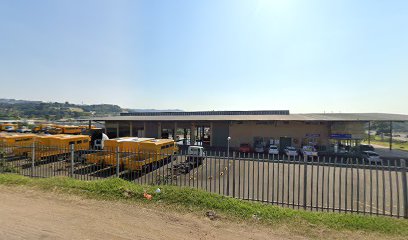
Tata International Durban is a Distribution service establishment in Durban, KwaZulu-Natal, South Africa
Tata International Durban: Distribution services and customer experience overview
From a business perspective, Tata Motors in South Africa presents a comprehensive distribution support framework designed to keep vehicle fleets operational and productive. The organisation emphasises a widespread network, in-house expertise, and access to Tata Genuine Parts, all geared towards delivering reliable supply chain support for transport operations in Durban, KwaZulu-Natal and beyond. The emphasis is on ensuring those involved in distribution activity can rely on vehicles and parts that minimise downtime and maximise uptime.
Key services underpinning the distribution offering include a robust after-sales support structure and a nationwide service footprint. The company positions its service proposition around ready access to authentic spares, a critical factor for distribution fleets that depend on predictable vehicle performance and minimal unscheduled maintenance. This commitment to genuine parts aims to reduce the risk of component failures and to extend the useful life of vehicles deployed in distribution tasks such as linehaul, regional delivery, and urban last-mile operations.
In terms of service philosophy, the provider highlights a customer-centric approach built on care, trust, and ongoing support. The service framework is designed to respond to breakdowns with urgency, ensuring that fleets can recover quickly from unexpected issues. The overarching goal is to keep distribution activity smooth and efficient, enabling drivers and dispatch teams to stay focused on meeting delivery windows and service level agreements.
One of the notable commitments is a structured resolution timeline for customer concerns. Through initiatives such as Tata Zippy, the organisation aims to address a high proportion of customer complaints within a defined timeframe. This approach signals an intent to minimise disruption to distribution schedules and to provide reliable, timely communication during service events or aftercare processes.
The distribution-facing experience is complemented by the practical advantages of the network. A widespread network means that service and parts availability are not limited to a single location, which benefits Durban-based operators by offering closer access to trained technicians and genuine spares. The in-house expertise across the service ecosystem supports diagnostic and maintenance work, reducing the need for external referrals and contributing to faster turnarounds when servicing fleet vehicles.
For customers seeking reassurance about vehicle performance, the emphasis on authentic Tata Genuine Parts is central. This focus supports predictable performance and easier scheduling of maintenance milestones, an important consideration for fleets that rely on consistent miles, predictable fuel economy, and dependable reliability in busy distribution corridors.
Typical job types within the distribution category, as reflected by the manufacturer’s product and service orientation, include heavy, medium, and light commercial vehicle utilisation for freight and distribution tasks. Vehicles highlighted on the brand’s official pages cover a spectrum of commercial truck formats, balancing load capacity with efficiency and driver comfort. While specific Durban-based job descriptions are not listed on the central site, the breadth of vehicle options suggests applicability to regional distribution needs such as urban intracity deliveries, regional trunk routes, and warehouse-to-customer logistics.
How requests usually work, based on the available information, involves engaging with the dealer network and service teams through established channels. The presence of a dealer locator indicates that local access points exist to initiate service, book inspections, obtain parts, and arrange maintenance. The ordering of parts and service support follows the broader Tata Motors model of pairing operational needs with accessible specialists and reliable supply chains, aiming to reduce downtime and keep distribution activity on track.
Practical tips for customers planning or operating in Durban’s distribution landscape include: keeping an up-to-date service schedule aligned with manufacturer intervals to capitalise on the genuine parts programme; using the dealer locator to identify the closest service point for quicker access to maintenance and parts; and prioritising proactive maintenance to minimise the risk of mid-route breakdowns, particularly for high-mileage fleets. Maintaining a clear line of communication with service teams can help secure faster responses during unexpected breakdowns and while awaiting parts replenishment.
Business hours and precise local availability are not specified on the central site, but the emphasis on a wide network and rapid response suggests that service support is designed to be accessible within standard business hours and within regional operation hours typical of commercial vehicle networks. The Durban area, as part of KwaZulu-Natal, benefits from the broader South African distribution footprint, which supports ongoing parts supply, service capability, and technical guidance for fleets engaged in regional distribution and B2B logistics. This combination of coverage, authentic parts assurance, and a customer-centric service ethos contributes to a dependable distribution experience for operators in Durban and the surrounding region.
Durban
KwaZulu-Natal
3608
South Africa
Sorry, no records were found. Please adjust your search criteria and try again.
Sorry, unable to load the Maps API.
Distribution service provision in Durban, KwaZulu-Natal: an overview for businesses
In Durban, KwaZulu-Natal, distribution services encompass the range of activities that move goods from suppliers to customers through organised, logistics‑driven processes. These services are designed to support businesses across multiple sectors, including retail, manufacturing, pharmaceuticals, perishable commodities, and industrial supplies. The emphasis is on reliability, visibility, and timely delivery, with attention paid to both domestic and cross‑border needs within southern Africa.
Clients engaging distribution services in this region can expect a combination of warehousing, order fulfilment, and transportation management. Warehousing typically involves secure storage facilities with controlled conditions where appropriate, stock control systems to monitor inventory levels, and coordinated receiving and put‑away processes. Order fulfilment focuses on picking accuracy, packing integrity, and efficient dispatches to meet customer expectations. Transportation management covers route planning, carrier selection, and the coordination required to move goods from distribution centres to end destinations, often including last‑mile delivery to commercial addresses or consumers.
Durban’s role as a major port city and economic hub influences the character of distribution services. Proximity to the Durban harbour supports import and export flows, while inland connections to major towns and cities across KwaZulu‑Natal and neighbouring provinces enable regional coverage. Businesses may choose providers that offer multi‑modal capabilities, enabling road and rail movement where appropriate, as well as the option to consolidate shipments for efficiency. The regional climate, with high humidity and seasonal rainfall, can also shape handling practices for sensitive goods such as foodstuffs, pharmaceuticals, and electronics, necessitating suitable storage and transit conditions.
Practical considerations for organisations seeking distribution services in Durban include assessing the scalability of warehousing space, the robustness of inventory management systems, and the capability to provide real‑time visibility. Transparency around stock accuracy, cycle counting, and reporting helps customers plan production, marketing campaigns, and seasonal demand. Providers frequently offer value‑add services such as order consolidation, kitting, and returns processing, which can streamline operations for retailers and manufacturers alike. Compliance with transport and trade regulations, security measures, and adherence to national and municipal bylaws are essential aspects of dependable service delivery.
When selecting a distribution partner in the Durban area, several criteria tend to be prioritised. Reliability and on‑time delivery performance are commonly weighed heavily, along with the ability to handle cross‑docking, cross‑border shipments, and specialised handling for fragile or high‑value items. Proximity to key markets, access to well‑maintained fleets, and the capacity to manage peak periods are also important. Environmental and sustainability considerations are increasingly influential, with some clients seeking providers that optimise routes to reduce emissions and employ energy‑efficient storage solutions. Communication practices, including proactive exception management and clear escalation protocols, contribute to smoother operations and fewer disruptions.
For businesses new to Durban’s distribution landscape, it is prudent to clarify service boundaries and timelines. Typical arrangements involve service levels tied to agreed lead times, inventory turn expectations, and defined responsibilities for freight insurance, loading and unloading, and risk transfer points. Depending on the complexity of the supply chain, a distribution partner may coordinate with suppliers, third‑party logistics providers, and transporters to deliver end‑to‑end solutions, or operate as a dedicated facility supplying multiple customers within a shared environment. In all cases, the focus remains on accuracy, speed, and cost‑effectiveness within the unique commercial ecosystem of KwaZulu‑Natal.
Ultimately, Durban’s distribution services aim to provide a dependable bridge between suppliers and customers, balancing efficiency with flexibility to accommodate changing market demands. By combining strategic warehousing, disciplined inventory control, and coordinated transportation, distribution partners help regional businesses maintain steady supply lines, support customer satisfaction, and sustain competitive operations in a dynamic southern African market.