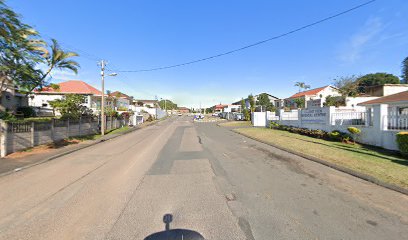
The Kenmont School is a High school establishment in Durban, KwaZulu-Natal, South Africa
Durban
KwaZulu-Natal
4052
South Africa

Sorry, no records were found. Please adjust your search criteria and try again.
Sorry, unable to load the Maps API.
Overview of High School Services in Durban, KwaZulu‑Natal
In Durban, KwaZulu‑Natal, high school education is delivered through a mix of public and independent institutions that cater to a diverse urban and suburban population. This sector embraces a broad spectrum of services designed to support learners from the late preteen years through the completion of secondary schooling, commonly associated with the Senior Certificate or equivalent qualifications. Across the city, families can expect schools to offer structured academic programmes, supportive pastoral care, and a range of enrichment activities aligned with local educational standards and community expectations.
Academic provision typically centres on core subjects such as languages (often English and one or more additional languages), mathematics, sciences, social studies, and practical subjects depending on the school’s emphasis. The curriculum generally aligns with national and provincial guidelines, including assessment requirements and examination preparation. While the exact subjects and elective options vary between institutions, Durban high schools commonly provide guidance on subject choice, progression routes, and ties to higher education or vocational pathways. The emphasis is on developing literacy, numeracy, critical thinking, and problem-solving skills that can support further study or skilled employment.
Pastoral and learner support services form a central pillar of Durban high schools. Counselling, study skills development, and wellbeing programmes are designed to assist learners in navigating adolescence, managing examinations, and planning post‑school options. Special education needs, where required, are typically accommodated through dedicated support teams or referral to appropriate services, ensuring inclusive access to learning opportunities within the regular school environment. In addition, many schools implement robust supervision and conduct policies to foster a safe, respectful, and orderly learning atmosphere.
Extra‑curricular activities are a notable feature in Durban’s high schools and often include sports, performing arts, debating, science clubs, and community service initiatives. Such activities are regarded as valuable supplements to classroom learning, offering avenues for leadership development, teamwork, and personal growth. Transport arrangements, uniform policies, and after‑care provisions are common considerations for families, particularly given Durban’s urban, peri‑urban, and rural perimeters. Some institutions may offer on‑site meals or partnerships with local providers to support students throughout the day.
Practical considerations inform the day‑to‑day experience of attending a high school in Durban. Location and accessibility influence travel times and safety, with convenient bus routes and train links benefiting many learners. Uniforms and prescribed materials are typical expectations, and schools often provide guidance on purchase lists and recommended stationery. While fees vary considerably between public and independent schools, prospective families are advised to inquire about what is included in costs, such as enrichment activities, textbooks, or transport subsidies. Language of instruction commonly centres on English, with additional language options reflecting regional priorities and school capacity.
Admission and progression practices follow standard local patterns, including matriculation routes at the end of Grade 12 and the assessment of learners for suitable subject choices and pathways. Parents and guardians should expect schools to offer clear communication about timetable structures, examination calendars, and assessment criteria. While the exact framework may differ between institutions, Durban high schools generally strive to provide transparent information and a supportive environment that helps learners achieve academically and prepare for the next stage of schooling or employment.
- Structured academic programmes across core and elective subjects
- Pastoral care, guidance, and wellbeing support
- Extra‑curricular activities spanning sports, arts and clubs
- Transport logistics, uniforms, and daily logistics consideration
- Career guidance and preparation for further study or vocational routes