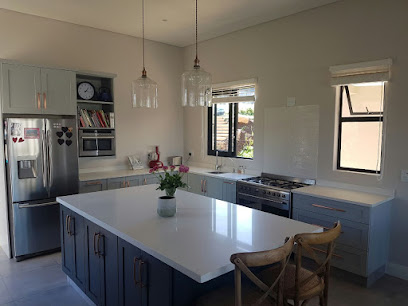
The Kitchen House is a Kitchen furniture store establishment in Durban, KwaZulu-Natal, South Africa
The Kitchen House: Custom Designed and Built Kitchens in Durban, KwaZulu-Natal
Established in 1997, The Kitchen House operates as a family‑owned business specialising in the design, manufacture and installation of high‑quality kitchen solutions. Based in the Upper Highway area, the company positions itself as a full‑service partner capable of turning client concepts into finished products that enhance both living spaces and daily living experiences. The emphasis is on bringing innovative designs to life through a tightly controlled manufacturing process and dedicated installation teams.
Core services focus on the full lifecycle of kitchen projects. The design phase benefits from experienced consultants and real‑time 3D design technology, enabling clients to visualise concepts as they are developed. This approach helps align expectations with practical realities, ensuring the proposed layouts are functional, ergonomic and tailored to individual needs. The emphasis on design is complemented by hands‑on manufacturing capabilities housed in a personal factory, which supports in‑house production and reduces reliance on external suppliers.
The kitchen projects typically follow a three‑stage workflow: design, manufacture and install. The design stage prioritises flow, ergonomics and usability, with an aim to harmonise aesthetic aims with practical requirements. By controlling the manufacturing process in‑house, The Kitchen House seeks to maintain consistent quality across all components and finishes. Installation is handled by a dedicated in‑house fitting team, which helps minimise delays and ensures that workmanship meets the standards expected by clients and reflected in the company’s portfolio.
In terms of style and capability, The Kitchen House showcases a range of offerings that span classic, contemporary, modern and bespoke kitchen environments. The portfolio highlights an ability to craft unique solutions that suit varying budgets without sacrificing function or design intent. Customer feedback publicly referenced in the site highlights professionalism, affordability and adherence to project timeframes, with clients noting a smooth renovation experience and staff going “above and beyond” standard expectations.
From a customer experience perspective, the process is designed to be informative and collaborative. The use of 3D design tools allows clients to engage with the evolving concept in real time, which can reduce ambiguity and help manage revisions before production begins. The combination of on‑site design input, in‑house manufacturing and a dedicated installation crew is positioned to streamline the transition from concept to finished kitchen, aiming to deliver value and satisfaction through quality craftsmanship.
Typical project types are aligned with bespoke residential kitchens, with an emphasis on functional layouts and ergonomic considerations. The business’s approach is to design around client needs and budgets while maintaining a focus on quality and purpose. This makes The Kitchen House a potential partner for homeowners undertaking kitchen renovations or new builds who require integrated design, manufacturing and installation capabilities in a single, coordinated service.
Operational details and practical tips for customers include planning around design timelines and lead times, given the coordination required between design, manufacturing and installation phases. It is advisable to begin with a clear brief that captures space measurements, preferred finishes, storage requirements and lighting considerations. Clients should consider sharing inspiration imagery and functional priorities early in the process to facilitate accurate 3D visualisation and efficient production planning.
Geographically, the business is rooted in the Durban region of KwaZulu‑Natal, with a footprint centred in the Upper Highway area. While specific service areas within KwaZulu‑Natal are not enumerated, the company presents itself as a local partner capable of handling projects for residential clients seeking customised kitchen environments with an emphasis on integrated design and fabrication.
- Main services offered: design consultation, 3D visualisation, in‑house manufacturing, and installation of customised kitchens.
- Typical job types: bespoke residential kitchens, design‑led renovations, and contemporary to classic kitchen interiors.
- How requests usually work: initial design consultation, real‑time 3D modelling to illustrate concepts, in‑house production, followed by professional installation by in‑house fitters.
Practical tips for customers include bringing accurate space measurements and noting any fixed appliances or plumbing constraints, considering a preferred material and finish early to streamline the design process, and budgeting for the complete project timeline from design through to installation. Prospective clients in Durban and the surrounding KwaZulu‑Natal area can expect a locally based service that emphasises personal attention, controlled production, and in‑house installation to help ensure outcomes align with initial concepts and practical needs.
Durban
KwaZulu-Natal
3610
South Africa
Sorry, no records were found. Please adjust your search criteria and try again.
Sorry, unable to load the Maps API.
Durban Kitchen Furniture Stores: Services and Practical Considerations
In Durban, KwaZulu-Natal, kitchen furniture stores offer a range of services designed to assist homeowners and developers in creating functional, aesthetically pleasing cooking spaces. These establishments typically operate as design partners from the earliest concept through to installation, delivering tailored solutions that reflect local living patterns, climate, and architectural styles. While offerings vary by retailer, several core services are commonly available to customers seeking contemporary, durable, and moisture-conscious kitchen furnishings.
Consultation and design planning sit at the heart of the process. Clients can expect initial consultations to outline space constraints, storage requirements, and preferred finishes. Designers often discuss workflow, appliance integration, lighting, and ergonomics to ensure the layout supports practical daily use. Detailed measurements are taken, and the information gathered informs the development of a practical layout that maximises cupboard space and work surfaces within the available footprint.
Material and finish options are a focal consideration. Durban dealers typically present a choice among laminates, melamine, veneer, solid timber, and moisture-resistant composites. Given the humid coastal climate, emphasis is placed on materials that withstand high humidity and exposure to steam. Finishes may range from modern matte and high-gloss options to timber looks, with attention paid to edge-banding, durability, and ease of cleaning. Surfaces are commonly selected to complement other rooms, while incorporating local preferences for colour and texture.
Customisation and project scope are important elements. Many stores can adapt standard cabinet configurations to fit unusual room shapes, alcoves, or open-plan layouts. Customers may request specialised storage solutions such as pull-out pantries, optimum corner solutions, integrated spice racks, and soft-close hinges or drawer systems. Custom heights, paneling, and feature details are often negotiable, enabling a cohesive kitchen that aligns with existing décor and architectural features.
Delivery, installation, and commissioning are addressed with practical scheduling. Delivery typically includes careful handling to avoid damage, with options for widening doorways, manoeuvring through confined spaces, and coordinating with appliance deliveries. Installation services may cover cabinet assembly, fixing units to walls, aligning doors and drawers, installing worktops, and fitting sinks, taps, and integrated appliances. Some retailers partner with trusted tradespeople for electrical, plumbed, or gas connections to ensure compliance and safety in line with local regulations.
Project management can extend beyond simply supplying units. Stores often provide a turnkey approach that coordinates ordering, manufacturing lead times, and installation windows. Customers benefit from a single point of contact who tracks progress, communicates schedule changes, and manages any post-installation adjustments. Aftercare may include dust removal, final checks, and guidance on warranty terms and maintenance routines to prolong the life of the kitchen furniture.
Practical considerations commonly highlighted for Durban projects include climate resilience and water resistance, especially in coastal residences or homes with high humidity levels. Stores commonly advise on moisture-resistant finishes, proper ventilation, and the use of durable hardware designed to withstand regular daily use. Local service providers frequently discuss lead times, delivery windows, and the impact of regional supply networks on availability. As a result, customers can anticipate a smooth workflow that minimises disruption to daily life and ensures a durable, easy-to-clean kitchen environment.
In summary, kitchen furniture stores in Durban offer a collaborative design-and-delivery experience that blends practical functionality with stylistic choices suitable for KwaZulu-Natal homes. From initial consultation through to installation and aftercare, the emphasis remains on delivering customised storage solutions, reliable fittings, and finishes that stand up to Durban’s climate and lifestyle.
- Design consultation and space planning
- Material and finish selection
- Customisation of cabinet layouts and storage solutions
- Delivery, installation, and commissioning
- Project management and aftercare guidance