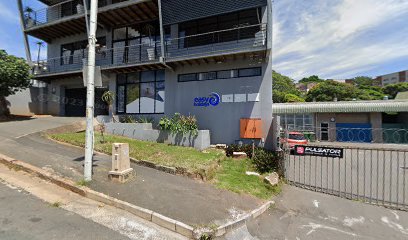
Towa Data Systems is a Software company establishment in Berea, Kwa-Zulu Natal, South Africa
Towa Data Systems: Software and Hardware Solutions for Retail and Hospitality in Kwa-Zulu Natal
Overview. Towa Data Systems positions itself as a long-standing provider of Point of Sale (POS) software and related hardware designed to support retail and hospitality businesses. With over a quarter of a century of experience showcased on its platform, the company emphasises reliable, intuitive software coupled with practical hardware options to streamline in-store transactions and back-office operations. The organisation highlights a cohesive approach where POS software and cloud back-office tools work in tandem to improve efficiency, reporting, and customer experiences.
Core software offering. The primary software focus centres on robust POS capabilities that are tailored to the needs of retail and hospitality environments. The software is described as enabling memorable customer experiences and seamless in-store sales, with features aimed at speeding transactions and improving service delivery. In addition to the POS front end, Towa provides a cloud back-office software suite designed to keep operations in sync. This back office includes functionality such as employee scheduling and sales analytics, enabling managers to monitor performance, track labour costs, and dissect sales data to inform strategic decisions. The combined software solution is pitched as a platform for business optimisation, helping operators analyse every facet of day-to-day activity.
Flexible rental model. A notable aspect of Towa’s offering is its fixed-cost rental structure. All software packages are available on a rental basis, with indicative pricing starting from R999 per month. This arrangement is presented as an accessible option for businesses with limited upfront capital, allowing customers to deploy comprehensive POS and back-office tools without significant initial outlay.
Hardware partnerships and in-store integration. Towa positions itself as a one-stop solution for both software and hardware needs. The company notes a partnership with Senor Tech since 2009, highlighting an all-in-one touch POS system designed for ease of use and maintenance. The hardware ecosystem includes peripherals such as printers, scanners, scales, video displays, and menu boards, underscoring a focus on reliability, convenience, and straightforward after-sales support. The hardware offering complements the software by delivering a cohesive, easy-to-integrate POS environment suitable for busy retail or hospitality settings.
Service delivery and customer experience. The vendor emphasises a consultative approach, with specialists in retail and hospitality available to discuss business requirements, provide demonstrations, and answer questions. This emphasis on expert guidance suggests a practical, hands-on engagement model aimed at ensuring that customers select a solution aligned with their operational needs. The combination of software demonstrations and hardware compatibility checks is presented as a pathway to tangible operational improvements and smoother customer interactions at the point of sale.
Typical job types and industries. While the information focuses on the software and hardware capabilities, the target industries are explicitly retail and hospitality. This indicates typical engagements involve configuration of POS systems for shops, cafés, quick-service venues, and other customer-facing outlets that require reliable transaction processing, inventory management, and performance analytics. The cloud back-office component is positioned to support roster management and sales analysis across these sectors, enabling managers to optimise staffing and monitor key metrics.
Request process and engagement flow. The product pages imply a straightforward engagement process: a prospective customer would assess software and hardware needs, request a demonstration or information, and consider rental options. The availability of a fixed-cost rental model suggests a move from exploration to deployment with clear budgeting. For on-site or remote demonstrations, the language indicates that specialists are prepared to walk through capabilities and show the software in action, helping customers visualise how Towa’s systems will operate within their business environment.
Geographical reach and local presence. Towa reports a Durban head office in Mount Edgecombe, KwaZulu-Natal, complemented by a Cape Town office in Observatory, and an international arm linked to Eswatini. This triad of locations signals a regional service footprint across South Africa, with capacity to support customers in multiple major urban centres. The operating hours listed for the South African offices suggest weekday availability during standard business hours, facilitating business-to-business consultations and demonstrations during the week.
Practical tips for customers. When considering Towa’s offerings, prospective clients may find value in the following:
- Consider starting with the fixed-cost rental option to test suitability before a longer-term commitment.
- Request a live demonstration to see how the POS interface handles typical sales scenarios and how the cloud back office presents analytics and scheduling tools.
- Assess hardware compatibility with existing peripherals and review the ease of after-sales support for the Senor Tech devices.
- Plan demonstrations around peak business hours to observe software performance during busy periods and to gauge customer service flow.
- Prepare questions about data security, backup routines, and the scalability of the back-office analytics as business needs grow.
Hours and locations. The KwaZulu-Natal presence is based in Mount Edgecombe, with operating hours generally aligned to standard business days: Monday to Thursday, typically 8am to 5pm, and Friday until 4pm. Additional offices in Cape Town and an international arrangement provide broader regional coverage for customers seeking in-person consultations or demonstrations.
Berea
Kwa-Zulu Natal
4001
South Africa
Sorry, no records were found. Please adjust your search criteria and try again.
Sorry, unable to load the Maps API.
Software company services in Berea, Kwa-Zulu Natal
In the Berea area of Kwa-Zulu Natal, software companies typically provide a spectrum of services designed to support digital transformation for small to mid-sized organisations as well as larger enterprises. The offering often combines bespoke software development, system integration, and practical IT support with a focus on improving operational efficiency, data visibility, and customer experiences. Businesses seeking software solutions in this region may encounter firms that emphasise collaborative delivery, local expertise, and an awareness of South Africa’s regulatory and security considerations.
A common range of services includes software development for tailored applications, whether for internal process automation, customer relationship management, or industry-specific needs. Teams frequently work across the full development lifecycle, from requirements gathering and architecture design to coding, testing, and deployment. Because Berea sits within a dynamic business network, developers may place emphasis on modular design, scalability, and maintainability to accommodate evolving business requirements.
Another core area is system integration. Many organisations rely on a mix of legacy systems and modern cloud or hybrid platforms. Software companies in this region often offer integration services that help connect software tools, databases, and reporting systems, improving data accuracy and reducing manual intervention. The objective is to create a cohesive technology stack where information flows efficiently between departments such as sales, finance, and operations.
Managed IT support and maintenance represent a standard component of the service mix. This typically includes proactive monitoring, security updates, backup planning, and on-call assistance to address incidents. The outcome is to minimise downtime, extend system lifecycles, and provide predictable maintenance costs. Depending on client needs, support arrangements may be structured as time-and-materials engagements or more formal service level agreements with defined response times.
Consulting and advisory services are often available to help organisations define technology roadmaps, assess current capabilities, and prioritise initiatives. These engagements may cover digital strategy, data governance, cybersecurity best practices, and cloud readiness. In Berea, where businesses may operate in diverse sectors, consultants tend to tailor recommendations to industry norms, regulatory considerations, and local talent availability.
User experience and interface design may also feature in the portfolio, particularly for organisations prioritising customer-facing applications or internal portals. While the focus in this market is typically on practicality and ease of use, attention to accessibility and responsive design is common, ensuring software performs well on desktops, tablets, and mobile devices.
Project delivery practices often reflect a collaborative, iteratively structured approach. Clients can expect phased plans with clear milestones, regular demonstrations of progress, and opportunities to refine requirements. Documentation, quality assurance, and risk management are typically integral parts of the workflow, helping organisations understand progress and align the project with business objectives.
Practical considerations for engaging a software partner in Berea include evaluating proximity and responsiveness, given the local business ecosystem. Many firms value strong relationships with clients and supply pragmatic, tested solutions that align with South Africa’s commercial and regulatory landscape. Security considerations are important, with an emphasis on data protection, access controls, and compliant handling of sensitive information.
Prospective clients may assess a potential partner’s track record through case studies, references, and a clear statement of methods and governance. It is common for firms to propose flexible engagement models that accommodate varying budgets and timelines, while emphasising transparent communication and collaborative problem-solving. Ultimately, partnerships in Berea aim to deliver reliable software capabilities that support growth, resilience, and better decision-making across the client’s organisation.