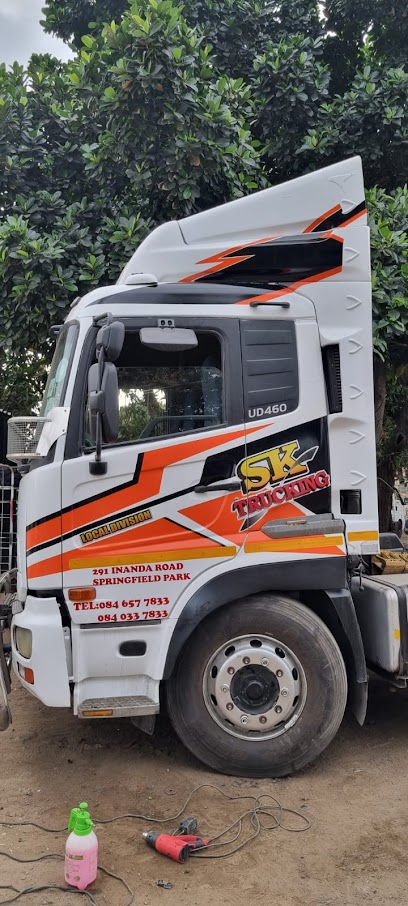
Trans Rite is a Transportation service establishment in Durban, KwaZulu-Natal, South Africa
Trans Rite: Transportation and Heavy Equipment Services in Durban, KwaZulu-Natal
Trans Rite operates from its head office in Durban, KwaZulu-Natal, with regional offices in Witbank and Alberton. Established in 2008, the company positions itself as a provider of a wide range of heavy transport and plant-related services aimed at supporting industrial and commercial operations across South Africa. The business emphasises safety, operational reliability, and the capability to deliver conveyance and material handling solutions through a diversified fleet.
Key vehicle and equipment categories form the core of Trans Rite’s offering. The fleet includes Water Tankers, Tippers, Rollers, Graders, Excavators, and various loader/backhoe types such as TLBs and Skidsteers. In addition, it operates different truck configurations to accommodate diverse loading, unloading, and on-site transport needs. These include Flat Deck Trucks, Curtain Side Trucks, Drop Side Trucks, Crane Trucks, Rollbacks and Lowbeds. The breadth of equipment supports a range of sectors, from bulk liquid and dry haulage to on-site earthworks, construction support and specialist lifting applications.
The organisation highlights a strong safety and people-centred approach. It adopts health and safety standards aligned with major industrial operators, including Eskom power stations and Anglo American mines. The stated aim is to provide a safe working environment for both customers and employees. This commitment is reflected in the provision of protective clothing and equipment to all staff, underscoring an emphasis on proactive risk management and compliant operations on site.
Operations are underpinned by skilled personnel across several roles designed to maintain uptime and performance. Plant operators are expected to work with due diligence and safety, identifying and logging risks for early corrective action and downtime avoidance. They are also tasked with reporting plant malfunctions and ensuring continuous safe operation. Plant mechanics play a complementary role by keeping equipment fully operational, addressing faults promptly, and performing routine maintenance such as checks every 400 hours or two months, with attention to oil, brakes, filters, windscreen, battery and fuel system. Daily inspections and fault logging are routine, with escalation pathways in place to involve management when issues exceed immediate control. A site supervisor role is described to ensure operator availability, proper staffing, backup arrangements for unfit workers, and the maintenance of orderly documentation and records of operating times.
From a customer experience perspective, the information available presents Trans Rite as a versatile, safety-conscious partner capable of supporting on-site projects with a broad equipment set. The emphasis on maintenance discipline and risk management suggests reliability in scenarios requiring timely equipment availability and predictable operations. The combination of on-site supervision and a robust safety framework may appeal to clients in mining, construction, bulk transport and related industries seeking consistent performance and clear accountability.
Typical job types, where stated by the available material, revolve around heavy transport logistics, earthmoving support, and material handling. The fleet’s variety enables responses to requests for bulk fuel or water distribution, site preparation, haulage of construction materials, and on-site lifting or equipment repositioning using crane trucks or lowbeds. While exact project scopes are not exhaustively detailed in the accessible information, the available equipment and safety emphasis suggest suitability for medium to large-scale industrial operations requiring dependable fleet capability and site coverage across KwaZulu-Natal and neighbouring provinces.
Practical tips for customers and site managers include aligning project timelines with vehicle and operator availability, ensuring site access and turning restrictions accommodate large trucks and abnormal loads, and confirming the scope of on-site supervision requirements to optimise workflow. Clients may also benefit from discussing maintenance expectations and response times for fault reporting, given the emphasis on rapid fault identification and escalation in the plant operation and maintenance processes.
In terms of location and coverage, Trans Rite originates in Durban with additional offices in Witbank and Alberton, suggesting a regional capacity to serve KwaZulu-Natal and parts of Gauteng and Mpumalanga. For organisations planning to engage a transport and heavy equipment partner, the company presents an integrated option combining transport assets with on-site plant and crew management capabilities, supported by a safety-forward culture.
- Main services offered: heavy transport (tippers, flat deck, curtain side, drop side, crane trucks, rollbacks, lowbeds), water tankers, and a range of plant and earthmoving equipment (rollers, graders, excavators, TLBs, skidsteers).
- Typical job types: bulk transport, site preparation and earthworks support, material handling, equipment repositioning and lifting.
- How requests usually work: client requirements are supported by operators, mechanics and a site supervisor to ensure safety, uptime and back-to-workability; faults are logged and escalated as needed.
Operating hours and specific service areas beyond Durban and the stated regional offices are not detailed in the available materials. Prospective customers with on-site transport and equipment needs in KwaZulu-Natal and adjacent regions may find it helpful to verify current fleet availability, on-site supervision arrangements, and safety certifications directly as part of initial discussions.
Durban
KwaZulu-Natal
4090
South Africa
Sorry, no records were found. Please adjust your search criteria and try again.
Sorry, unable to load the Maps API.
Overview of Transportation Services in Durban, KwaZulu-Natal
Durban, a major port city on the east coast of South Africa, benefits from a diverse transportation sector that serves residents, commuters, businesses and visitors. The range of transportation service options typically includes passenger mobility, freight and courier services, and specialised logistical solutions designed to move people and goods efficiently within the metropolitan area and to nearby regions. The landscape combines local taxi and minibus networks, formal taxi associations, public transport supplements, and private providers offering a variety of arrangements to meet demand throughout the year.
For urban travellers, practical expectations centre on reliability, safety and accessibility. Services commonly operate across central Durban, surrounding suburbs and key tourism nodes such as the beachfront and commercial districts. In peak periods, demand may rise in the morning and late afternoon, with temporary adjustments in service frequency. Customers often plan for potential delays associated with roadworks, weather conditions, and traffic congestion on major routes converging on the city centre, the harbour precinct, and kilometre-long corridors along the coast and inland routes. Public and semi-public transport options typically complement private hire and courier services, offering a mix of scheduled routes and flexible travel arrangements.
Freight and courier transportation in Durban is enhanced by the city’s status as a port hub. Businesses frequently rely on road-based deliveries to and from industrial estates, warehouses and retail centres, with attention paid to vehicle capacity, loading zones and on-site handling requirements. Larger consignments may utilise intermodal solutions that connect road transport with coastal or air depots, subject to client timing and regulatory considerations. For cross-border shipments or regional distribution, operations are commonly coordinated to align with inland routes and access to regional hubs in KwaZulu-Natal and neighbouring provinces.
Passenger transportation services in Durban typically span several core segments. Local and long-distance taxi services provide door-to-door mobility, often operating through intermediaries or affiliations. Minibus taxis, a long-standing component of city traffic, contribute to affordable and frequent services across wider catchment areas, albeit with varying levels of comfort and regulation. Private hire and chauffeur-style offerings present a higher degree of customisation, including airport transfers, corporate travel, and event transport, subject to vehicle availability and driver compliance with local laws. Ride-hailing platforms may complement traditional modes, offering digital access to reservations and fare estimates, while continuing to coexist with established networks.
Practical considerations for travellers and businesses include vehicle accessibility, particularly for passengers with mobility needs, luggage constraints near beachfront hotels and arcades, and the availability of secure parking or drop-off points in busy hubs. Road safety remains a priority, with attention to vehicle maintenance, driver documentation and adherence to traffic regulations. Availability during evenings, weekends and holiday periods can vary, influencing planning for social events, conferences or tourism itineraries. Environmental and weather factors, including humidity and tropical rainfall patterns, can affect travel times and vehicle performance, underscoring the value of flexible arrangements and contingency planning.
- Common service types: passenger transport, freight and courier deliveries, and customised private hire.
- Key considerations: reliability, safety standards, accessibility, and regulatory compliance.
- Locations of interest: central business districts, coastal tourist corridors, industrial estates and harbour-area logistics zones.
- Practical planning: anticipate traffic, weather impact, and peak-period demand when coordinating travel or deliveries.
Overall, transportation services in Durban are characterised by a blend of traditional and modern solutions designed to meet a broad spectrum of mobility and logistics needs. The city’s coastal geography and active port frame a transportation ecosystem that supports both urban travel and regional trade, with providers continually adapting to demand, regulatory developments and evolving customer expectations.