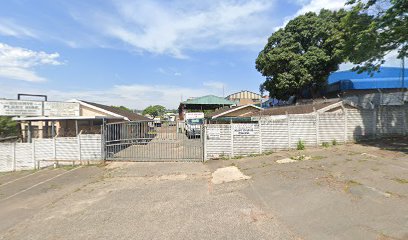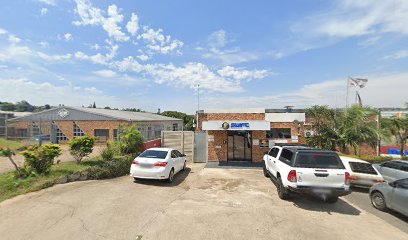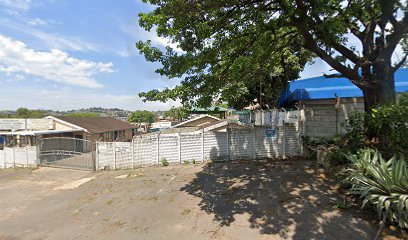
Ubunye Plant Hire is a Construction equipment supplier establishment in Durban, KwaZulu-Natal, South Africa
Ubunye Plant Hire: Construction Equipment Supplier in Durban, KwaZulu-Natal
Ubunye Plant Hire Cc operates as a construction equipment supplier serving Durban and the surrounding KwaZulu-Natal region. The available information from the provided listing centres on contact avenues and physical location rather than a detailed catalogue of equipment or service descriptions. The business is identified by a Queensburgh address and a set of telephone lines, mobile numbers, and an email address, indicating a conventional local operation aimed at facilitating direct customer communication and on-site equipment arrangements.
The entry highlights practical contact details rather than explicit service narratives. The listed website, www.ubunyeplant.co.za, offers a digital touchpoint for potential clients, though the depth of information accessible via that site is not reflected in the provided content. This means prospective customers may need to reach out directly to inquire about equipment availability, hire terms, delivery options, and any value-added services such as operator provision, after-hours support, or on-site assessments. The absence of clearly defined service categories in the source encourages a direct enquiry approach to confirm project suitability and scheduling needs.
In terms of location, the business is listed at 14 Martin Drive, Queensmead, Queensburgh 4093. The Queensburgh area is part of the greater Durban metropolitan region, situating Ubunye Plant Hire within a dense commercial and industrial belt that commonly serves construction, maintenance, and civil works projects across KwaZulu-Natal. While the source does not specify service radii or which districts are routinely covered, the physical address signals an intention to operate within the Durban area and its environs, making it convenient for local contractors and municipal projects seeking near-site equipment solutions.
The absence of customer reviews in the provided material means there is limited insight into the buyer experience, timeliness of deliveries, equipment condition at handover, or the quality of customer support. Without direct quotes or ratings, potential clients are encouraged to engage in a straightforward pre-hire discussion to gauge responsiveness, equipment compatibility with project requirements, and clarity of terms. A practical approach would be to prepare a summary of intended machine types, estimated hire duration, and any site constraints (weight, dimensions, power supply, or access considerations) to facilitate a smooth quoting process.
Typical job types that construction equipment hire businesses commonly support—such as Ubunye Plant Hire—include earthmoving, site preparation, demolition, material handling, and project-specific plant needs. However, the exact breadth of Ubunye’s fleet and capabilities is not detailed in the available source. As such, customers should verify whether standard plant hire categories are offered (for example excavators, skid steers, loaders, generators, compactors, scissor lifts, or light construction machinery) and whether this supplier can provide operators, maintenance, or training as part of the hire package. Any confirmation should be obtained directly via the listed contact channels.
Practical tips for customers planning a hire through Ubunye Plant Hire include the following:
- Prepare a concise job brief: outline project scope, required machine type, expected running hours, on-site access constraints, and delivery or collection timelines.
- Request a written quote that itemises hire rates, delivery charges, fuel policy, operator costs (if available), and any mandatory deposits or cancellation terms.
- Clarify equipment readiness: confirm the latest service records, maintenance status, and whether ancillary items (attachments, hoses, safety harnesses) are included or available as extras.
- Discuss site safety and compliance: ensure the hire aligns with local regulations, site-specific safety requirements, and operator qualifications if an on-site operator is needed.
- Confirm delivery logistics: verify access routes, crane or truck access permissions, and any required on-site guidance for manoeuvring large equipment in confined spaces.
For travellers and clients near Durban who value accessibility, Ubunye Plant Hire’s presence in Queensburgh potentially offers a convenient point of contact for ad hoc projects or ongoing equipment needs within the region. While business hours are not stated on the supplied page, prospective customers would typically expect to schedule viewings or discussions during weekday business hours, with flexibility to coordinate around project milestones. The local nature of the business implies a familiarity with KwaZulu-Natal construction cycles and the practicalities of on-site plant logistics in the area.
In summary, Ubunye Plant Hire is positioned as a Durban-based equipment supplier with a clear local contact framework and a physical Queensland-area footprint. The available content emphasises accessibility and direct communication rather than a publicly enumerated fleet or service menu. This places importance on proactive outreach to establish precise service details, align expectations, and confirm capacity for specific construction equipment needs in KwaZulu-Natal.
Durban
KwaZulu-Natal
4070
South Africa
Sorry, no records were found. Please adjust your search criteria and try again.
Sorry, unable to load the Maps API.
Durban Construction Equipment Suppliers: Services and Practicalities
Durban, a major port city in KwaZulu-Natal, hosts a diverse range of construction equipment suppliers that cater to projects ranging from small-scale refurbishments to large civil engineering undertakings. In this regional market, suppliers typically provide access to an array of machinery, tooling, and accessories designed to support excavation, lifting, material handling and site preparation. The emphasis is on availability, reliability and practical solutions that align with local logistics, weather patterns and regulatory expectations.
A typical catalogue includes earthmoving machines such as mini-excavators, skid-steer loaders and compact loaders, along with associated attachments for digging, trenching and grading. Procurement often extends to heavy equipment such as backhoes and wheel excavators, but availability may be tiered to suit project size, duration and budget. Complementary items commonly featured include portable generators, compressors, concrete mixers, vibrating plates and various compaction tools. Access to lifting equipment like steel gantry systems, hoists and scaffold components is also standard, especially for sites requiring temporary works and elevated access.
The service offering usually encompasses equipment rental, short- and long-term hire, and a purchase pathway for new or refurbished units. In Durban’s climate, equipment readiness is particularly valued, with suppliers prioritising well-maintained machines, up-to-date safety features and clear operating manuals. Many outlets provide a hands-on assessment option, allowing customers to inspect machines, request demonstrations, or arrange trial periods before committing to a hire or purchase. This approach supports informed decisions aligned with project timelines and site constraints.
Maintenance and support form a core component of the service model. On-site servicing or rapid swap-out arrangements are commonly available to minimise downtime on busy sites. Preventative maintenance programmes, scheduled servicing and access to spare parts are typical features, ensuring equipment remains fit for purpose across the Durban operating environment. Some suppliers offer mobile technician visits or repair services within reasonable travel distances, reflecting the real-world need to resolve issues swiftly.
Logistics and delivery are practical considerations in this region. Urban and coastal road networks can influence delivery lead times and equipment placement on site. Many Durban suppliers organise delivery windows, and larger orders may benefit from integrated material handling coordination to streamline project logistics. Returning or exchanging equipment is usually straightforward, subject to standard terms regarding wear, damage, and fuel levels. Clear paperwork accompanies every hire, including itemised inventories, rate periods, and safety instructions.
Safety and compliance are emphasised across the sector. Equipment is provided with necessary safety features such as seat belts, operator presence systems, and audible alarms where appropriate. Operators are typically required to hold valid certification or training relevant to the equipment type, while sites must adhere to local health and safety regulations. Suppliers commonly supply operator manuals, safety briefings and basic induction information to help clients operate equipment responsibly.
A practical reader can expect a straightforward engagement process: identify the equipment needs for a given site, confirm availability and delivery options, review hire terms or purchase agreements, and ensure that appropriate support and maintenance arrangements are in place for the project duration. In Durban, the focus remains on dependable access to machinery, regulatory compliance, and efficient, cost-conscious solutions that keep construction progressing smoothly while addressing the unique logistical characteristics of KwaZulu-Natal.