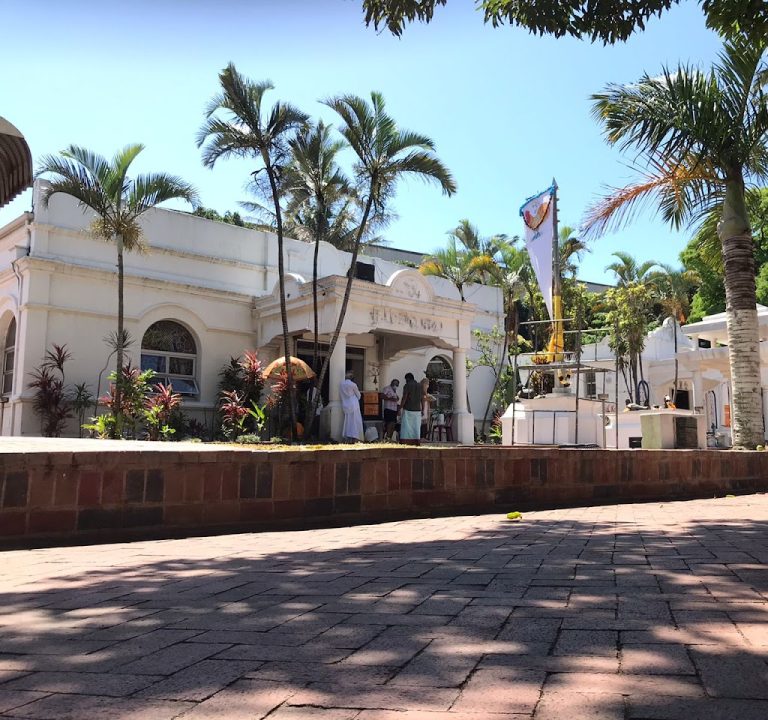
Umgeni Road Hindu Temple is a attractions establishment in Durban, KwaZulu-Natal, South Africa
Umgeni Road Hindu Temple – Attractions in Durban, KwaZulu-Natal
The Umgeni Road Temple Complex stands as a historic centre for Hindu worship in Durban, South Africa. Established in 1883, it is recognised as one of the oldest and largest Hindu temple complexes in the country. The site is noted for its distinctive architectural style, with a central shrine that reflects the South Indian temple tradition. This combination of historical significance and architectural character makes the temple a key cultural and religious landmark within KwaZulu-Natal.
A feature highlighted by the temple is the newly constructed eight-metre-high statue of the Hindu deity Shiva, which marks a striking addition to the complex’s landscape. This statue serves as a focal point for visitors and worshippers alike, contributing to the temple’s visual identity and devotional atmosphere. The presence of such a prominent sculpture alongside traditional temple precincts reinforces the venue as a living site of Hindu practice and heritage.
The temple’s location at 535 Umgeni Road in Greyville places it within reach of the Durban metropolitan area, making it accessible to a broad range of visitors, including locals, pilgrims, students of culture, and tourists seeking insight into Hindu religious life in South Africa. The site is commonly described as an inclusive space that accommodates diverse forms of Hindu worship, reflecting the breadth of practices within the tradition and offering a venue for ceremony, reflection, and community gathering.
From a visitor experience perspective, the temple functions as more than a place of worship. It is a cultural anchor where visitors can observe and participate in Hindu rituals and seasonal observances in a respectful and observant manner. While specifics about individual services are not exhaustively listed on site, the temple’s long-standing presence and ongoing cultural significance suggest a steady rhythm of devotional activities, education, and communal events that form the core of the visitor encounter.
The temple’s contact details provide a practical touchpoint for those seeking information or planning a visit. The address is 535 Umgeni Road, Greyville, Durban, 4001, with a dedicated phone line available at 031 312 5069. Such details offer a straightforward means to verify opening hours, event schedules, and any visitor guidelines that help ensure a respectful and meaningful experience for all attendees.
- Main services offered: The temple serves as a worship and cultural site for traditional Hindu practices and observances, with architectural features and shrines that reflect South Indian temple heritage.
- Typical activities: While specific programmes are not itemised here, the site is described as a hub for Hindu worship and cultural life, suggesting participation in rituals, ceremonies, and community events as part of the visitor experience.
- How requests usually work: Visitors and worshippers typically engage with the temple directly for information on worship times, special ceremonies, and guided or self-guided visits. The contact number provides a direct means to obtain current details.
Practical tips for customers planning a visit include consulting the temple’s official channel to confirm opening times and any visitor guidelines in advance. Given its status as a historic temple complex and a centre of contemporary Hindu practice, visitors are encouraged to dress modestly and maintain a respectful demeanour within the precincts. The location in Greyville situates the temple within a busy Durban corridor, with accessibility considerations typical of urban sites, including potential weekday and weekend variations in schedules that are best confirmed prior to attendance.
In terms of area served, the temple clearly functions as a Durban-and-surrounds destination, welcoming both local residents and visitors from KwaZulu-Natal who are interested in Hindu religious life, history, and architectural heritage. As a long-standing institution, Umgeni Road Temple is presented as a durable beacon of tradition, continuity, and cultural exchange within the region.
Durban
KwaZulu-Natal
4001
South Africa
Sorry, no records were found. Please adjust your search criteria and try again.
Sorry, unable to load the Maps API.
Durban Attractions: Services and Practicalities
Durban’s attractions scene in KwaZulu-Natal blends coastal appeal with cultural and natural experiences, offering a range of services designed to help visitors make the most of their time. Consumers typically encounter a mix of guided tours, independent ticketing assistance, and on‑the‑ground logistics that enable easy access to beaches, wildlife sanctuaries, museums, and botanical gardens. The emphasis is on readability, convenience, and safety, ensuring that first‑time visitors can navigate unfamiliar environments with confidence.
A core component of attractions services is guided interpretation. Trained guides provide context about Durban’s heritage, including its colonial history, coastal ecosystems, and modern urban development. These services may be offered in walking tours, day trips, or specialised programmes focused on themes such as art and architecture, marine life, or indigenous culture. For many visitors, a guided option helps translate local knowledge into a cohesive narrative and can enhance understanding of the city’s distinctive geography and climate.
Ticketing and access arrangements are typically central to the customer experience. Attractions may operate ticket desks, online reservation systems, or partnered agglomerations that bundle entry with transport or meals. Visitors should anticipate clear information about opening hours, peak times, seasonal events, and any age or concession policies. In urban settings such as Durban, a common approach is to provide multiple tiers of access (general admission, priority entry, or combined passes) to accommodate different budgets and timeframes, while avoiding long queues during busy periods.
Transport and logistics form a practical focus of Durban attraction services. Many sites are spread across coastal and inland zones, requiring careful planning for travel time between venues. Services may include shuttle arrangements, guided coach tours, or secure parking recommendations. Accessibility is increasingly prioritised, with facilities designed to accommodate wheelchairs, strollers, and other mobility needs. Practical considerations also cover safety briefings, weather contingencies for outdoor venues, and guidance on appropriate attire for subtropical conditions, such as sun protection and hydration.
Facilities and visitor support are part of the standard offering. Expect clean, well‑signed reception areas, information desks, and clear wayfinding throughout sites. Many attractions provide interpretive panels, multimedia displays, or tactile exhibits to enhance understanding for visitors of all ages. Family‑friendly provision is common, with activities designed for children that balance education with entertainment. In Durban, where marine and nature experiences are prevalent, attention to environmental sustainability and respectful wildlife interaction is emphasised in several programmes.
Plan and budgeting considerations are relevant for potential visitors. While it is not customary to list prices here, audiences are advised to verify whether attractions offer family discounts, group rates, or off‑peak pricing. Practical details such as cashless payment options, accessibility of restrooms, shade areas, food and beverage availability, and the presence of on‑site retail can influence overall enjoyment and convenience. When selecting services, customers benefit from reading concise descriptions of what is included in a package, any additional costs for optional experiences, and the process for refunds or rain‑date arrangements.
In summary, Durban’s attractions services aim to deliver informative interpretation, straightforward access, and comfortable logistics, set against the city’s vibrant climate and coastal landscape. By combining guided insights with practical planning and accessible facilities, visitors can experience a broad spectrum of Durban’s offerings—ranging from heritage and culture to natural beauty and recreational activities—without undue complication.