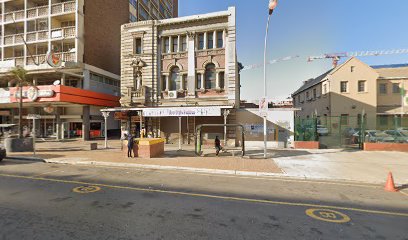
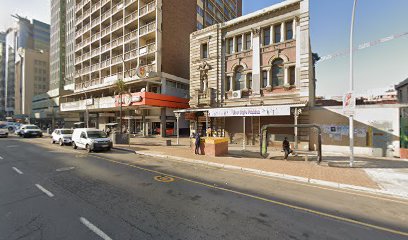
Westwood FET College (Pty) Ltd is a College establishment in Durban, KwaZulu-Natal, South Africa
Westwood FET College (Pty) Ltd — College, Durban, KwaZulu-Natal
<p Westwood FET College presents itself as a dynamic centre for learners seeking flexible pathways into further education and professional development. The site positions the college as a place where ambition to lead, innovate and succeed can be nurtured through focused programmes and practical, skills-based study. The language used throughout highlights a drive to “develop a passion for learning today,” suggesting an emphasis on engagement, personal growth and marketable skills.
<p The college’s online materials emphasise a curriculum designed to be well researched and robust. Sections such as “Best Curriculum” indicate a commitment to offering well-structured programmes, while “Flexible Timing” suggests options to accommodate learners with busy schedules or competing responsibilities. These elements collectively portray the institution as prioritising accessibility and relevance for a diverse cohort of students and professionals alike.
<p The site also frames Westwood FET College as a community-oriented place, with references to a “Community” focus and a sense of shared purpose among students and staff. This communal aspect is reinforced by the presentation of a sizeable number of facilities and staff involved in teaching and mentoring learners, noting a sizeable classroom footprint and a dedicated cadre of educators. While specific programmes are not itemised in the accessible content, the emphasis on learning environments and leadership development hints at a broad offering aligned with technical, vocational and entrepreneurial aims.
<p The presented figures on the site offer a snapshot of scale: 125 subjects offered, 267 classrooms, 169 distinguished professors, and 100 current students enrolled. Although these numbers appear unusually compact for a functioning higher-education institution, they are included in the available content and may reflect a snapshot or illustrative data. Prospective learners should interpret such figures with caution and seek direct confirmation through official enquiry channels.
How enquiries and initial engagement are handled is reflected in the site structure. Prominent links such as “Get Started Now” and “Enquiry” indicate that prospective students can initiate contact online to explore programmes, entry requirements and practical details. The presence of sections that invite potential learners to explore “Future Students” and “Our Community” suggests an approach that blends information about admission pathways with an emphasis on student life and peer networks.
Main services and offerings, as inferred from the site navigation and headings, include education designed to foster leadership, entrepreneurship, engineering and broad professional development. Although exact course titles and qualification levels are not enumerated in the accessible content, the framing of the institution as a place for aspiring leaders and engineers implies a focus on practical, career-relevant study with a professional emphasis.
Typical customer experiences, based on the available content, appear to be shaped by flexible scheduling, curriculum quality, and a strong sense of community. Learners may expect programmes that accommodate different timetables, support from a community of peers, and access to a structured curriculum designed to advance employability skills. The emphasis on marketable skills and connections gained through improved education suggests a learner journey centred on measurable outcomes and real-world application.
- Main services offered: Emphasis on well-researched curriculum, flexible timing and a focus on leadership, entrepreneurship and engineering-oriented education.
- Typical job types: Specific target industries or roles are not detailed in the available content.
- How requests usually work: Prospective students access enquiry via the site, with paths labelled Get Started Now and Enquiry for initial engagement.
Practical tips for customers can be drawn from the content and structure of the site. Pursue the Enquiry route early to obtain programme information, entry requirements, and flexible scheduling options. Consider exploring the Future Students and Our Community sections to gain context on student life, peer networks and the learning environment. When evaluating the college, note the stated commitment to a strong curriculum and flexible timing as indicators of accessibility for a busy or working learner. If possible, verify current offerings and staffing details directly through official enquiries to confirm programme suitability and the latest information.
Location and service area details are not explicitly stated within the accessible site content beyond the identification of the institution as a college in KwaZulu-Natal. Visitors should cross-check geographic coverage and campus locations via the official enquiry channels to confirm service areas and proximity to Durban and surrounding areas. For those planning visits, relying on the flexible timing feature may assist in aligning visits with available slots or open days, where applicable.
Durban
KwaZulu-Natal
Durban Central, Durban
South Africa
Sorry, no records were found. Please adjust your search criteria and try again.
Sorry, unable to load the Maps API.
Overview of College Services in Durban, KwaZulu-Natal
In Durban, KwaZulu-Natal, a range of college services supports local learners from vocational courses to more traditional further education programmes. These institutions typically provide practical training alongside academic study, with facilities designed to cater for a diverse student body. Across the city, colleges may operate on multiple campuses or offer satellite centres, making access more convenient for residents in coastal and inland communities.
Academic programmes span several sectors, including business studies, information technology, engineering trades, hospitality and tourism, health sciences support roles, and creative industries. Programmes are generally structured around recognised qualifications which may lead to diplomas, certificates, or short specialised courses. Instruction often combines timetable-based lectures with practical workshops, laboratories, or simulators to mirror real-world work environments. There is usually an emphasis on employability, with some courses integrating industry-informed projects or work-integrated learning opportunities.
Student support services are a key feature. Admissions guidance helps prospective students understand entry requirements, while orientation programmes prepare new entrants for campus life. Counselling services, tutoring, and academic skills development are commonly available to assist learners at different stages of their studies. Language and literacy support can be important for students who are navigating programmes conducted in English or Afrikaans, with provisions to help non-native speakers access learning materials and participate in classes.
Practical facilities form a central component of the college experience. Modern libraries or resource centres provide study spaces, reference materials, digital databases, and computer labs. IT services typically support campus networks, email access, and essential software, enabling students to complete assignments and conduct research. Workshop spaces for trades, laboratories for science courses, and dedicated catering or hospitality kitchens are part of the essential infrastructure in many colleges. Accessibility considerations, such as wheelchair-friendly campuses and adapted classrooms, are increasingly prioritised to improve inclusion.
Student life often benefits from on-site or nearby accommodation assistance, with information on safe housing options, meal plans, and living arrangements where applicable. Transport is a practical consideration, given Durban’s relatively dispersed campus setups and the wider KwaZulu-Natal region. Students commonly rely on public transit, car sharing, or campus shuttle services where available. Safety and security are typically addressed through campus patrols, access controls, and clear emergency procedures, contributing to a stable studying environment.
Career support and progression guidance are integral to many college offerings. Career services may provide resume and interview workshops, industry connections, and information on apprenticeship or placement opportunities. Job fairs and employer partnerships can help learners plan a pathway from study to employment, though the availability of these activities varies by institution and programme. For students pursuing funding, information on scholarships, bursaries, and government grants is generally available through the college’s financial aid office or dedicated support staff.
Practical considerations for prospective students include understanding the timetable and duration of programmes, tuition and any mandatory fees, and the assessment structure. Some courses may require practical assessments, portfolios, or demonstrations in addition to written exams. Programme length can vary from several months for certificates to two years or more for diplomas. Applicants should review the specific entry requirements, including any bridging or bridging programmes that may be relevant, and consider whether part-time study options align with personal commitments.
In summary, Durban’s college sector offers a broad spectrum of services meant to equip learners with practical skills and recognised qualifications. While exact facilities and programmes differ between institutions, common themes revolve around accessible learning, practical training, student support, and clear routes to employment or further study within KwaZulu-Natal and beyond.