

TLB Hire Durban is a Plant and machinery hire establishment in Durban, KwaZulu-Natal, South Africa
TLB Hire Durban: Executive Plant Hire for Durban and KwaZulu-Natal
TLB Hire Durban presents itself as a comprehensive plant hire partner in Durban, KwaZulu-Natal, offering a broad and continually expanding fleet of heavy equipment suitable for a variety of construction, landscaping, civil, and industrial projects. The business emphasises a single-source solution for “light to heavy” tasks and positions its fleet as capable of handling demanding workloads with reliability and speed. The core message is clear: the right machine accelerates project progress, reduces downtime and makes complex tasks more manageable on site.
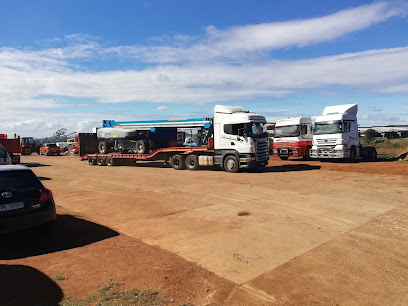
Central to the offering is an extensive range of machinery designed to cover both small-scale and large-scale operations. The fleet includes excavators, TLBs (tractor, loader, backhoe), bobcats (skidsteers), tippers, rollers, forklifts, and cherry pickers. In addition, in-house transport options are available through a dedicated fleet that comprises lowbeds, rollbacks, and crane trucks. This combination facilitates not only equipment supply but also the logistics of moving machinery between sites, which can be a significant advantage on multisite projects or tight timelines.
Detailed equipment options highlight versatility for diverse site requirements. Bobcats and skidsteers are showcased for their agility in confined or awkward spaces, making them popular with landscapers, building contractors, and small-quantity rubble loading tasks. Attachments extend capabilities further: hammer/pecker attachments enable breaking hard surfaces like rock and concrete; sweeper attachments provide efficient cleaning of hardened surfaces such as parking lots and driveways; trencher attachments create drainage pathways for water and sewer systems; auger attachments facilitate drilling for footings, fence poles, or planting; and combinations with tipper trucks support the removal of soil, rubble, or other materials from site.
The range of TLBs and excavators is positioned for larger earthmoving and site-clearing work. TLBs are highlighted for their versatility in digging, loading, site clearance, trenching, and general earthworks, with options to pair a TLB with a hammer or a tipper truck for enhanced productivity on large or cluttered sites. Excavators, including specialised versions with hammers, peckers, or attachments like augers, are presented as suitable for large-scale trenching, bulk earthworks, and civil construction tasks. Small but capable units such as mini excavators are emphasised for restricted spaces, trenching, landscaping, and plumbing works, while larger excavators target road and civil projects. The equipment narrative consistently ties machine capability to practical on-site outcomes, reinforcing the value of the fleet for efficient project delivery.
The company markets itself as an “all in one Plant Hire store” through its branding and service descriptions, underscoring an integrated approach to equipment supply and transport. The emphasis on operational readiness—“fully operational” and “heavy duty” capabilities—appeals to customers seeking reliable machines that perform consistently across varied conditions. The language suggests a focus on equipment that won’t fail users and can handle a wide range of job types from light maintenance to heavy civil work.
Typical job types referenced through the equipment uses include site clearance and site clean-ups, trenching, general earthworks, drainage and underground work, demolition and debris removal, road and building construction, landscaping, and loading activities associated with rubble, soil, and other materials. These categories align with common sectors in the Durban region, such as civil contracting, construction, landscaping, mining support, and infrastructure projects, providing a logical fit for local demand.
How requests typically work, based on the site structure, involves a straightforward process through the company’s contact page. While explicit procedural details are not enumerated in the available content, the presence of an in-house transport fleet suggests a streamlined workflow for supplying equipment and moving it to customer sites, potentially coordinating delivery and pick-up alongside the client’s schedule. The business hours and best times to visit are not stated in the available content, so prospective clients should refer to the contact page for current details and to confirm site access or equipment readiness on preferred dates.
Practical tips for customers
- Match the machine to the task and consider attachments that extend capability (hammer, auger, trencher, sweeper, etc.).
- Plan for transport needs if multiple machines or on-site movement is required; utilise the in-house rollbacks, lowbeds, and crane trucks where possible.
- Assess site constraints such as space, height, and access to determine whether a compact unit (mini excavator or skidsteer) or a larger excavator is appropriate.
- Confirm availability and delivery windows in advance to minimise downtime and ensure equipment aligns with critical milestones.
- Clarify fuel, operator requirements, and environmental conditions to ensure safe and compliant operation on site.
TLB Hire Durban serves a defined geographical area within Durban and the wider KwaZulu-Natal region by offering a consolidated fleet of earthmoving and material handling equipment accompanied by in-house transport. The emphasis remains on versatility, reliability, and efficiency—qualities that are particularly valued in fast-moving construction and civil projects across the area.
Durban
KwaZulu-Natal
Hillcrest, Durban
South Africa

Sorry, no records were found. Please adjust your search criteria and try again.
Sorry, unable to load the Maps API.
Plant and machinery hire services in Durban, KwaZulu-Natal
Durban, a major port and industrial hub on the KwaZulu-Natal coast, relies on a diverse plant and machinery hire sector to support construction, infrastructure, and maintenance projects. Providers typically offer a range of equipment suited to urban builds, coastal conditions, and inland work, from small tools to large heavy machinery. The emphasis is on reliable access to equipment when needed, with flexible arrangements that suit short-term projects and longer-scale developments alike.
Commonly available equipment includes earthmoving machines such as excavators, skid steer loaders, and backhoe loaders, as well as material-handling units like telehandlers and forklifts. For lifting and access needs, hiring options often cover mobile cranes, boom lifts, scissor lifts, and access platforms. Concrete-related hire can encompass mixers, pumps, and trowels, while generators, pumps, compressors, and lighting towers address site utilities and night-work requirements. The collection of equipment is typically supported by multiple power options, travel speeds, and lift capacities to match diverse site demands.
Operational models in Durban usually distinguish between dry hire (the equipment is provided without an operator) and wet hire (an operator is supplied along with the machine). Dry hire is common for experienced teams with established supervision, while wet hire suits projects needing immediate on-site capability or specific operator skills. Some providers may offer optional supervision or site management services, but this is not a universal feature; the client’s team often remains responsible for safety and day-to-day operation when equipment is hired without an operator.
Businesses engaging plant and machinery hire should anticipate a straightforward process: an initial enquiry, a technical assessment of site needs, and a quotation detailing the equipment, terms, and any required permits. Delivery and collection are arranged to align with project schedules, and many providers offer delivery to construction sites, manufacturing facilities, or remote locations around Durban and the wider KwaZulu-Natal region. In some cases, there may be minimum hire periods or additional charges for remote/difficult access routes.
Insurance and safety form a critical consideration. Most customers will be asked to confirm appropriate coverage and to perform a risk assessment for the site. Equipment is generally delivered in a ready-to-use condition, with routine maintenance conducted by the hire company. Clients should verify fuel policies, mileage or utilisation limits, and responsibilities for refuelling and minor servicing during the hire period. If on-site supervision is required, ensure clarity regarding the operator’s qualifications, certifications, and language of communication, so that safety protocols and site rules are respected.
Practical considerations include site access, ground conditions, and clearance requirements. Weight and dimension limits influence the suitability of equipment for restricted urban spaces or narrow access points. Power availability and electrical compatibility can affect the use of generators, pumps, and light towers. Weather patterns in KwaZulu-Natal, including heavy rains and high humidity at certain times of the year, may impact mobilising, transport, and operation, necessitating contingency planning for delays or equipment protection.
Durban’s plant and machinery hire market also emphasises service reliability, timely maintenance, and responsive support, especially for projects with tight deadlines or complex co-ordination. Contractors and construction teams typically benefit from a clear understanding of hire terms, a transparent pricing approach, and straightforward procedures for extending or reducing hire periods as project scopes evolve. By focusing on equipment suitability, safety compliance, and practical logistics, hire providers in Durban aim to support efficient project delivery across residential, commercial, and infrastructural sectors.


