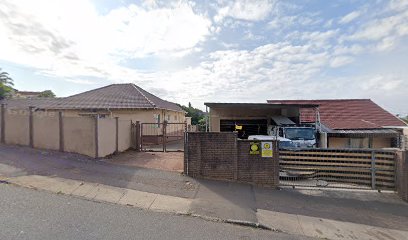
Phangela Group Durban is a Security service establishment in Durban, KwaZulu-Natal, South Africa
Phangela Group Durban: a comprehensive security partner offering professional guarding, specialised operations and training
Phangela Group, established in 2000, presents itself as a South African‑owned security company with a broad remit that extends beyond conventional guarding. As an outside observer notes, the organisation emphasises a culture centred on diligence, discipline and a proactive approach to protecting client assets. The Durban observer would find a company profile that positions Phangela as a leading authority in private security, with a commitment to innovative staffing solutions and a track record spanning two decades.
Core services are organised around guarding and protective operations, supported by management systems designed to calibrate risk and performance. The guarding services are described as more than routine presence; officers are salaried professionals equipped with substantive training and real-world skills. This reflects Phangela’s philosophy that security is an investment in peace of mind, not merely a cost. The emphasis on trained personnel, consistent availability and a focus on safeguarding premises aligns with expectations for corporate clients seeking dependable protection for their assets and staff.
Operational management forms a distinct facet of Phangela’s offering. The Durban perspective would note the integration of technology with frontline security, including PSIRA registration, GPS‑tracked site visits and EMS dashboards. The approach is described as engineering calm rather than merely managing activities, with risk analysis layered into daily patrols and incident response. The aim is to provide measurable oversight through KPI‑driven practices, offering clients a transparent view of security performance, response times and coverage across sites.
For environments seeking covert insights, the Under Cover Security service embeds precision operatives within a client’s workforce. These officers work discretely alongside staff to identify theft, misconduct, safety breaches and other internal risks. A dedicated Case Manager provides legal and procedural guidance, ensuring discreet operations remain compliant and controlled. This capability highlights Phangela’s portfolio beyond overt protection to include proactive detection and internal risk management.
Security guard training constitutes a foundational element of Phangela’s value proposition. PSIRA‑accredited programmes convert recruits into professional officers capable of handling real‑world challenges. The training covers compliance, legal protocols and practical field skills, aiming to deliver guards who can protect people, property and reputation with confidence. For organisations prioritising staff development and quality assurance, the emphasis on rigorous training standards is a notable feature.
Specific divisions also feature in Phangela’s structure. The company’s S.W.A.T division includes Riot Control, Strike Action Support, VIP Protection and Armed Escort. Described as highly trained and regularly refreshed through ongoing training, the team maintains a state of readiness and stays connected with a central command hub. The S.W.A.T unit operates as part of a broader network, with communications linked to a Nerve Centre to support rapid, coordinated responses to urban threats.
Additional background information presented on the site describes Phangela as a multi‑discipline security group with other areas such as cleaning and tactical divisions, reflecting a broader enterprise ecosystem. The organisation stresses a culture of service as an investment, continuous improvement and a commitment to employing people in ways that contribute to the broader economy. Certifications cited include a Certificate of Registration with the Private Security Industry Regulatory Authority (PSIRA) and a Certificate of Performance Excellence, underscoring a focus on regulatory compliance and recognised performance benchmarks.
The Durban reader would also encounter evidence of client‑facing assurances, including testimonials that emphasise professionalism, reliability, adaptability and quick response times. While the site highlights a robust capability set and a history of service excellence, it remains prudent for prospective clients to verify current PSIRA status, insurance coverage, and relevant local compliance before engaging any provider for security needs.
Practical tips for potential customers include clarifying site specifications and risk profiles, requesting documented service level agreements with KPIs and reporting cadence, and asking how GPS monitoring, incident dashboards and responder timelines are implemented in practice. Given the breadth of Phangela’s offering, clients may wish to map requirements to specific divisions—such as guarding, undercover operations or VIP protection—and discuss how integration across divisions can deliver a coordinated security solution. Clients are advised to review training credentials and ongoing professional development plans for officers, ensuring that teams assigned to their sites maintain current competencies and legal compliance.
Geographically, Phangela describes its delivery across South Africa, with the Durban requirement situated within a national framework. The company’s Cape Town head office and regional growth suggest a scalable model capable of addressing urban security needs in KwaZulu‑Natal through a network of trained personnel, modern systems and disciplined management practices.
Durban
KwaZulu-Natal
4004
South Africa
Sorry, no records were found. Please adjust your search criteria and try again.
Sorry, unable to load the Maps API.
Security service provisions in Durban, KwaZulu-Natal
Durban, a major coastal city in KwaZulu-Natal, presents a varied security landscape that accommodates residential communities, commercial precincts, industrial hubs, and event venues. Providers in this region typically offer a combination of physical guarding, technological monitoring, and advisory services designed to protect people, property, and assets in a dynamic urban environment. The emphasis is on practical protection strategies that respond to local crime patterns, transport networks, and the needs of both dense urban wards and more dispersed perimeters along the coast.
A broad spectrum of services is commonly available. On-site security guards and patrol teams form the foundation of many offerings, delivering visible deterrence, access control, reception duties, and incident reporting. Mobile patrols extend coverage beyond fixed points, incorporating randomised or structured routes to check premises, deter trespass, and secure perimeters after hours. For larger sites or multi-tenant developments, security management often blends static guards with roving teams to ensure rapid response and consistent presence.
Technological security solutions are frequently integrated to enhance situational awareness. Closed-circuit television (CCTV) systems, sometimes monitored by a central control room, help deter crime and provide evidentiary material when incidents occur. Access control measures, including biometric or card-based systems, regulate entry points to offices, data rooms, and restricted zones. Alarm systems connected to monitoring centres enable swift notification of security personnel and, where appropriate, police or emergency services. In Durban’s commercial environments, digital platforms may support remote monitoring, incident logging, and performance reporting, though details vary by provider.
Residential security commonly combines physical guarding with home automation and smart monitoring. Gatekeeper services, vehicle patrols in gated communities, and rapid response to alarm activations are typical features. For high-net-worth properties or estates along Durban’s suburbs and coastal belt, security assessments may include perimeter fencing, lighting design, and landscape considerations to maximise deterrence while minimising nuisance to neighbours.
Event security is another important segment, reflecting Durban’s status as a vibrant venue city for conferences, festivals, and sporting occasions. Providers plan crowd management, access control, bag checks, stewarding, and emergency evacuation protocols tailored to event size and venue layout. Coordination with local authorities and venue management is commonly emphasised to ensure smooth operations and adherence to safety regulations.
Practical considerations arise when engaging a security service in Durban. Prospective clients are advised to verify that providers hold appropriate regulatory registration where required, such as registration with the Private Security Industry Regulatory Authority (PSIRA) in South Africa. Clear written agreements detailing coverage hours, response expectations, and escalation procedures help manage risk. It is prudent to discuss response times for mobile patrols and alarms, along with the level of liaison with police or emergency services. Site surveys and risk assessments are often recommended prior to service commencement, enabling tailored plans that address specific vulnerabilities and occupancy patterns.
In terms of delivery, Durban clients should anticipate a localisation of services to reflect neighbourhood dynamics, climate considerations, and seasonal demand. Providers typically adapt their staffing levels to business hours, public holidays, and major events, ensuring that security arrangements remain robust without excessive disruption or cost. A thoughtful approach balances visible deterrence with discreet protection, underpinned by professional training, clear communication, and commitment to safeguarding people and property within KwaZulu-Natal’s distinctive urban and coastal environment.