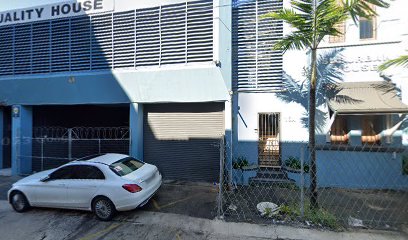
Contra Consolidations is a Freight forwarding service establishment in Berea, Kwa-Zulu Natal, South Africa
Contra Consolidations: Freight Forwarding Services and Customer Experience in Berea, Kwa-Zulu Natal
Contra Consolidations presents itself as South Africa’s leading independent neutral consolidator, with a Durban-based operation that underpins a broad spectrum of import and export freight forwarding services. The firm emphasises neutrality—selling exclusively to freight forwarders—to provide cargo protection and service integrity across global routes. This stance is complemented by a partner network that supports a wide international reach, allowing Contra to offer consolidated shipments with a focus on reliability and service quality.
Core service offerings span ocean freight, road freight, air freight, and a dedicated transhipment hub function. In ocean freight imports, Contra highlights its capacity to collaborate with leading independent consolidators at load ports, enabling customised standard operating procedures and service integrity for inbound cargo. The import service portfolio includes weekly sailings from major ports and a transhipment hub network that extends reach to smaller ports, with particular attention to high‑value cargo, hazardous goods, and automotive vehicles. This breadth suggests a capability to manage complex, risk‑sensitive shipments while maintaining consistent service standards.
Ocean freight exports are presented with a strong emphasis on LCL (less than container load) services to more than 200 destinations worldwide. The export programme is anchored by regular services ex Durban, Johannesburg, and Cape Town, with direct connections to Africa, Europe, the Far East, and North America. Destination coverage includes key ports such as Luanda, Abidjan, Mombasa, Lagos, Rotterdam, London Gateway, Singapore, and New York, illustrating a global reach that supports mixed cargo and varied customer requirements.
The road freight portfolio features scheduled intercity and cross‑border capabilities, including domestic door deliveries and bonded cargo movements. Over‑border services connect South Africa with neighbouring countries, including Botswana, Lesotho, Swaziland, Zambia, and Zimbabwe, highlighting Contra’s role in facilitating continental trade and regional distribution. This complement of road services integrates with consolidation offerings for customers requiring seamless local collection, inland delivery, and cross‑border efficiency.
In addition to freight operations, Contra operates a transhipment hub strategy centered on its Durban headquarters, described as Southern Africa’s principal port. This positioning enables consolidated cargo to reach destination markets across East Africa, West Africa, and Indian Ocean islands through a combination of road and sea freight solutions. The hub approach, coupled with both import and export capabilities, aims to deliver end‑to‑end connectivity for global shipments.
The company also markets specialised vehicle consolidation services, using a patented R Rack system to optimise containerised transport of vehicles such as cars, motorbikes, vans, boats, caravans and trailers. The offering includes safety‑driven packing processes, inspection reports, and photographs at origin and destination, designed to maximise cargo protection and enable cost efficiencies in global vehicle movements.
Information technology and systems play a notable role in Contra’s service delivery. The firm is described as powered by CargoWise, a freight management software that provides a customer portal for shipment tracking, invoicing, and bookings. Integration with depots and shipping lines is claimed to support live tracking and status updates, reflecting a technology‑forward approach to freight management and customer visibility.
Part of the customer experience is facilitated by practical tools such as the EXPORT BOOKING FORM and the Quick Track feature, which addresses shipment, HBL/MBL details and container bookings. These tools signal an emphasis on efficient, trackable processes for partners and clients within the forwarding ecosystem.
Operational details such as container specifications are provided, detailing a variety of container types (general purpose, high cube, reefer, open top, flat rack, etc.) with explicit internal dimensions, payloads, and cubic capacities. This level of specification illustrates a readiness to handle a wide range of freight profiles—from standard cargo to high‑value or specialised consignments.
Practical tips for customers include leveraging the neutral consolidation model to work through approved freight forwarders, confirming the appropriate port of load, and engaging with the export booking process early to secure preferred weekly services. Given the Durban hub’s prominence, customers located in or around Berea and the Kwa‑Zulu Natal region may benefit from proximity to the coast and port facilities when planning imports or exports. It is advisable to clarify whether shipments will route through Durban or another gateway, and to discuss any special handling needs (hazardous materials, high‑value vehicles, or time‑sensitive cargo) with the chosen freight forwarder partner.
Overall, Contra Consolidations presents a comprehensive, neutral, and technology‑enabled platform for global shipping needs. The integration of a transhipment hub with broad ocean and road networks, coupled with vehicle consolidation capabilities and a robust IT framework, positions the company as a versatile partner for businesses seeking reliable consolidation and freight management in the Kwa‑Zulu Natal region and beyond.
Berea
Kwa-Zulu Natal
4001
South Africa

Sorry, no records were found. Please adjust your search criteria and try again.
Sorry, unable to load the Maps API.
Freight forwarding services in Berea, Kwa-Zulu Natal
Freight forwarding in Berea, Kwa-Zulu Natal, addresses the needs of businesses and individuals requiring efficient movement of goods across local, national and international borders. Located near the city of Durban, Berea benefits from access to major transport corridors, port facilities, and a growing network of logistics professionals. The service landscape generally encompasses end-to-end management of cargo, paperwork, and timelines, with emphasis on reliability and regulatory compliance.
Most providers offer a spectrum of transport modes to suit varying shipment profiles. Air freight is commonly used for time‑sensitive consignments, high‑value goods, or perishables that may benefit from faster transit. Sea freight remains a staple for bulk materials or items where cost efficiency is key, often accompanied by consolidated shipments to optimise container utilisation. Road freight forms the backbone for local and regional deliveries, including door-to-door and port-to-door services, with routes that connect Berea to inland hubs and other coastal cities. In some cases multimodal solutions combine these modes to balance speed, cost, and risk.
Customs clearance is a core function within freight forwarding. Experienced professionals in Berea typically handle documentation such as commercial invoices, packing lists, bills of lading, and certificate of origin, ensuring compliance with South African regulations and destination‑country requirements. This scrutiny helps minimise delays at borders and allows smoother continuity of goods through the supply chain. Insurance placement is another standard consideration, offering protection against loss or damage during transit, subject to policy terms and the nature of the cargo.
Warehousing and dispatch services are commonly integrated components of freight forwarding. Short‑term storage, inventory control, order picking, and repackaging can be arranged to accommodate seasonal demand, coordination with distribution networks, or compliance with specific handling needs. In Berea, providers may also offer value‑added services such as label printing, kitting, or customised packaging, which can help streamline downstream operations for clients.
Tracking and visibility are increasingly important in contemporary logistics. Many forwarding agents provide shipment monitoring, notification updates, and access to digital documents. While the exact technology platform varies, the goal remains consistent: to give clients a clear view of where goods are in transit, anticipated arrival times, and any exceptions that could influence planning. This transparency supports better decision‑making and more responsive supply chains.
Practical considerations for engaging freight forwarding in Berea include selecting a partner with local knowledge and international reach. Proximity to major Durban transport nodes, including the port and international airports, often translates into faster handling, more economical routing, and better contingency planning. Clients should assess the provider’s compliance posture, including licensing, insurance coverage, and adherence to relevant customs and trade regulations. Clear service levels, reliable communication, and well‑defined responsibilities help reduce friction when schedules shift or documentation is required.
Environmental and social responsibility considerations are increasingly relevant. Some freight forwarders emphasise sustainable transport options, efficient route planning to minimise emissions, and responsible handling of customer goods. For businesses in Berea, aligning with a partner that supports ethical sourcing and compliant practices can reinforce corporate governance and reputational strength.
In summary, freight forwarding services in Berea, Kwa-Zulu Natal, are characterised by a comprehensive approach to transporting goods, from intake and documentation through to delivery and aftercare. The choice of mode—air, sea, or road—depends on factors such as urgency, cargo type, and cost, while ancillary services like customs clearance, warehousing, and tracking enhance operational resilience. Practical engagement hinges on local expertise, regulatory understanding, and clear communication to ensure goods move smoothly from origin to destination.