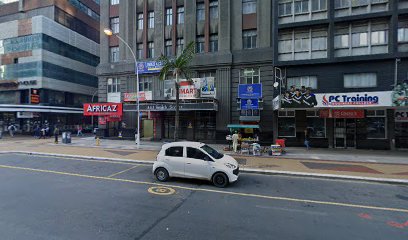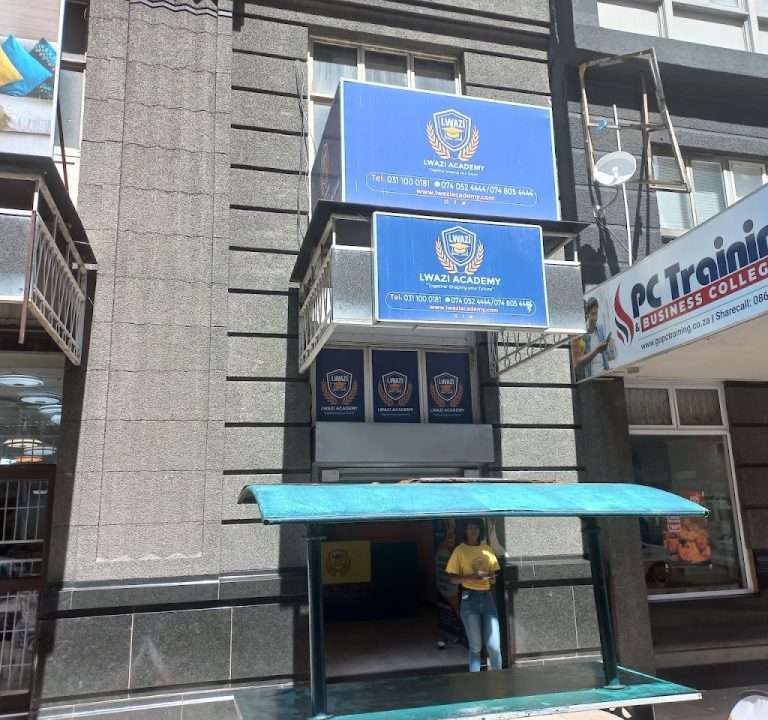
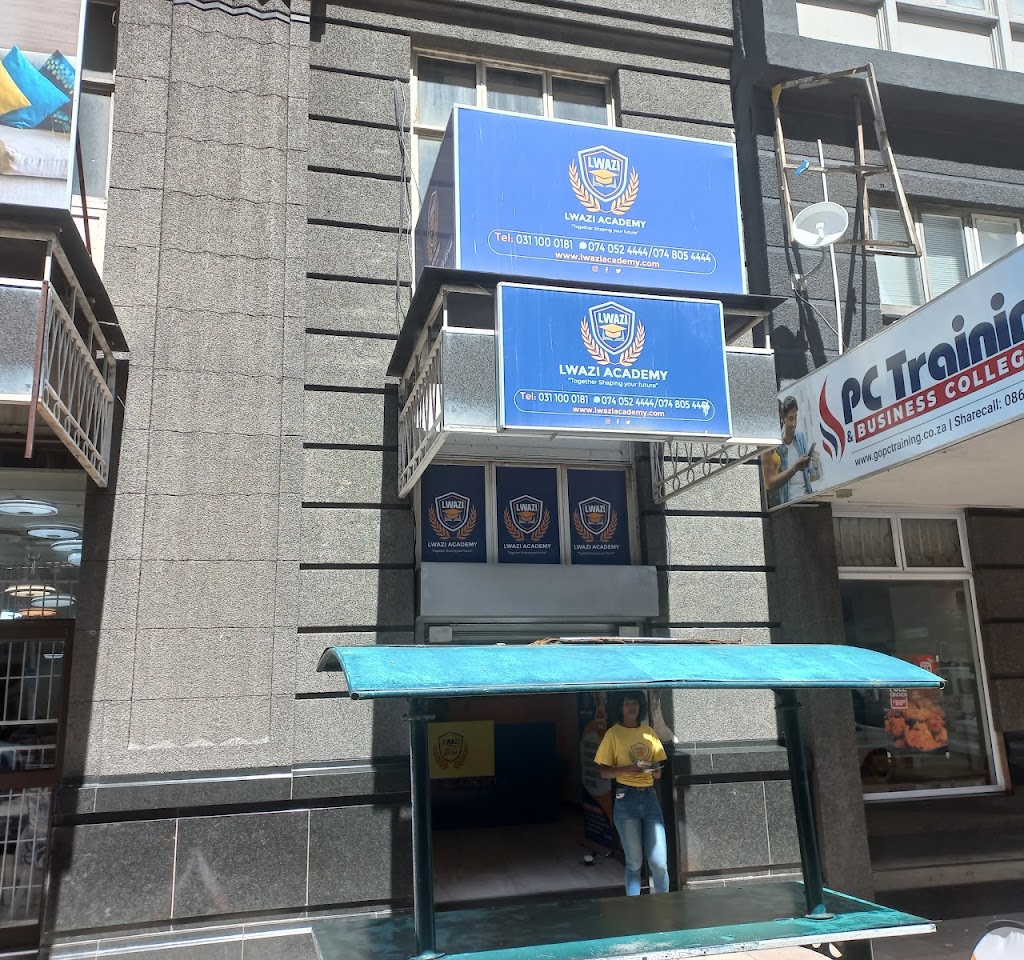
Lwazi Academy is a College establishment in Durban, KwaZulu-Natal, South Africa
Lwazi Academy: Summary of Services and Customer Experience
Based in Durban, KwaZulu-Natal, Lwazi Academy operates as a private college offering accredited training programmes, short courses and career-development pathways. The institution emphasises practical, industry-relevant education designed to equip learners with employable skills. Courses are aligned with the regulatory frameworks of HWSETA (Health and Welfare Sector Education and Training Authority) and the Quality Council for Trades and Occupations (QCTO), underscoring a commitment to recognised standards within the South African education landscape.
The academy presents a broad portfolio of vocational programmes aimed at both youth and adult learners. Among the core offerings are First Aid Responder training, which equips participants with essential life-saving skills such as CPR and wound care. The HIV and AIDS Counselling programme provides training in key communication and ethical competencies intended to support individuals and communities affected by the condition. For public health practice, the Health Promotion Officer course (L3, SAQA ID: 94597) is presented as a pathway to roles focused on community health education and programme facilitation.
Engineering pathways form a notable portion of Lwazi Academy’s curriculum, with N4-N6 qualifications available in Mechanical Engineering, Electrical Engineering, and Civil Engineering. These courses are positioned as vocational routes to technical careers, covering areas such as power systems, fault finding, and infrastructure design and maintenance. The inclusion of N2-N6 levels suggests a structured ladder programme designed to support progression from foundational to more advanced trade qualifications, potentially opening doors to roles in manufacturing, construction, facilities management, and engineering services.
The academy’s messaging positions the campus as a practical environment that supports learners through career development alongside academic study. The presence of dedicated sections on academic research and expertise centres, faculty specialist consultations, student success services, and industry partnerships signals an ecosystem aimed at guiding students beyond coursework. This includes access to career counselling, tutoring for advanced subjects, and opportunities to engage with industry partners through an innovation hub, all of which can contribute to a more well-rounded student experience.
In terms of the customer journey, Lwazi Academy provides information about its mission and objectives, and outlines a vision centred on empowering learners to meet challenges and contribute to the future through innovative thinking, effective communication and cultural awareness. The stated objectives emphasise continuous quality improvement, policy compliance and responsive service delivery, which are important markers for prospective students assessing reliability and consistency.
Operational details indicate a regular weekday schedule with extended hours, typically Monday to Friday from 8am to 5pm, and Saturdays from 8am to 2pm. This relatively broad weekly availability can be helpful for both employed adults seeking after-work or weekend study options and for prospective students planning campus visits for information sessions. The campus location in Durban situates the academy within the KwaZulu-Natal coastal region, serving learners in and around the city and its environs.
Student testimonials and external reviews are not extensively visible within the site content provided, but the standard programme mix suggests a focus on practical skills, industry relevance and structured progression. The combination of accredited training, short courses and career development pathways is designed to support diverse learner needs—from entry-level certifications to more technical N4–N6 engineering qualifications.
Practical tips for prospective students and employers considering Lwazi Academy:
- Verify accreditation and the specific HWSETA and QCTO approvals for the desired programme to ensure recognised certification and industry relevance.
- Note the engineering streams (Mechanical, Electrical, Civil) and identify which level (N2–N6) aligns with current qualifications or career goals.
- Plan campus visits during open hours (weekdays or Saturdays) to discuss course content, delivery methods and support services with staff.
- Take advantage of student support services such as career counselling and tutoring to maximise success and employability outcomes.
- Consider the cadence of study alongside work commitments, leveraging the weekend hours where available.
In terms of location and service area, Lwazi Academy identifies itself as a Durban-based private college offering services primarily to learners in KwaZulu-Natal, with programmes designed to lead to practical, industry-aligned careers across health, welfare and engineering sectors. The institution presents a cohesive offering that blends structured qualifications with additional support mechanisms and industry connections to facilitate employability pathways.
Durban
KwaZulu-Natal
4001
South Africa
Sorry, no records were found. Please adjust your search criteria and try again.
Sorry, unable to load the Maps API.
College Services in Durban, KwaZulu-Natal
Durban, situated on the eastern seaboard of South Africa, hosts a range of college services aimed at supporting learners through various stages of education and training. For prospective students and adult learners alike, the focus is on accessible pathways into further study, practical skills development, and ongoing personal and professional growth. The typical offerings span from entry guidance and academic support to specialised programmes designed to respond to local industry needs.
Academic guidance and admissions support are commonly provided to help learners navigate selection criteria, campus facilities, and funding options. Advisors may clarify programme requirements, assist with application timelines, and outline the steps required to secure a place in a course. While specifics vary between institutions, the overarching goal is to demystify the process and help applicants make informed choices aligned with career aspirations.
A broad spectrum of learning programmes is available, including diploma and certificate courses, occupational qualifications, and short courses aimed at upskilling the workforce. In Durban, these programmes often emphasise practical, hands-on training aligned with industry standards. Students can expect a curriculum that blends theoretical foundations with applied exercises, laboratory work, workshops, and real-world projects where feasible. Evening and weekend classes are commonly offered to accommodate employed learners and those with other commitments.
Career services form a core element of college provision. Professional guidance may cover career planning, resume and interview preparation, and access to work placements or industry-sponsored projects. Regardless of the programme, there is usually an emphasis on developing transferable skills such as communication, problem-solving, teamwork, and digital literacy, which enhance employability across sectors.
Facilities and campus life feature prominently in Durban’s college environment. Learners may encounter classrooms equipped with modern teaching aids, computer labs, engineering workshops, and science laboratories. Libraries, study spaces, and student support hubs aim to foster independent learning while providing access to study materials and academic assistance. While the scale and scope of facilities differ by campus, the aim is to create a conducive learning atmosphere that supports concentration and collaboration.
Student support services address diverse needs, including academic literacy, language support, and accessibility. For many learners, especially those transitioning from school to college or from other regions, personalised tutoring or study-skills workshops help bridge gaps. Disabilities and special needs services are typically available to facilitate inclusive participation through reasonable adjustments and targeted resources.
Practical considerations for Durban learners include transport and commuting options, campus safety, and access to accommodation or refine timetables to fit personal circumstances. Durban’s geography means consideration of urban traffic patterns, peak travel times, and proximity to residential areas and work locations. Many institutions offer guidance on housing, bursaries, and financial planning to ease the balance between study costs and living expenses.
Online and blended learning elements are increasingly present, allowing students to engage with course materials remotely while meeting essential on-campus requirements. Even where online components exist, face-to-face sessions, labs, or practicums often remain integral to certain programmes, ensuring hands-on experience and direct supervision where necessary.
Overall, customers in Durban can expect a well-rounded set of college services designed to support access, progression, and success. The focus remains on practical education that equips learners with relevant skills, industry vitality, and pathways to further study or secure employment within KwaZulu-Natal and beyond.